

When you stand among the lush greenery of the Waiahole Valley, you are witnessing more than just a beautiful tropical landscape; you are looking at a masterpiece of indigenous engineering that has functioned for centuries. The lifeblood of our traditional taro patches (known as lo‘i kalo) is the ‘auwai—an ancient, sophisticated irrigation system that diverts fresh mountain water to nourish the land. At Waiahole Poi Factory, our profound connection to the ‘āina (land) is maintained through this very water, which is essential for producing the authentic hand-pounded poi we serve to our community daily.
The ‘auwai system stands as a living testament to the deep understanding ancient Hawaiians possessed regarding hydrology, topography, and sustainable community resource management. It is far more than a simple set of ditches; it is a complex network designed to ensure that water is shared equitably, kept clean, and eventually returned to the stream to sustain the entire valley ecosystem. In this comprehensive guide, we explore the mechanical genius of this ancient technology and why it remains absolutely vital to our locally sourced taro and sustainable agricultural practices today.
The Engineering of the ‘Auwai: Gravity and Harmony
The true brilliance of the ‘auwai lies in its elegant simplicity and its unwavering respect for the natural flow of water. Unlike modern industrial irrigation that often relies on mechanical pumps and intrusive pipes, the ‘auwai utilizes the natural gradient of the land to move water efficiently. This gravity-fed system requires constant maintenance but leaves a minimal environmental footprint. Our factory building, which dates back to 1904, stands as a historical anchor for this valley's long-standing relationship with agricultural water management.
- The Po‘owai (Head Dam): Water is first diverted from a natural stream using a carefully constructed dam made of river rocks and clay. This dam is designed to take only what is strictly needed for the crops, allowing the majority of the stream to continue its path toward the ocean.
- The Main Channel: The diverted water travels through a hand-dug channel that precisely follows the contours of the valley. These walls are often reinforced with stones to prevent soil erosion and ensure the water flows smoothly toward the fields.
- The Makawai (Water Gates): Strategic openings in the channel walls allow water to enter individual lo‘i. These gates are easily adjusted using rocks or mud to regulate the volume of water entering each patch based on the growth stage of the taro.
- The Ho‘i (Return Flow): This is the most ecologically critical component of the entire system. Once the cool water has circulated through the taro patch, it exits through a dedicated return channel and flows directly back into the original stream bed to maintain balance.
Key Components of the ‘Auwai System
Sustainability and Community: The Law of the Water
The ‘auwai system served as the foundational infrastructure of the ancient Hawaiian land division system known as the ahupua‘a. It fostered a deep sense of community responsibility because every person located downstream depended entirely on the diligent stewardship of those living and farming upstream. In Waiahole Valley, local farmers still actively repair and utilize the historic McCandless non-potable water system to keep these fields flowing.
- Shared Responsibility: Maintaining the ‘auwai was always a collective effort. Families would gather regularly to clear fallen debris, repair stone walls, and ensure the water remained free of contaminants.
- Equitable Distribution: In Hawaiian culture, water was never "owned"; it was managed as a public trust. Each farmer was entitled to a specific amount of water based on the amount of labor they contributed to the system's ongoing upkeep.
- Agricultural Preservation: While modern systems were introduced in 1989 for domestic use, the traditional ‘auwai remains the functional priority for agricultural preservation in Waiahole.
At our original valley location, we honor these ancient principles by supporting local farmers who continue to utilize these traditional methods. When you enjoy our Hawaiian food plate, you are supporting a cycle of water and life that has remained unbroken for a thousand years.
Why Cool Water is the Secret to Superior Poi
If you have ever wondered why hand-pounded poi from Waiahole has such a distinct and superior flavor, the answer lies in the temperature of the water. Kalo (taro) is highly sensitive to heat; if the water in a lo‘i becomes stagnant or too warm, the taro can develop "root rot," a devastating condition that ruins the entire crop.
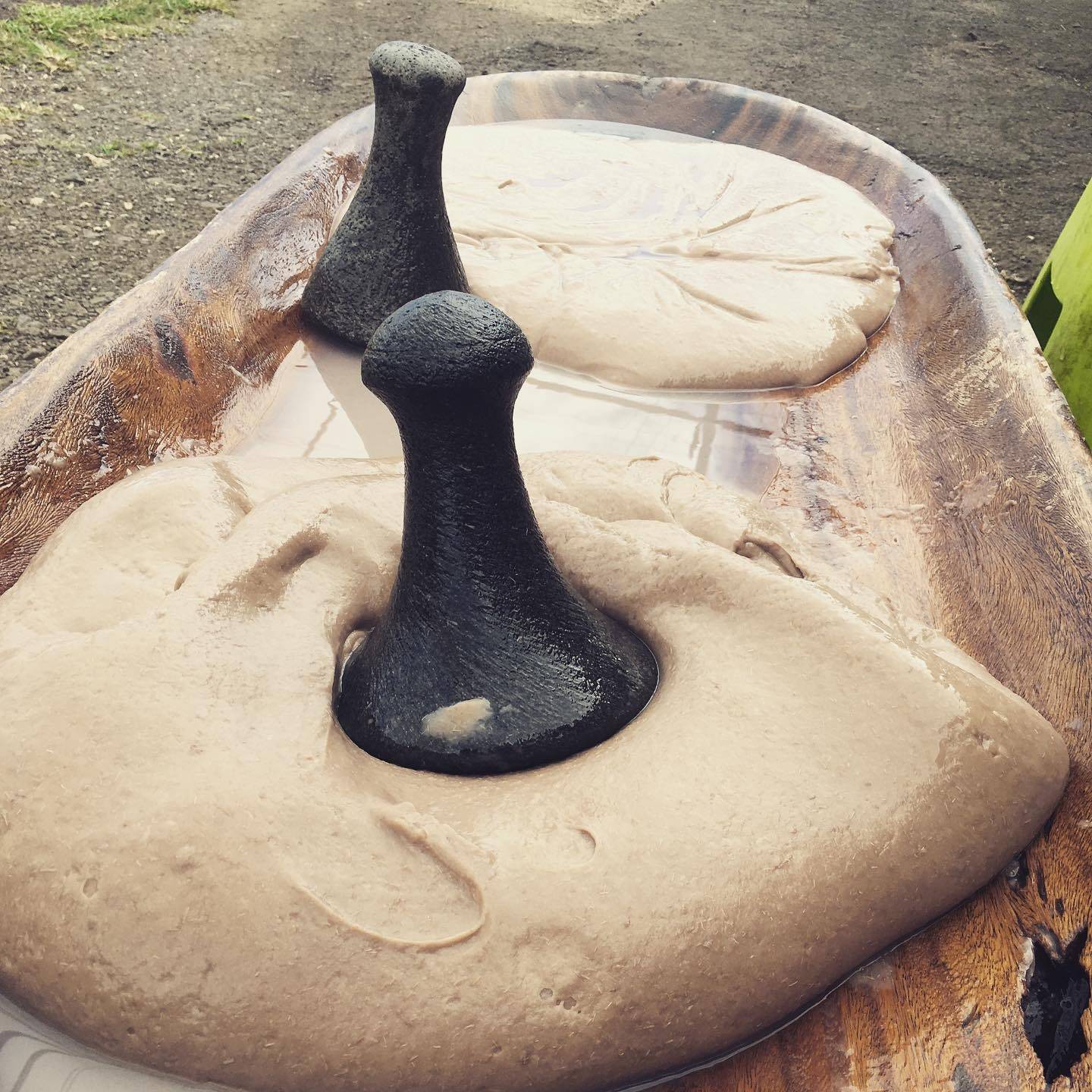
The ‘auwai system ensures a constant, vigorous flow of fresh, cold mountain water. This moving water oxygenates the soil and keeps the taro corms cool, allowing them to grow slowly and develop a dense, nutty flavor and a smooth, creamy texture. Because this system keeps our taro healthy and high-quality, we are able to continue the traditional practice of using the pōhaku (stone) and papa (wooden board) to hand-pound our poi daily.
What the Community is Saying: A Living Heritage
FAQ: Frequently Asked Questions About the ‘Auwai System
1. Is the ‘auwai system still used in Hawaii today? Yes. While many systems were altered by plantation-era diversions, many communities, particularly in valleys like Waiahole, are actively restoring and maintaining their ancient ‘auwai to support traditional taro farming.
2. Does the water in the ‘auwai ever run dry? In times of extreme drought, the flow can decrease. However, the system is designed to prioritize the health of the stream first, ensuring that some water always remains for the natural ecosystem.
3. Is the ‘auwai water safe for the taro? The water is remarkably clean as it comes directly from the mountain forests. The taro patches actually act as natural filters, removing sediments before the water returns to the stream via the ho‘i.
4. Can I see an ‘auwai at Waiahole Poi Factory? When you visit our original valley location, you can see the lush taro patches nearby that are fed by the valley's historic water systems.
5. How can I help protect Hawaii's traditional water systems? Supporting local taro farmers and choosing restaurants like ours that prioritize traditional methods helps ensure that the economic and cultural value of the ‘auwai remains recognized.
Flowing with Tradition
The ‘auwai is more than just an irrigation technique; it is a philosophy of life. It teaches us that what we take from the source, we must use wisely and return with gratitude. At Waiahole Poi Factory, every bowl of poi we serve is a celebration of this ancient engineering and the cold, mountain water that makes it all possible.
Taste the difference of traditional farming today:
- View Our Menu of Kalo-Based Dishes
- Order Online for Pickup in Historic Waiahole Valley
- Learn More About the 100-Year History of Our Factory