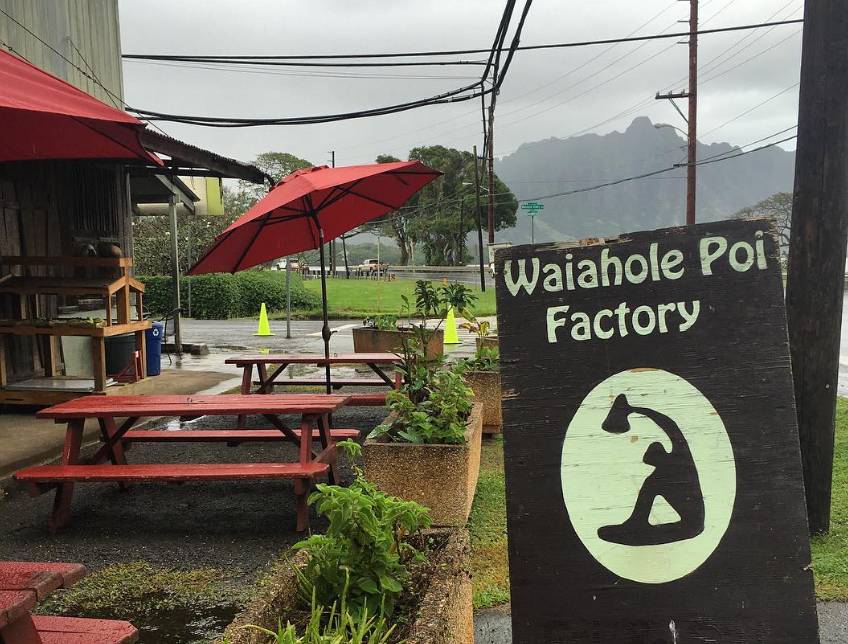
Finding genuine Hawaiian food means looking past tourist traps and fusion concepts to the places that still honor Native Hawaiian culinary traditions. The difference between authentic Hawaiian cuisine and generic “tropical” fare rests on ingredients, preparation methods, and cultural connection. At Waiahole Poi Factory in Kaneohe, those connections have been maintained for more than a century.
Built in 1905 as a working poi factory in Waiahole Valley, the building processed kalo (taro) grown in the surrounding fields for nearly seventy years. After periods as an art gallery and community kitchen, the family revived it in 2009 as a full-time Hawaiian food restaurant dedicated to hand-pounded poi and traditional plate lunches. Their motto, “Hānai i ka ‘ai, hānai i ke aloha” — nourish with food, nourish with love — guides every dish they serve.
What Makes Hawaiian Food Unique
Authentic Hawaiian cuisine centers on dishes that existed long before Western contact. Poi — steamed and pounded taro root mixed with water — served as the primary staple of the Native Hawaiian diet for over a thousand years. Taro is considered a kinolau, a physical manifestation of the god Kāne. Laulau (pork and butterfish wrapped in taro and ti leaves) requires careful wrapping and hours of steaming. Kalua pig traditionally cooks for many hours in an imu, the underground oven. Kulolo, the dense taro-coconut dessert, needs a full day of steaming to develop its signature caramelized texture.
These methods are not shortcuts. Hand-pounding poi takes focused time and technique passed through generations. The labor creates space for ‘ohana gathering and cultural transmission. Waiahole Poi Factory continues that practice, producing fresh poi daily from local taro and steaming kulolo for up to twenty-four hours.
Local plate lunch culture, with rice, macaroni salad, and teriyaki-style proteins, developed later through plantation influences. Both traditions hold value, yet they are distinct. True Hawaiian food prioritizes the older techniques and the kalo plant itself.
How to Spot Authentic Hawaiian Food
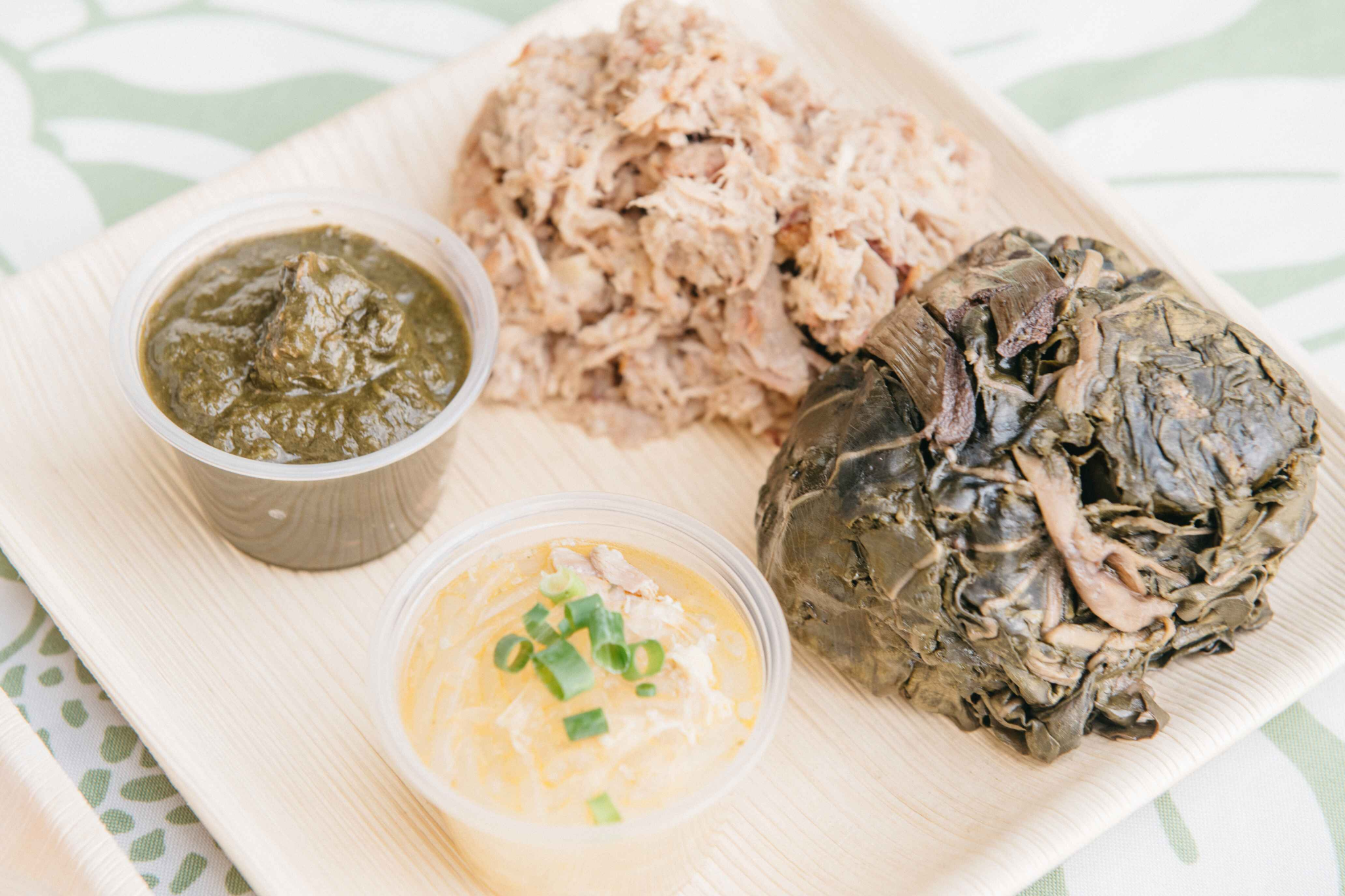
Start with the menu. Look for poi offered as a choice alongside rice, laulau, kalua pig, lomi salmon, squid luau, beef luau, and kulolo or haupia. At Waiahole Poi Factory the plates are built exactly this way.
Ask how the poi is made. Fresh hand-pounded poi has a short shelf life and a mild, slightly sweet flavor when new; it develops a pleasant tang as it ferments. Machine-processed or powdered versions lack the same character. Restaurants proud of traditional methods will tell you openly.
Sourcing matters. Waiahole Poi Factory works with local farmers to keep Hawaiian agricultural traditions alive and supports the valley’s agricultural presence. Native Hawaiian-owned family businesses preserve recipes and knowledge that larger operations often cannot.
Ownership and longevity provide further clues. The Hoe family has stewarded this place through multiple generations, returning it to its original purpose of sharing Hawaiian culture through food.
Must-Try Dishes at Waiahole Poi Factory
Order poi first. Consistency is traditionally measured in “fingers” — one-finger is thick, three-finger thinner. It is naturally hypoallergenic, low in fat, and rich in complex carbohydrates. Many first-timers start with a small portion.
Laulau delivers the reward of slow cooking: generous pork with a touch of butterfish, wrapped and steamed in taro leaves until the greens and meat become one rich, earthy package. Kalua pig is slow-cooked and smoked for twelve hours until it falls apart, then seasoned simply with Hawaiian sea salt. Squid luau and beef luau bring creamy coconut milk and tender taro leaves into savory stews. Chicken long rice offers a lighter ginger-broth alternative.
Every plate includes lomi salmon — diced tomatoes, onion, green onion, and salt-cured salmon — and a serving of haupia, the classic coconut pudding.
For dessert, the Sweet Lady of Waiahole stands out. Warm, house-made kulolo (grated taro, coconut milk, and sugar steamed for twenty-four hours) is topped with cold haupia ice cream. The contrast of temperatures and textures has made it a signature of the Windward Coast. Kulolo alone is also available by the scoop or pound when ready.
Current Plate Options
Sides are available individually so you can build exactly the meal you want or take home extras for later.
Two Locations, One Tradition
The original Waiahole Valley location sits at 48-140 Kamehameha Highway in Kaneohe. Open most days from 10 a.m. to 6 p.m. (closed Tuesdays), it offers outdoor seating, the historic building atmosphere, and the full Country Store experience. The Windward Mall food-court location provides extended evening hours and remains open seven days a week, making it convenient for visitors who want authentic food without the valley drive.
Both locations serve the same carefully prepared menu. Online ordering is available for pickup. Catering and bulk orders support family reunions, backyard luaus, and gatherings of any size. Core items such as kalua pig, laulau, poi, and lomi salmon are naturally gluten-free and dairy-free, which simplifies planning for mixed groups.
Why Independent Family Places Matter
Large Hawaiian-themed chains prioritize consistency and speed. They typically roast kalua-style pork in ovens and rely on machine-processed poi. Traditional items such as fresh kulolo or carefully wrapped laulau appear less often. Independent, family-run kitchens like Waiahole Poi Factory accept the longer timelines because the results cannot be rushed: twelve-hour kalua pig, twenty-four-hour kulolo, and daily hand-pounded poi.
Supporting Native Hawaiian-owned businesses keeps cultural knowledge and local farming practices circulating within the community. Revenue stays closer to the people who grow the taro and carry the recipes.
How to Enjoy Your Visit
Approach the meal with curiosity. Order ‘ohana-style — several dishes to share — rather than single plates if the group is larger. Dip kalua pig into the poi. Ask questions about the preparation; the staff are happy to explain. If poi is new to you, begin with a small cup.
Visit during quieter hours if possible. The original location’s setting in the green valley adds its own sense of place. The mall location removes any barrier of distance. Live music or special events sometimes appear; check current schedules when you plan.
Authentic Hawaiian food requires time, traditional methods, and a living cultural connection. You will find those elements at Waiahole Poi Factory. Look for the hand-pounded poi, the long-steamed kulolo, the carefully prepared laulau and kalua pig, and the family that has kept the building’s original purpose alive. Come hungry, leave with a deeper appreciation for the food that has sustained Hawaiian people for generations, and take home the taste of Waiahole Valley.
Plan your visit or order online at waiaholepoifactory.com. Two locations on the Windward side of Oahu stand ready to share the traditions.