
.jpg)
Aloha! If you’ve ever scooped into a bowl of poi at a Hawaiian luau or roadside stop on Oahu, you likely noticed its distinctive feel and subtle flavor. For tourists and food enthusiasts seeking an authentic Hawaiian culinary experience, understanding Hawaiian poi texture reveals the care, history, and craftsmanship behind this sacred staple.
Real Hawaiian poi is not one uniform product. It ranges from thick, elastic hand-pounded versions to smoother milled styles. This guide explores the journey from kalo root to table, explaining why textures differ and what real Hawaiian poi truly tastes like.
The Sacred Foundation: Kalo in Hawaiian Culture
Kalo (taro) holds a revered place in Hawaiian tradition as the elder sibling of humankind in the story of Hāloa. This spiritual connection elevates poi beyond everyday food. Historically, families gathered around a shared poi bowl, fostering community and conversation while nourishing themselves with this versatile starch.
The preparation begins in carefully tended lo‘i (wetland taro patches). Mature corms are harvested, steamed until soft, peeled, and transformed. The method of transformation—hand-pounding or milling—defines the final Hawaiian poi texture, consistency, and flavor profile.
Traditional Hand-Pounded Poi: The Living Art of Ku‘i ‘Ai
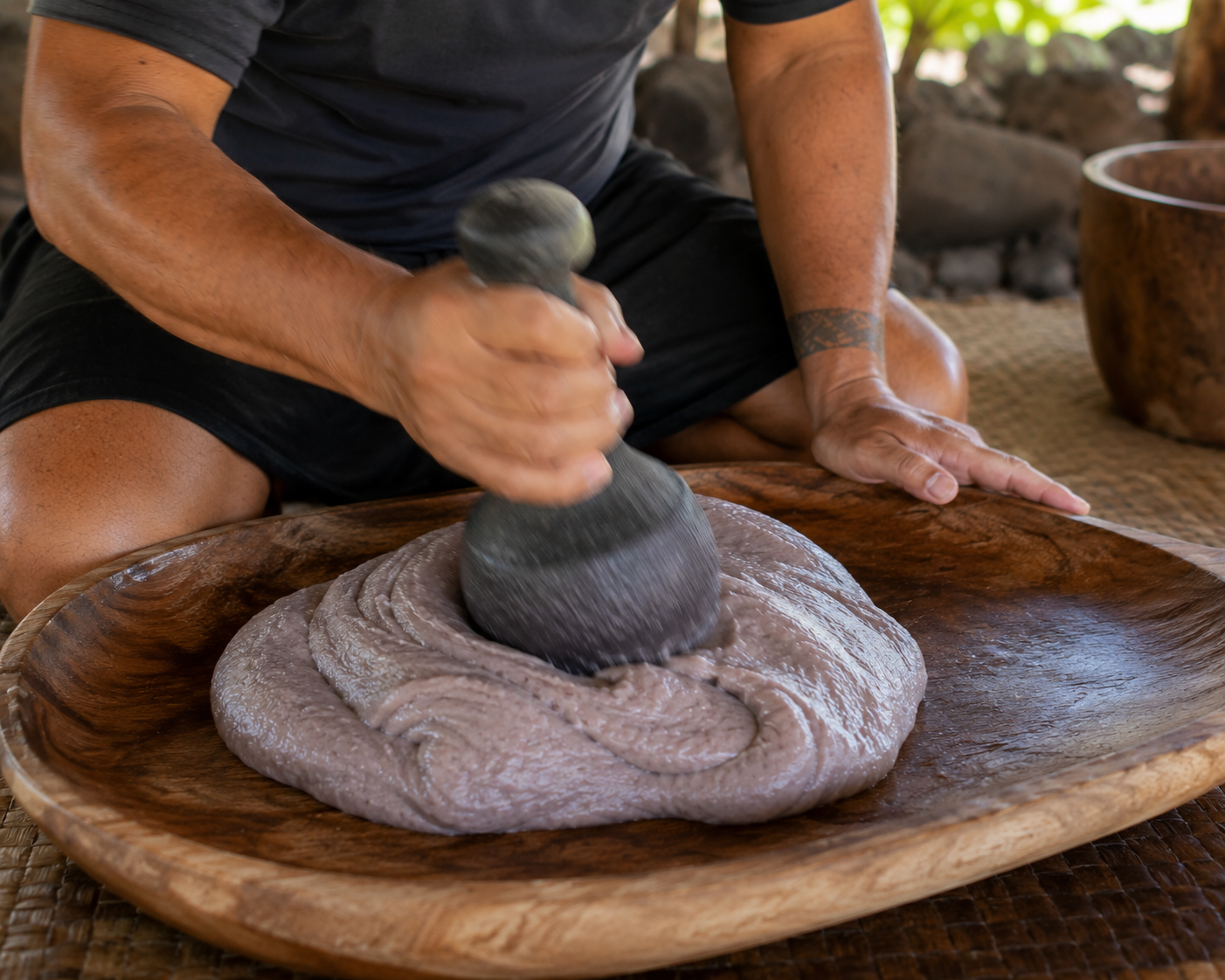
Hand-pounding, or ku‘i ‘ai, is the time-honored technique. Steamed taro is placed on a wooden papa ku‘i ‘ai board and worked with a basalt pōhaku ku‘i ‘ai pestle. Using rhythmic strokes and very little water, the kalo becomes paʻiʻai—a dense, concentrated paste.
This method yields:
- A thick, elastic, and stretchy consistency with satisfying pull
- A substantial, almost dough-like or fudgy mouthfeel
- Subtle textural nuance from natural fibers
Minimal water preserves the kalo’s full character. Fresh hand-pounded poi tastes mildly sweet and earthy, with nutty undertones reminiscent of chestnut or sweet potato. Over days, natural lactic fermentation develops a pleasant tang, similar to mild sourdough or yogurt. Locals often favor “two-finger” or thicker poi, scooped cleanly by hand.
This approach honors ancestral skills and supports windward taro farmers, keeping cultural practices vibrant.
Milled Poi: Modern Efficiency for Everyday Enjoyment
Most poi available today is milled using high-speed grinders. These machines process larger batches efficiently but require more water for smooth operation. The outcome is a consistent, often thinner product suited to broad demand.
Milled poi typically features:
- A smoother, pudding-like texture
- Lighter, more fluid consistency
- Milder, approachable flavor
While it may lack the pronounced “pull” of hand-pounded poi, milled versions remain delicious and accessible. They provide an excellent entry point for newcomers while delivering taro’s nutritional benefits.
What Does Real Hawaiian Poi Taste Like?
Poi is a dynamic food whose flavor evolves:
- Fresh (Day 1): Mildly sweet, starchy, and earthy with a clean finish.
- Day 2–3: Gentle tanginess emerges, adding complexity and brightness.
- Day 3+: More pronounced sour notes that many Hawaiians prefer, balancing richer dishes.
Real Hawaiian poi tastes neither overly sweet nor bland. It offers a versatile, subtly nutty base that complements kalua pig, lomi salmon, chicken long rice, or squid luau. Its texture—whether elastic or smooth—enhances the overall meal rather than competing with it.
Pro Tip for First-Timers: Eat poi alongside savory proteins instead of alone. The contrast highlights its subtle qualities beautifully.
Texture Comparison Table
This comparison helps explain why poi experiences can vary so delightfully.
Why Poi Texture Matters for Visitors
Texture influences not just enjoyment but also cultural connection and nutrition. Hand-pounded poi retains more natural qualities from gentle processing. Its elasticity reflects skilled craftsmanship passed through generations.
Both styles showcase taro’s versatility and digestibility. Poi remains a gentle, hypoallergenic staple suitable for many diets. Exploring the differences deepens your appreciation for Hawaiian foodways and the dedication of producers preserving them.
FAQ: Your Questions About Real Hawaiian Poi Answered
What is the main difference between hand-pounded and milled poi?
Hand-pounded poi uses minimal water and traditional stone tools, resulting in a thicker, elastic texture and more concentrated flavor. Milled poi uses machines and more water for a smoother, often thinner consistency that’s easier to produce in volume.
What does real Hawaiian poi taste like to beginners?
Fresh poi is mildly sweet and earthy, like a subtle sweet potato or unsweetened pudding with nutty notes. It develops a pleasant tangy sourness over a few days through natural fermentation—many locals enjoy this version best.
Is thicker poi always better?
Not necessarily—it depends on preference. Thicker, hand-pounded styles offer more chew and intensity, while smoother milled poi provides a gentle, versatile base. Try both to discover your favorite Hawaiian poi texture.
How should I eat poi?
Scoop it with your meal rather than alone. It pairs wonderfully with salty or smoky proteins like kalua pig. Use fingers traditionally or a spoon—there’s no wrong way once you find what you enjoy.
Does poi go bad?
Poi naturally ferments and is safe for several days when stored properly. Many prefer the sour stage. Refrigerate to slow changes or enjoy fresh for sweeter notes.
Where can I try authentic poi on Oahu?
The original Waiahole location on the windward side offers a scenic road-trip setting ideal for immersive dining. The convenient town location at Windward Mall makes it easy for quick meals or weeknight dinners. Both serve high-quality fresh Hawaiian poi.
Is poi gluten-free and good for dietary needs?
Yes, traditional poi is naturally gluten-free, easy to digest, and often recommended for sensitive stomachs or as a first food for babies.
Planning Your Poi Experience on Oahu
Whether you prefer the scenic, sit-down atmosphere of the windward side or the convenience of town dining, Waiahole Poi Factory offers poi made with respect for tradition and quality. Explore the full traditional Hawaiian food menu to build your perfect plate.
Ready to taste the difference? Order fresh Hawaiian poi, complete meals, or family-style options through the official Toast Online Ordering Portal for easy pickup or delivery. Your authentic Hawaiian culinary adventure awaits—come hungry and curious.