
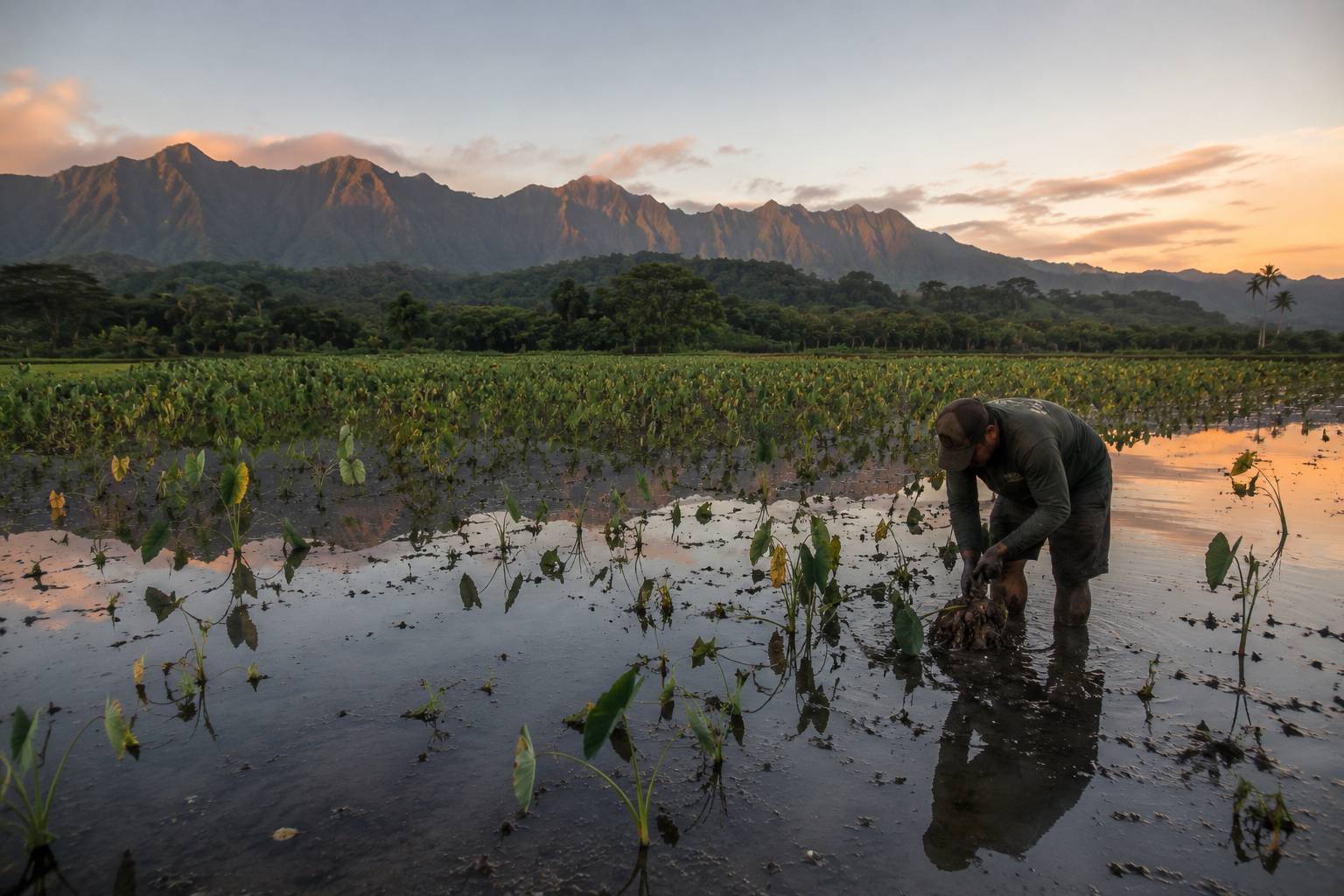
To the casual observer driving along the scenic Kamehameha Highway on Windward Oahu, the vibrant green patches of heart-shaped leaves look like a beautiful part of the tropical landscape. But for the farmers who dedicate their lives to the Waiahole Valley, these patches—known as lo‘i—represent a grueling, sacred, and deeply rewarding way of life. At Waiahole Poi Factory, the journey of the food doesn't start at the stove; it starts in the cool, ancestral mud of the valley floor.
Understanding the "Lo‘i to Table" process is essential for anyone searching for the best authentic Hawaiian food on Oahu. It is a story of sustainability, cultural preservation, and intense physical labor. When you sit down to enjoy a bowl of hand-pounded poi, you are tasting the result of a year-long cycle of growth, irrigation, and care. This blog takes you behind the scenes into the daily life of the practitioners who sustain Hawaii’s most important staple crop: kalo (taro).
The Morning Ritual: Entering the Sacred Lo‘i
For a taro farmer in Waiahole, the day begins long before the first customer arrives at the restaurant window. The morning usually starts in the cool, misty air of the valley, often before the sun has fully cleared the mountain peaks. Entering a lo‘i kalo is considered a spiritual act. In Hawaiian mythology, Haloa, the first taro plant, was the stillborn elder brother of the first Hawaiian man. This lineage makes the farmer not just a producer of starch, but a caretaker of a literal ancestor.
The work is deeply physical and immersive. Farmers spend hours wading through knee-deep mud and cold, flowing mountain water. One of the first tasks of the day is checking the ‘auwai—the traditional irrigation ditches that divert fresh water from mountain streams into the patches. Because kalo is a water-intensive crop, maintaining the flow of cold, oxygenated water is a feat of ancient engineering. If the water becomes stagnant or warm, the taro roots can develop rot, destroying an entire year's harvest.
The Life Cycle of the Kalo Plant
The Labor of Love: Why Hand-Pounded is the Gold Standard
The transition from the field to the Waiahole Poi Factory is where the raw harvest becomes a culinary treasure. While many commercial poi producers use industrial grinders that can process hundreds of pounds of taro in minutes, Waiahole maintains its status as a top Oahu destination by sticking to the traditional method: Ku‘i Kalo.
Pounding taro by hand using a pohaku ku‘i ‘ai (stone pounder) and a papa ku‘i ‘ai (wooden board) is an exhausting art form. It requires a specific rhythmic strike and the careful addition of water to achieve the perfect consistency. This process creates Pa‘i‘ai, the thick, undiluted form of taro. Unlike the thin, purple, "bagged" poi found in grocery stores, hand-pounded poi has a complex, nutty flavor and a dense texture that satisfies the soul. This labor-intensive process is the reason Waiahole is consistently ranked among the best places for Hawaiian food on the island.
Environmental Stewardship: Sustainable Farming in Kaneohe
Taro farming is one of the most sustainable forms of agriculture globally. The lo‘i system acts as a natural filtration system for the island’s watershed. As mountain water flows through the taro patches, the plants trap sediment and excess nutrients. By the time the water returns to the stream and eventually reaches the ocean, it is often cleaner than when it first entered the patch.
By supporting local taro farmers, Waiahole Poi Factory helps preserve the vital green belts of Windward Oahu. In a world where the average meal travels thousands of miles, the "Lo‘i to Table" model in Waiahole has a remarkably low carbon footprint. It is a closed-loop system: the taro grows in the valley, is prepared in the factory, and the scraps are often returned to the earth as compost for the next generation of huli.
Community Voices: Real Reviews of the Farm-to-Table Experience
The connection between the mud of the valley and the flavor of the plate is something visitors and locals notice immediately.
Frequently Asked Questions
1. Is all the poi at Waiahole Poi Factory made from local taro? Yes, Waiahole Poi Factory is committed to sourcing kalo from local farmers, particularly those in the Waiahole and Waiane valleys. This ensures the freshest product and supports the local agricultural economy.
2. Why does hand-pounded poi taste different than machine-made poi? Machine grinding creates a uniform, smooth texture but often introduces heat that can subtly change the flavor. Hand-pounding preserves the starch structure and creates a "live" texture that is much more flavorful and nutrient-dense.
3. Can visitors volunteer at the taro patches? While the patches directly behind the factory are often private, several organizations in the Kaneohe area, such as Kakoo Oiwi, host community work days where you can get in the mud and help maintain the lo‘i.
4. How long does it take for a single taro plant to be ready for the table? It is a lesson in patience. Depending on the variety of kalo and the water temperature, it takes anywhere from 8 to 14 months for a plant to reach maturity and be ready for harvest.
5. What makes Waiahole's taro farming sustainable? Traditional wetland taro farming uses no chemical fertilizers. The flowing water provides all the necessary nutrients, and the manual weeding process ensures that no pesticides enter the island's precious water table.
Taste the Legacy of the Lo‘i
The next time you stand at the window of the Waiahole Poi Factory, take a moment to look toward the mountains. Somewhere in those lush green valleys, a farmer is likely standing in the mud, tending to the next generation of Haloa. From the lo‘i to your table, every bite is a tribute to the endurance of Hawaiian culture and the hard work of the local farmer.
Ready to experience the freshest harvest on Oahu?
View Our Menu of Kalo-Based Dishes
Order Online for Pickup in Historic Waiahole Valley
Learn More About the 100-Year History of Our Factory