
If you’ve only experienced poke at a mainland bowl chain, you haven’t tasted the real thing. Authentic Hawaiian poke is a simple, fish-forward dish rooted in centuries of island fishing traditions—not a customizable rice bowl buried under sauces and toppings. Understanding what makes poke authentic helps you recognize quality preparation and appreciate the cultural knowledge behind every bite. This guide explains the traditional ingredients, preparation methods, and history that distinguish real Hawaiian poke from its commercialized cousins—and shows how that same spirit of respect for ingredients lives on at places like Waiahole Poi Factory.
What Is Hawaiian Poke? Understanding This Traditional Island Dish
Poke (pronounced POH-keh) comes from the Hawaiian verb meaning “to slice” or “cut crosswise into pieces.” The dish traditionally referred to any diced raw fish served as a relish, dating back to ancient Polynesian fishing traditions when fishermen would season cut-offs from their catch with sea salt, seaweed, and crushed kukui nuts.
The cultural context matters. Poke isn’t fusion cuisine or a trendy health food—it’s everyday Hawaiian food tied directly to island fishing culture and the practice of honoring fresh catch with minimal interference. Traditional preparation keeps the focus on the fish itself: clean cubes of raw ahi or tako, seasoned simply with Hawaiian sea salt, limu (seaweed), and sometimes inamona (roasted kukui nut condiment).
The key distinction between authentic Hawaiian poke and mainland poke bowls comes down to proportion and philosophy. Traditional poke is served in 3-4 ounce portions as a side dish or pupu (appetizer), often alongside rice or poi. The fish is the star. Mainland poke bowls flip this ratio—often 60-70% rice by volume, with the fish becoming just another topping drowning in spicy mayo and crispy onions.
At Waiahole Poi Factory, a family and Native Hawaiian owned establishment rooted in Waiahole Valley, this cultural knowledge comes from generations of lived experience. Established as a poi factory in 1905, the space has preserved traditional Hawaiian foodways through changing times. That difference shows up in every preparation of their signature dishes.
How Poke Evolved: From Ancient Hawaii to Modern Tables
Before Western contact, Native Hawaiians were already practicing the fundamentals of poke—seasoning fresh reef fish with pa‘akai (Hawaiian sea salt), limu, and inamona. The technique was practical: fishermen working long days needed a way to preserve and flavor their catch using ingredients available on the boat or shore.
The dish transformed significantly between 1885 and 1924, when Japanese plantation workers arrived in Hawaii. They brought shoyu (soy sauce), sesame oil, and rice-based culinary traditions that blended with existing Hawaiian foodways. This cultural exchange period gave birth to modern poke styles—shoyu poke, spicy ahi variations with chili oil—that are now considered traditional even though they incorporate Asian ingredients.
Waiahole Poi Factory has witnessed this entire evolution firsthand. Originally constructed in 1905 as a full poi factory serving the valley community, it later became a Native Hawaiian art gallery during the Hawaiian Renaissance and then returned to food production. Today, under the care of the Hoe family, it continues to honor pre-contact staples while respecting how island cuisine naturally adapts. The same principle that guides authentic poke—fresh, quality ingredients treated with respect and simple seasoning—shapes every plate they serve.
What hasn’t changed across centuries is the core principle: fresh, quality fish (or taro, or pork) treated with respect and simple seasoning that enhances rather than masks the main ingredient. When mainland poke chains exploded in popularity, traditional Hawaiian poke consumption in the islands remained steady. Two separate dishes, sharing only a name.
Traditional Hawaiian Poke Ingredients: What Makes It Authentic
The fish determines everything. Ahi (yellowfin tuna) is the most traditional choice. Look for bright red color, firm texture, and an ocean-fresh smell—any brown tones or rainbow sheen indicates oxidation. Tako (octopus) is the other classic option, requiring proper tenderizing before cubing.
Authentic seasoning starts with Hawaiian sea salt (pa‘akai), harvested from coastal salt ponds for over 1,000 years. The volcanic minerals give it a distinct flavor profile you won’t find in table salt. Limu provides ocean umami—over 60 edible seaweed varieties grow in Hawaiian waters, but ogo is most common in poke for its mild flavor and pleasant texture.
Inamona, the traditional roasted kukui nut condiment, is increasingly rare because the preparation is labor-intensive: roasting, peeling, and grinding kukui nuts with Hawaiian salt. Most commercial operations skip it entirely. Modern authentic additions that have earned their place include shoyu, sesame oil, green onion, and Maui onion—introduced through cultural exchange but now integral to what islanders consider traditional poke.
What doesn’t belong: heavy mayonnaise-based sauces, mango chunks, edamame, or any topping that competes with the fish for attention. At Waiahole Poi Factory, ingredients are locally sourced whenever possible from Waiahole Valley and surrounding areas, ensuring the quality and freshness that authentic Hawaiian food demands. Their commitment shows in dishes that prioritize the main ingredient the same way traditional poke does.
How to Prepare Hawaiian Poke: Authentic Methods
Proper poke starts with proper fish handling. Sushi-grade ahi must be frozen to specific temperatures to kill parasites according to FDA guidelines. Once thawed, the fish should stay below 40°F until preparation.
The cutting technique matters more than most home cooks realize. Cubes should be roughly ¾-inch, cut against the grain to ensure tender bites. Slicing with the grain creates stringy, chewy pieces that ruin the texture. Work quickly to minimize time at room temperature, keeping unused portions refrigerated.
Mixing requires a gentle hand. Fold seasonings into the fish rather than stirring aggressively—you’re coating the cubes, not making tuna salad. For classic shoyu poke, the ratio is roughly 1 pound fish to 2 tablespoons shoyu, 1 tablespoon sesame oil, and seasonings to taste. Let it rest for 10-15 minutes so flavors absorb, but no longer—extended marinating essentially “cooks” the fish through acid and salt, changing the texture.
The most common mistake is over-complicating. If you need six sauces to make your poke taste good, your fish isn’t fresh enough. Traditional preparation at establishments like Waiahole Poi Factory—where poi is still made on-site using methods connected to the building’s century-old roots—applies the same philosophy across all dishes: quality ingredients prepared simply, with techniques passed down through generations.
What to Serve with Hawaiian Poke: Traditional Pairings and Waiahole Offerings
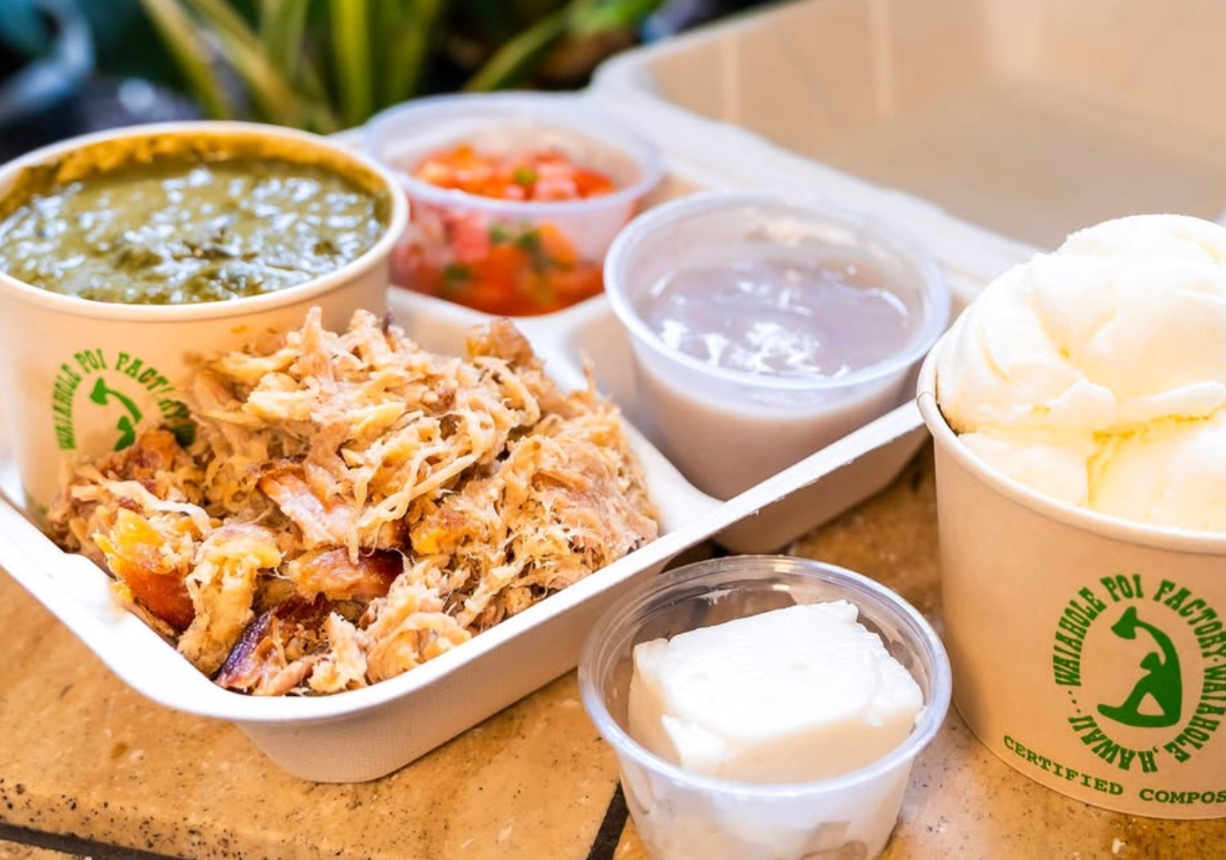
White rice is the most common accompaniment—a neutral base that lets the poke’s seasoning shine. But the traditional pairing is poi, the purple-gray paste made from pounded taro root that has been a Hawaiian staple for over a thousand years. Poi’s mild, slightly sour flavor and smooth texture complement poke’s bold saltiness and firm fish cubes.
At Waiahole Poi Factory, poi is prepared daily, maintaining the traditional connection to taro that defines the valley’s food heritage. Pairing fresh poke with fresh poi creates the authentic island eating experience—two ancient foods that have sustained Hawaiian communities for generations.
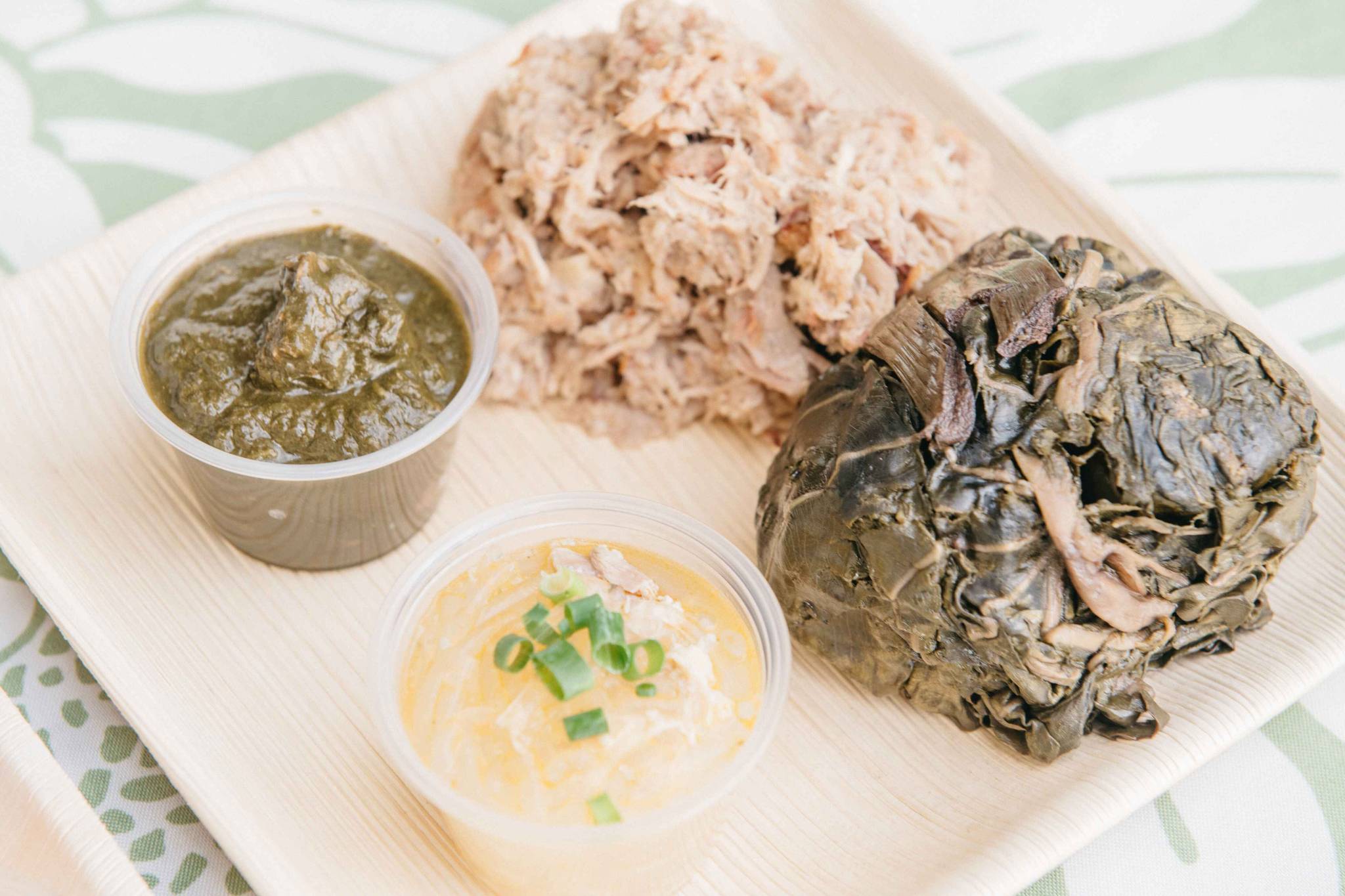
A complete Hawaiian plate might include lomi salmon (diced salt-cured salmon with tomatoes and onions), kalua pork (slow-cooked and shredded with Hawaiian sea salt), and haupia (coconut milk dessert) for contrast. These aren’t random additions—they represent the balanced plate culture that defines everyday Hawaiian eating, where poke functions as one component of a larger meal rather than the entire focus.
Here’s how Waiahole Poi Factory’s core offerings reflect that same traditional plate philosophy:
For beverages, choose options that won’t compete with raw fish and bold seasonings. Cold beer, unsweetened iced tea, or coconut water work better than sugary sodas. Waiahole also offers house-made limeade, mamaki tea, and traditional awa for those seeking deeper cultural connections.
Hawaiian Food 101: A Closer Look at Traditional Lu‘au from Waiahole Poi Factory
One of the clearest ways to understand the same philosophy that guides authentic poke—simple ingredients prepared with care and respect—is to look at classic Hawaiian lu‘au dishes. Waiahole Poi Factory regularly shares educational content under their Hawaiian Food 101 series to help people learn the real flavors of the islands.
In this Instagram reel, they highlight two beloved menu staples: squid lu‘au and beef lu‘au. Both feature tender protein slow-cooked with taro leaves (lu‘au) and coconut milk, seasoned simply with Hawaiian sea salt. The post playfully asks viewers to choose a side—“Are you team squid or team beef?”—while showing that either choice delivers the same ono (delicious) result rooted in traditional preparation.
Where to Experience Authentic Hawaiian Food Traditions on Oahu
Finding authentic poke in Hawaii is easier than on the mainland, but not all island poke is created equal. Look for family-owned Hawaiian restaurants, local fish markets with daily catches, and establishments with obvious ties to island culture. High turnover is your friend—if items sell out by early afternoon, that’s a good sign they’re making fresh batches daily.
Red flags include overly elaborate presentations that prioritize Instagram appeal over flavor, menus dominated by non-traditional ingredients presented as “authentic,” and chain operations with no cultural roots in Hawaii. The best traditional foods often come from the most unassuming places—a family restaurant that’s been serving the same community for decades.
Waiahole Poi Factory represents exactly this kind of authenticity: family and Native Hawaiian owned, with roots in a 1905 poi factory building, two locations (the historic Waiahole Valley original and Windward Mall), and a menu centered on laulau, kalua pig, lu‘au dishes, chicken long rice, hand-prepared poi, lomi salmon, and signature desserts like the Sweet Lady of Waiahole (warm kulolo with haupia ice cream). They also offer catering and authentic Hawaiian food tours for those who want a deeper experience.
The difference between eating traditional Hawaiian food here versus a mainland chain isn’t just ingredient quality—it’s the cultural knowledge embedded in every preparation decision, from how taro is handled to seasoning ratios to serving portions. Supporting local Hawaiian businesses does more than get you better food—it helps preserve cultural foodways that might otherwise disappear under the pressure of commercialization.
Bringing Authentic Hawaiian Flavors to Your Table
Authentic Hawaiian poke is simple: quality fish, minimal seasoning, traditional preparation methods that honor the catch. Look for bright red ahi, Hawaiian sea salt, limu, and restraint—if the ingredient list reads like a fusion menu, you’re not getting the real thing. Consume within 24 hours, pair with poi or rice, and seek out family-owned Hawaiian establishments with cultural roots in the islands.
The same principles guide every dish at Waiahole Poi Factory. Whether you choose a Kanaka Nui plate (the works with laulau, kalua pig, chicken long rice, and lu‘au), a combo or single plate, a bowl, or just a side of fresh poi and lomi salmon, you’re tasting food prepared with generations of knowledge in a place that has served the community for over a century.
Experience the Real Taste of Hawaiian Tradition
The next time you’re on Oahu, skip the poke bowl chains and find a place where the recipes come from generations of island living, not corporate test kitchens. Visit Waiahole Poi Factory in historic Waiahole Valley or at Windward Mall. Explore the full menu of traditional plates, order hand-prepared poi to take home, book a food tour, or arrange catering for your next gathering. Order online, call (808) 239-2222, or stop by to taste what over a century of Hawaiian food tradition tastes like. Hanai i ka ‘Ai, Hanai i ke Aloha—nourished by the food and spirit of our ancestors.