
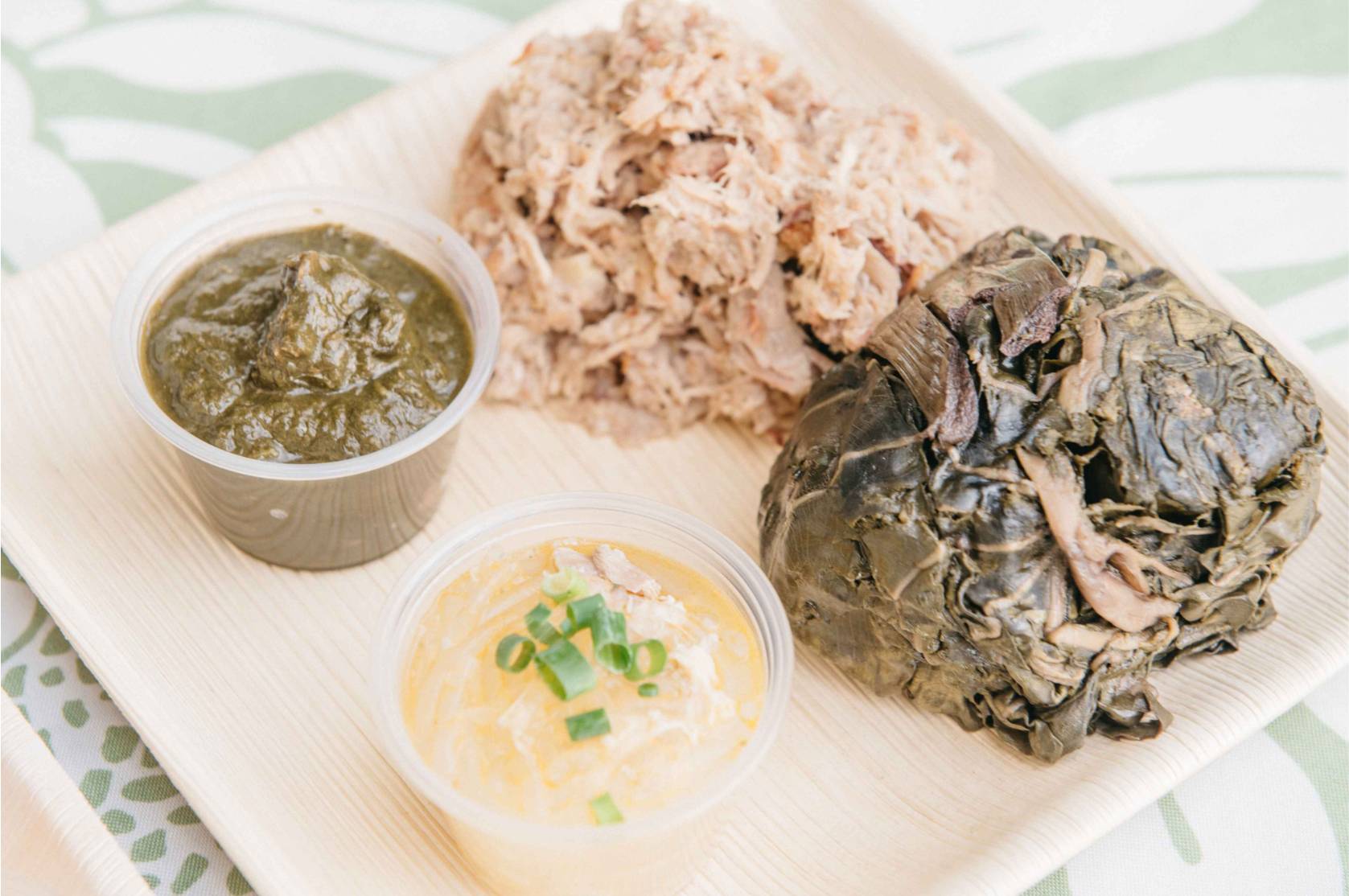
If you have ever wondered what makes lau lau one of Hawaii’s most revered dishes, the answer begins in the valley and ends with patience. This is not fast food. It is seasoned pork shoulder and salted butterfish cocooned inside velvety taro leaves, bound securely in structural ti leaves, and slow-steamed for hours until the meat surrenders and the leaf bundle melts together.
The result is a culinary centerpiece that has anchored Hawaiian gatherings for over 1,500 years, from ancient makahiki harvest rites to Sunday family gatherings (ʻohana dinners). Lau lau represents a direct link to ancestral cooking methods and land stewardship.
At Waiahole Poi Factory, nestled against the Koolau Mountains in Windward Oahu, we honor these slow food traditions every single day. From hand-pounding fresh kalo into paʻiʻai to steaming our famous 24-hour kulolo, our kitchen is dedicated to preserving authentic Native Hawaiian flavors without taking shortcuts. Here is everything you need to know about traditional lau lau, from its ancient origins to how we prepare it today.
What Is Lau Lau? Understanding Hawaii's Iconic Steamed Dish
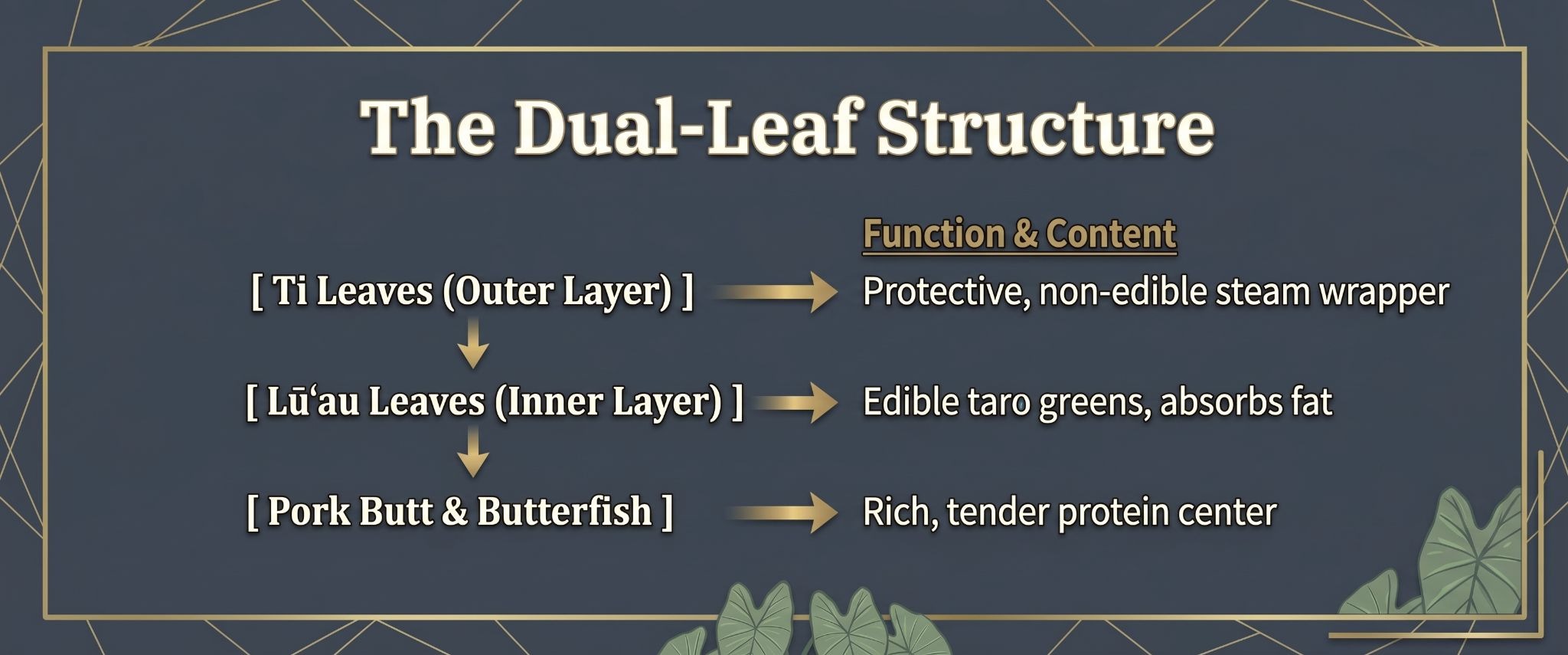
Traditional Hawaiian lau lau consists of fatty pork butt and salted butterfish wrapped in luʻau leaves (the edible greens of the taro plant). This bundle is enveloped in tough ti leaves and steamed for four to six hours. The word lau translates to "leaf" in the Hawaiian language, doubled for emphasis to highlight the central role foliage plays in holding and flavoring the dish.
The outer ti leaves act as a natural moisture seal during steaming. Inside, the tender luʻau leaves absorb the rendered pork fat and sea salt, infusing the pork with an earthy flavor unique to traditional Pacific island cooking.
The Anatomy of a Lau Lau Bundle
Ancient Origins: The Imu Tradition
Ancient Hawaiians originally prepared lau lau in an imu (an underground earth oven heated by red-hot volcanic rocks). Bundles were laid atop damp banana leaves and covered with earth to trap heat for half a day. According to historical accounts from the University of Hawaii’s Kamakakūokalani Center for Hawaiian Studies, taro (kalo) cultivation was introduced by Polynesian voyagers around 400 to 500 CE, making taro-based dishes over 15 centuries old.
Because of the labor involved in cultivating kalo, prepping leaves, and firing an imu, lau lau was historically reserved for major celebrations, royal feasts, and seasonal harvests.
A Quick Note on Terminology: A luʻau is the festive gathering or feast itself. Lau lau is the cherished steamed dish served on the plate.
While modern kitchens often swap imu pits for heavy-duty commercial steamers, the integrity of the process remains unchanged. At Waiahole Poi Factory, originally established as a poi milling facility in 1905, we continue to source local kalo and leaves from the surrounding Waiahole Valley to ensure every bundle carries genuine historical accuracy.
Traditional Lau Lau Ingredients: What Goes Into an Authentic Bundle
Creating genuine Hawaiian lau lau requires strict adherence to authentic island ingredients. Substitutions change both the texture and the cultural character of the dish.
The Pork and Fish Combination
Authentic lau lau leans heavily on pork butt (shoulder). The fat marbling is essential. As the bundle steams, the fat slowly renders, basting the meat from the inside out and tenderizing the greens. Butterfish (black cod) adds a salty, tender contrast. While some modern variations use chicken or beef, fat-rich pork remains the classic choice.
The Critical Taro Greens (ʻau)
Raw taro leaves contain naturally occurring microscopic calcium oxalate crystals. Consuming raw or undercooked taro leaves causes a severe, itchy reaction in the throat. Prolonged steaming over a minimum of 4 hours breaks down these crystals completely, leaving the greens smooth, safe, and savory.
How Lau Lau Is Made: The Traditional Steaming Process
Making lau lau requires patience, methodical handling, and precise wrapping to maintain structural integrity under hours of heat.
1.Prep the Leaves: Removing tough veins and neutralizing oxalates.
Wash fresh luʻau leaves thoroughly under cold water. Trim off tough stems and heavy central ribs so the leaves fold easily without tearing. Wash sturdy ti leaves and remove the stiff central rib from the lower half to ensure flexibility.
2.Layer and Season the Filling: Building the inner edible core.
Lay 4 to 6 overlapping luʻau leaves flat on your workspace. Place 3 to 4 ounces of seasoned pork butt and a piece of salted butterfish in the center. Sprinkle lightly with coarse red Alaea Hawaiian sea salt.
3.Fold the Taro Leaf Packet: Encapsulating proteins in greens.
Tightly fold the edges of the luʻau leaves over the meat, creating a compact, seamless green envelope that completely covers the protein.
4.Seal with Ti Leaves: Creating a waterproof outer shell.
Place 2 to 3 ti leaves in a cross pattern. Position the green taro packet in the center. Fold the ti leaves upward around the taro bundle. Secure the top tightly with natural butcher twine or stripped ti leaf stems to form a steam-tight seal.
5.Slow-Steam to Perfection: 4 to 6 hours of low-and-slow heat.
Arrange bundles inside a large steam pot above boiling water. Cover tightly and steam continuously for 4 to 6 hours, replenishing water as needed. The pork becomes fork-tender, and the luʻau leaves transform into a savory green wrapping.
Lau Lau Across Polynesia: What Makes the Hawaiian Version Unique
Leaf-wrapped steamed dishes exist across the Pacific islands, yet Hawaiian lau lau features distinct differences in preparation and seasoning compared to its regional cousins:
- Hawaiian Lau Lau: Focuses purely on pork, butterfish, salt, and taro greens wrapped in ti leaves. It contains no coconut milk, no onions, and no added spice, allowing the natural flavor of cooked kalo leaves and pork fat to take center stage.
- Samoan Palusami: Uses fresh taro leaves filled with coconut cream and diced onions, wrapped in banana or taro leaves, and baked in an oven.
- Tongan Lū Pulu: Features corned beef or mutton cooked inside taro leaves with coconut cream.
- Cook Islands Rukau: Concentrates on taro leaves simmered in coconut milk without meat, often served as a soothing vegetable side dish.
Hawaii’s version stands apart through its simplicity. By omitting coconut milk or heavy seasonings, Hawaiian lau lau relies entirely on the interplay between salted pork fat, fish, and fresh land-grown kalo leaves.
Nutritional Profile and Health Considerations
Despite its rich taste, lau lau offers substantial nutritional value when integrated into a traditional diet.
As documented in nutritional databases such as USDA FoodData Central, cooked taro leaves are packed with dietary fiber, iron, potassium, and essential vitamins. When paired with poi (a fermented, low-fat starch derived from kalo root), the meal provides balanced complex carbohydrates, protein, and dietary minerals.
How to Enjoy Lau Lau at Waiahole Poi Factory
When dining at our historic Waiahole location, eating lau lau is an unhurried cultural ritual.
- Unwrap the Outer Layer: Cut the twine and peel back the non-edible outer ti leaves.
- Keep the Greens: Do not discard the dark green inner luʻau leaves. They absorb the savory juices of the pork and butterfish during the long steam and are meant to be eaten.
- Pair with Fresh Poi: Take a piece of tender pork and cooked taro leaf, dip it into a spoonful of our fresh, hand-pounded Poi, and enjoy how the clean tartness of kalo cuts through the richness of the meat.
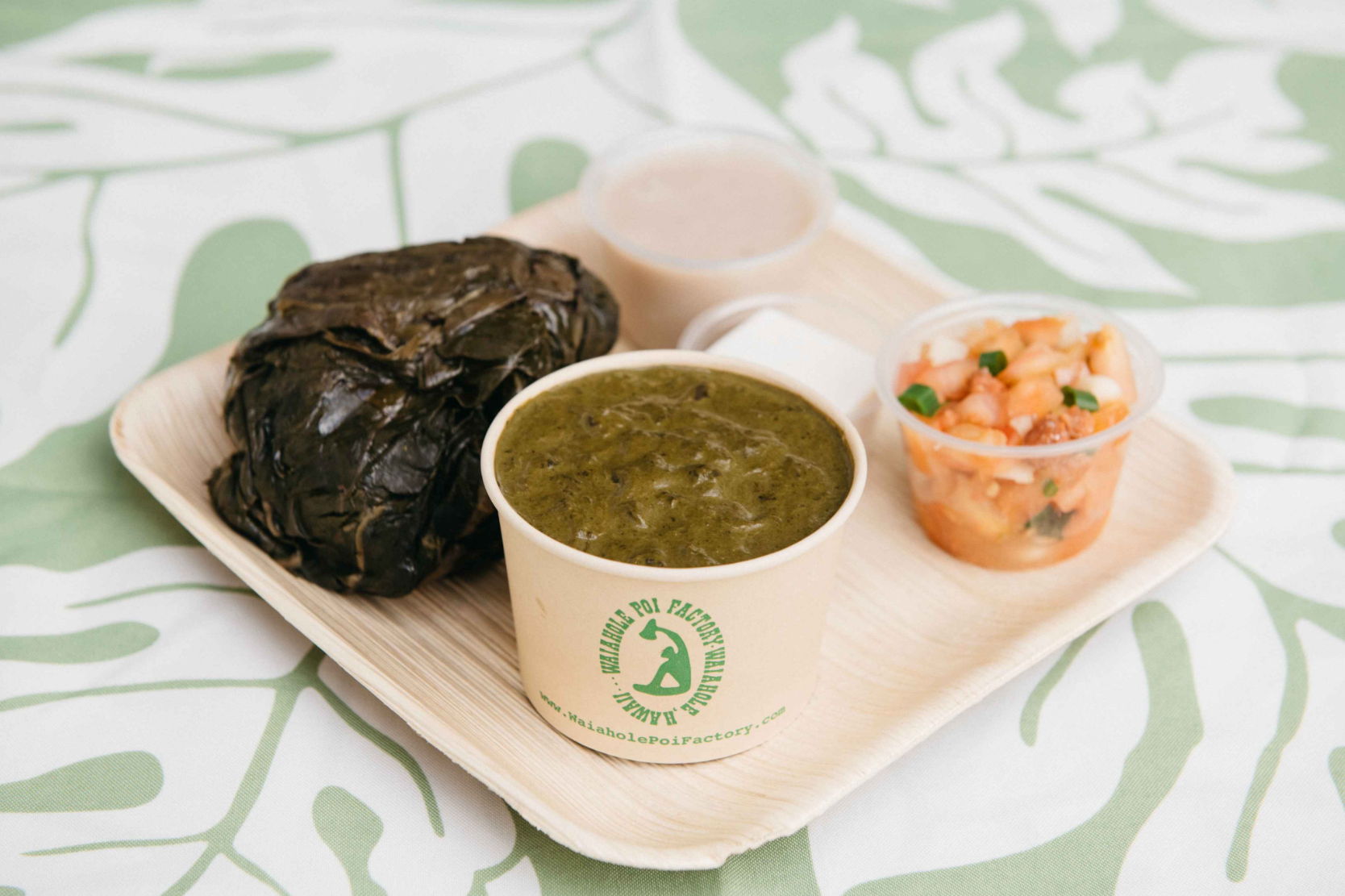
A traditional combination plate featuring Lau Lau, Poi, and sides
Explore Our Authentic Menu Offerings
At Waiahole Poi Factory, lau lau is part of a broader heritage menu designed to bring the traditional taste of Old Hawaii to your plate:
- Combination Plate Meals: Pair your Pork or Beef Lau Lau with our legendary Kalua Pig, savory Squid Luʻau (taro leaves slow-cooked with squid and coconut milk), or Chicken Long Rice.
- Hand-Pounded Poi & Paʻiʻai: Made fresh on-site using traditional stone pōhaku on wooden papa kuʻi ʻai boards.
- Lomi Lomi Salmon: Salted salmon tossed with diced island tomatoes and sweet green onions for a crisp side dish.
- Sweet Lady of Waiahole: Finish your meal with our iconic dessert featuring warm, 24-hour hand-steamed Kulolo topped with rich vanilla ice cream.
Taste True Hawaiian Heritage at Waiahole Poi Factory
While making lau lau at home can be a rewarding weekend project, nothing replaces over a century of community tradition. Since 1905, our location in Waiahole Valley has served as a gathering point for authentic Hawaiian food, hand-pounded kalo, and genuine island hospitality.
Whether you live on Oahu or are visiting the Windward
coast, stop by our historic counter and enjoy hand-steamed lau lau prepared the traditional way.
Experience Authentic Hawaiian Food Today
Visit us at our historic Waiahole Valley location or order your meals online for fast pickup.