
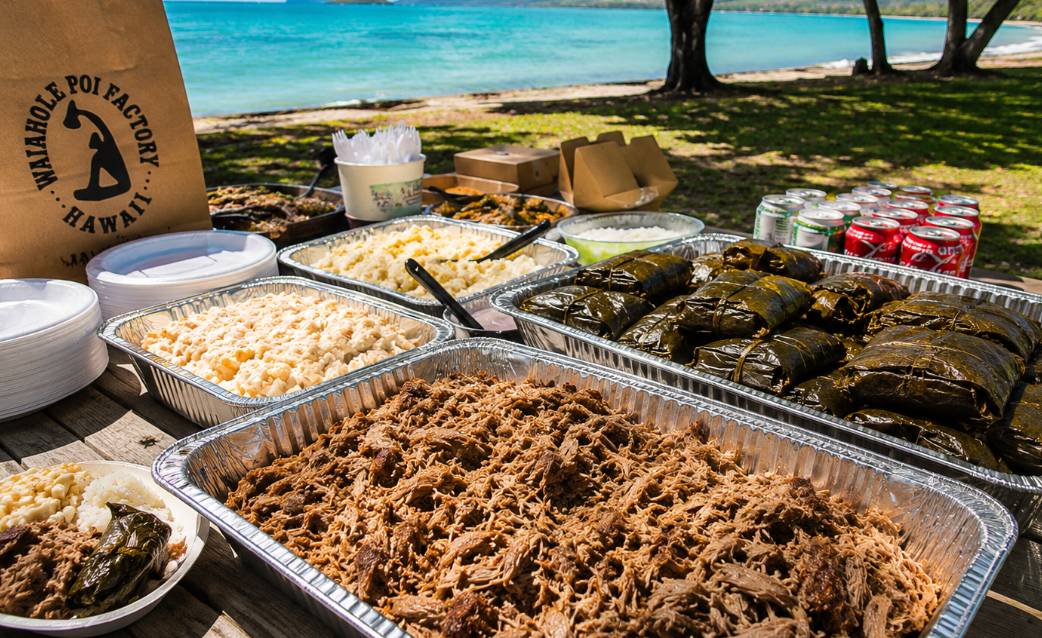
A traditional Hawaiian meal connects you to centuries of culture, community, and care for the land. If your experience of Hawaiian food comes only from resort buffets or mainland poke shops, you are missing the depth found in hand-pounded poi, kalua pig, laulau, and the sides that complete the plate. At Waiahole Poi Factory we prepare these dishes the way our family and community have for generations, using ingredients tied to Waiahole Valley and methods that honor the kalo plant as an elder sibling.
This guide walks through the essential dishes that define an authentic Hawaiian plate, explains why they matter culturally, and shows exactly what we serve at our historic 1905 location and Windward Mall counter.
What Makes a Hawaiian Meal Authentic
The luau feast gives the clearest picture of traditional dining. The word “luau” refers to young taro leaves used in cooking, yet it came to name the communal gatherings that mark births, marriages, and other milestones. These meals strengthen ‘ohana bonds and pass knowledge between generations.
An authentic plate centers on poi as the staple starch. Proteins such as kalua pig or laulau sit beside sides like lomi salmon and chicken long rice. Desserts finish the meal with haupia or kulolo. Pre-contact diets relied heavily on carbohydrates from taro, with fish and other proteins filling the rest. This differs from local-style dishes that blend Japanese, Korean, Filipino, Portuguese, and Chinese influences from the plantation era. Loco moco and spam musubi belong to that later chapter. They are delicious and culturally important, yet they stand apart from the foods Native Hawaiians developed over centuries.
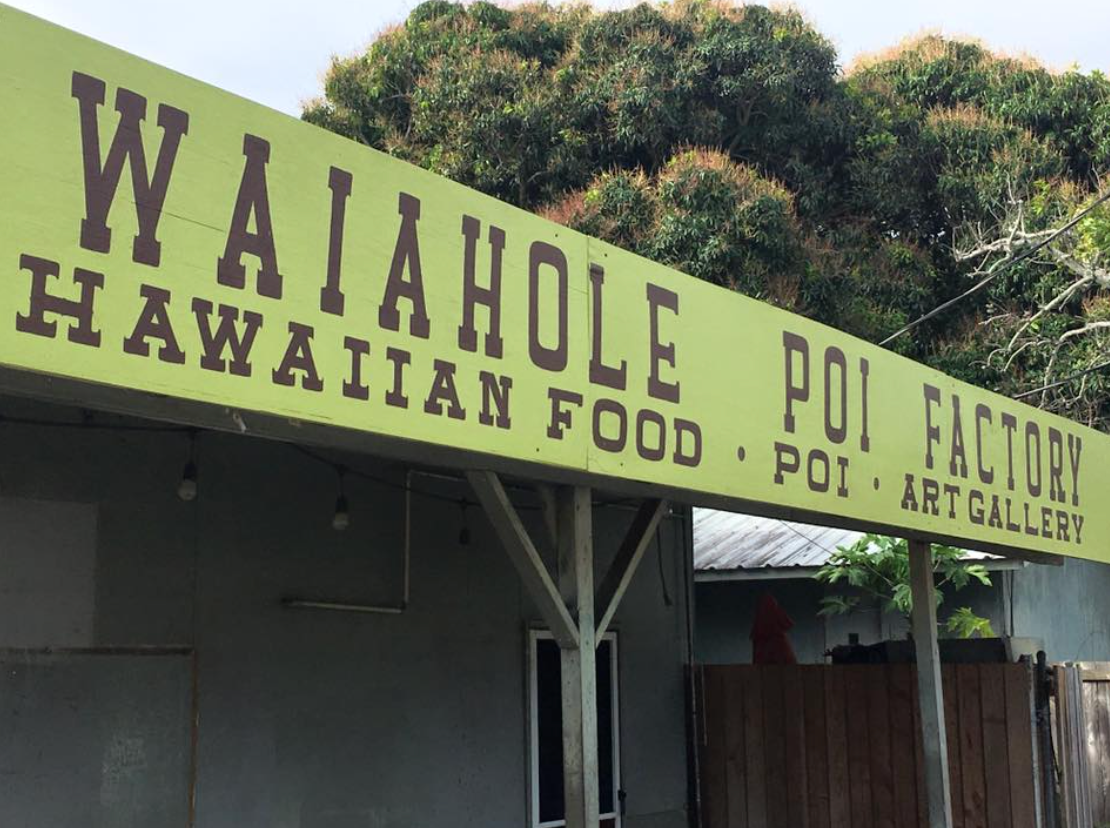
We keep the older traditions alive. Our building has stood in Waiahole Valley since 1905. The Hoe family revived it as a full Hawaiian food operation in 2009 after years as an art gallery and incubator kitchen. We source from local farmers, pound poi by hand on selected days, and steam kulolo for a full day. Every plate carries the motto “Hānai i ka ‘ai, hānai i ke aloha” — nourish with food, nourish with aloha.
Poi: The Foundation of Hawaiian Cuisine
Poi is pounded taro root. In Hawaiian culture it is family. Creation stories describe the kalo plant as the elder brother of the Hawaiian people, which is why it appears at every traditional meal. Taro offers more protein than most root crops and is highly digestible.
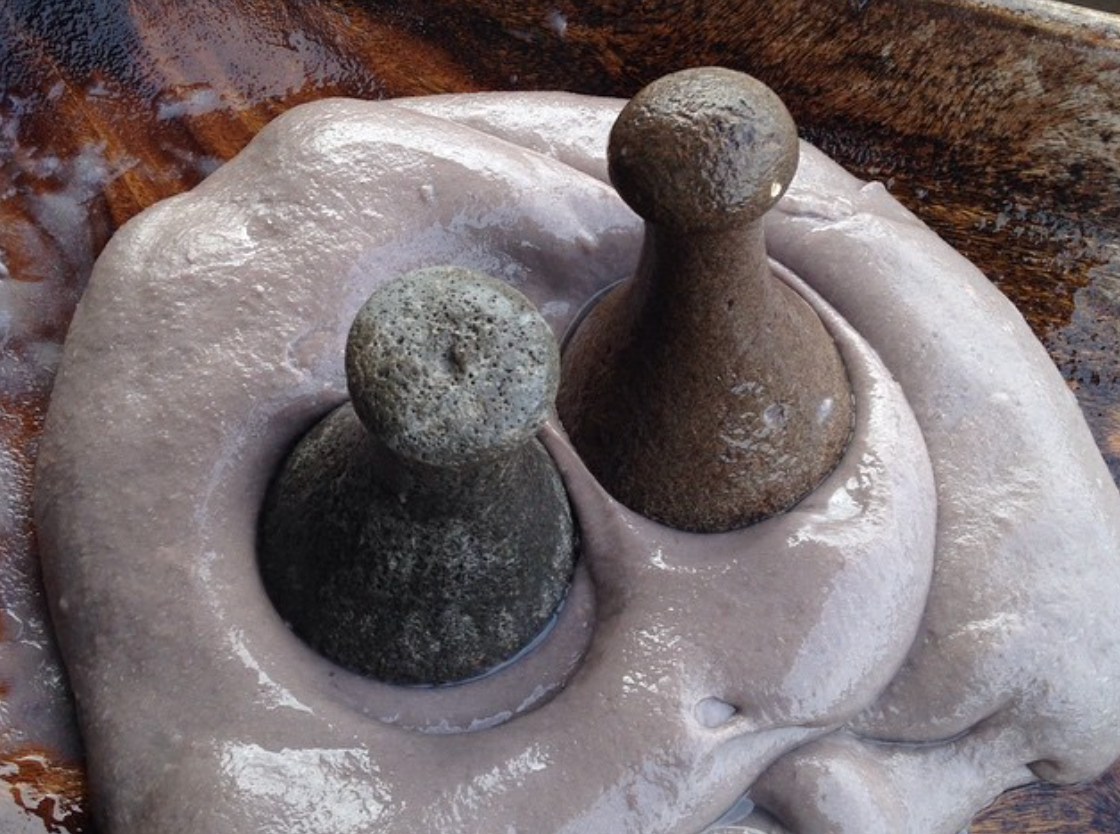
The hand-pounding process matters. We use a papa ku‘i ‘ai (pounding board) and pōhaku ku‘i ‘ai (stone pounder) on Wednesdays and Sundays at the valley location. This creates a silkier texture than machine milling alone. Fresh poi tastes slightly sweet. Over one to three days it ferments naturally through lactic acid bacteria and develops a pleasant tang. That sourness is transformation, not spoilage.
You can eat poi straight, dip kalua pig or lomi salmon into it, or pair it with any plate. We offer both hand-pounded poi (limited batches, first-come basis) and freshly milled poi. Call ahead to confirm pounding days and reserve. The difference is clear: hand-pounded poi stays smooth without the gluey thickness that turns some people away.
Kalua Pig, Laulau, and the Heart of the Plate
Kalua pig gains its smoky flavor from long, slow cooking. We smoke pork butt for twelve hours until it falls apart, then shred and season it only with Hawaiian sea salt. The result is tender and clean, free of heavy sauces.
Laulau takes a different path. Generous pork and a touch of butterfish are wrapped in taro leaves and steamed until the greens turn silky and the meat becomes buttery soft. The leaves add an earthy note that balances the richness.
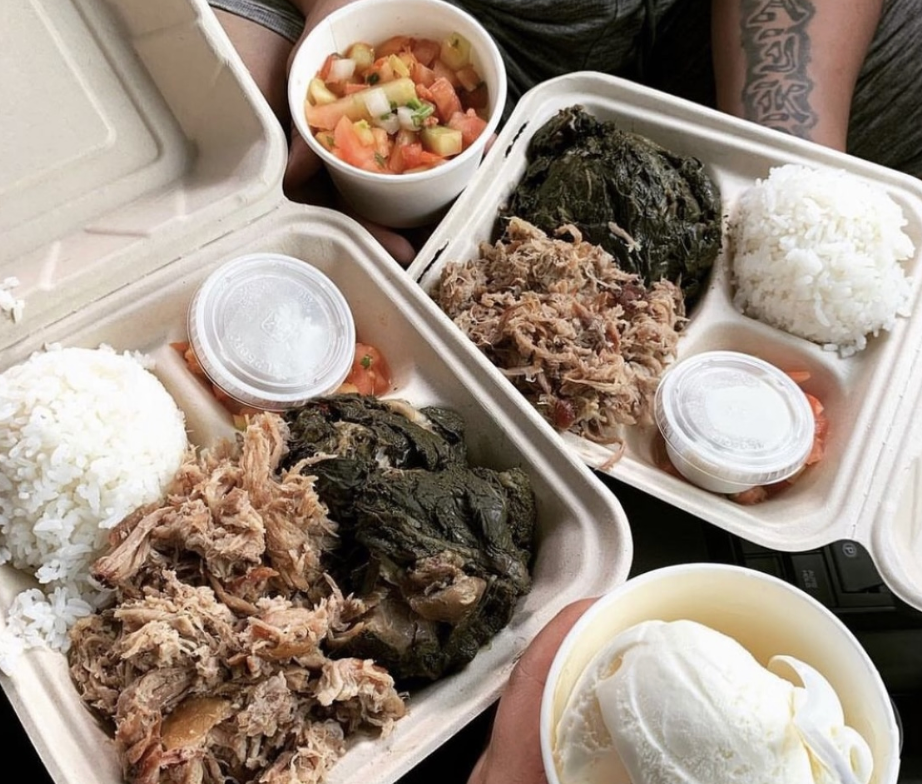
These methods developed for practical reasons. Large quantities could feed gatherings. Leaf wrapping protected the food and added flavor before refrigeration. At Waiahole Poi Factory the same principles guide every order. Our Kanaka Nui plate, also called “the works,” brings laulau, kalua pig, chicken long rice, your choice of beef luau or squid luau, rice or poi, lomi salmon, and haupia together on one tray.
Menu Highlights at a Glance
Combo plates let you pick two entrees. Single plates offer one. Bowls pair one entree with rice only. All plates include lomi salmon and haupia unless noted.
Essential Sides That Complete the Plate
Lomi salmon provides a cooling contrast. Salt-cured salmon, diced tomatoes, and onions are mixed by hand — “lomi” means to massage. The bright acidity cuts through richer meats.
Chicken long rice shows how Hawaiian cuisine absorbed outside influences while staying true to itself. Glass noodles cook with chicken in a clean ginger broth. It offers comfort without heaviness.
Ho‘io salad adds a fresh, vegan-friendly option (ask to hold the shrimp). Fern shoots, onions, tomatoes, and a light sweet-soy ginger dressing round out the plate.
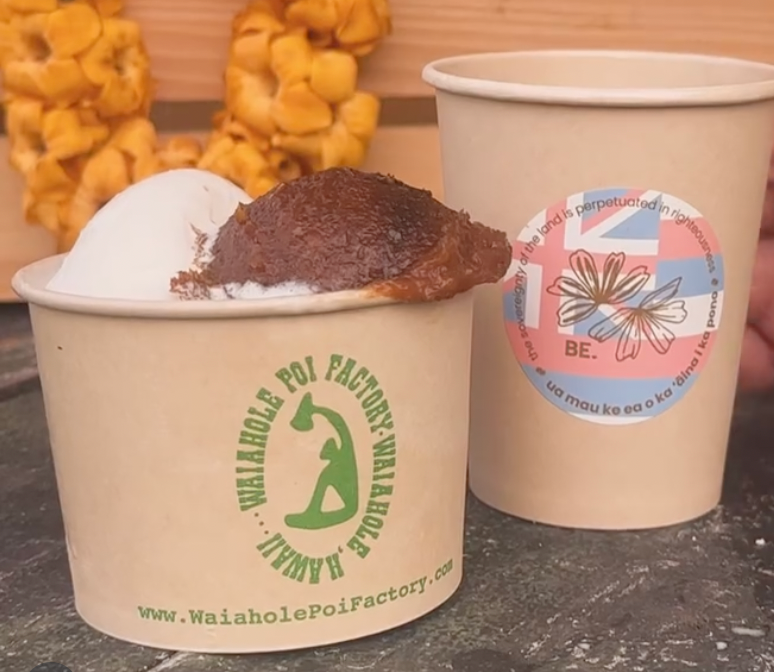
For dessert we turn to the same taro plant. Haupia is a light coconut milk pudding with a custard-like set. Kulolo is denser and more demanding. We steam grated taro root, coconut milk, and sugar for up to twenty-four hours. The long heat caramelizes the sugars into a deep mahogany color and creates a fudgy, slightly chewy texture. Our signature Sweet Lady of Waiahole places a warm slice of that kulolo under a scoop of haupia ice cream. The hot-and-cold contrast melts into a rich coconut sauce. A Tahitian Sweet Lady version uses warm banana po‘e instead.
Why These Traditions Still Matter
The ahupua‘a system once divided the islands into mountain-to-sea sections so every community could reach all ecological zones. Taro lo‘i produced high yields through careful water management and seasonal care. Today far less of Hawaii’s food is grown locally. Supporting Native Hawaiian-owned businesses that keep traditional preparation methods alive helps protect knowledge that sustained the islands for centuries.
When you choose hand-pounded poi, twelve-hour smoked kalua pig, or twenty-four-hour steamed kulolo, you are choosing the slower path that preserves flavor and culture. We source from Waiahole Valley farmers and prepare everything on site. The difference shows in every bite.
Experiencing Authentic Hawaiian Meals with Us
Look for smooth, silky poi rather than gluey texture. Kalua pig should taste of wood smoke and salt, not liquid smoke. Kulolo should be dense and slightly chewy from the long steam.
We operate two locations. The original Waiahole Valley site keeps the historic building and the outdoor picnic tables. Hand-pounded poi is available there on Wednesdays and Sundays while supplies last. The Windward Mall food-court counter offers the same plates with longer hours, including Tuesdays. Both locations serve the full menu of plates, sides, and desserts. Catering is available for gatherings of ten to more than one hundred people with advance notice.
When you sit down to a traditional Hawaiian meal here, you participate in practices that predate modern Hawaii by centuries. The poi connects you to creation stories. The kalua pig reflects communal cooking. The locally grown ingredients honor the land. Every order helps keep these methods alive for the next generation.
Ready to Taste the Real Thing?
Order a Kanaka Nui plate, a simple bowl of kalua pig with poi, or a Sweet Lady of Waiahole for dessert. Visit the historic valley location or the Windward Mall counter, or order online for pickup. Call ahead for hand-pounded poi or catering. We look forward to nourishing you with food and aloha.
Order online or stop by either location. Mahalo for supporting traditional Hawaiian food.