
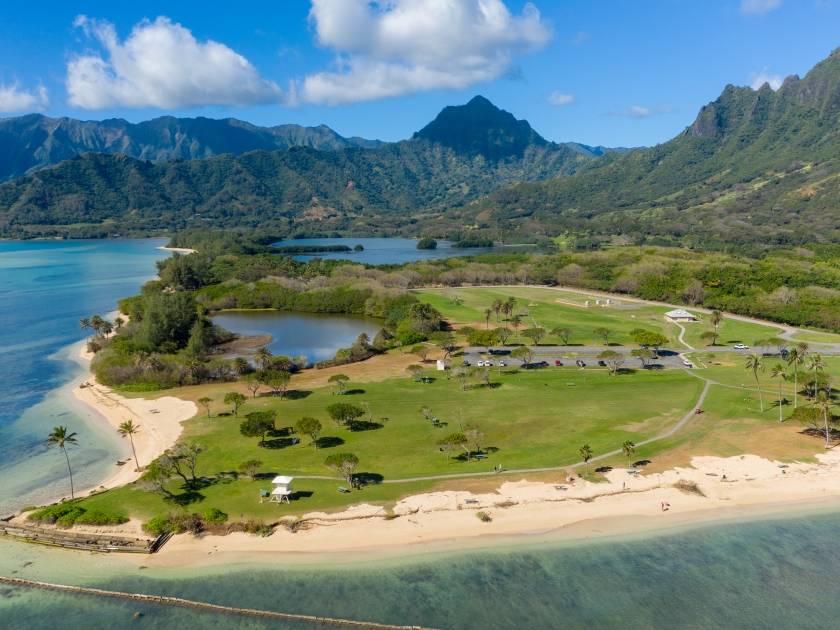
A proper Windward Oʻahu day trip itinerary requires an early morning start at Kualoa Regional Park followed by a cultural lunch stop right here at Waiāhole Poi Factory. We designed this specific route to connect you directly with the genuine history of our island and the agricultural roots of the Kāneʻohe region.
Morning Views at Kualoa Regional Park and Mokoliʻi
Start your morning driving up the coast on Kamehameha Highway to Kualoa Regional Park. The focal point of this coastal stretch is Mokoliʻi. This small island holds significant importance in Native Hawaiian mythology. According to tradition, the island represents the tail of a giant lizard defeated by the goddess Hiʻiaka. Visitors frequently stop here for photography or quiet reflection by the water. The Hawaii State Parks division manages this 153-acre protected area.
You will notice the dramatic ridges of the Koʻolau mountains rising strictly behind you. These mountains trap the trade wind clouds to provide the vital rainfall needed for the ahupuaʻa (traditional land division). This constant flow of fresh water feeds the valleys below. Our local farmers rely entirely on these ancient waterways to cultivate the traditional crops we serve.
The Deep Roots of Waiāhole Valley
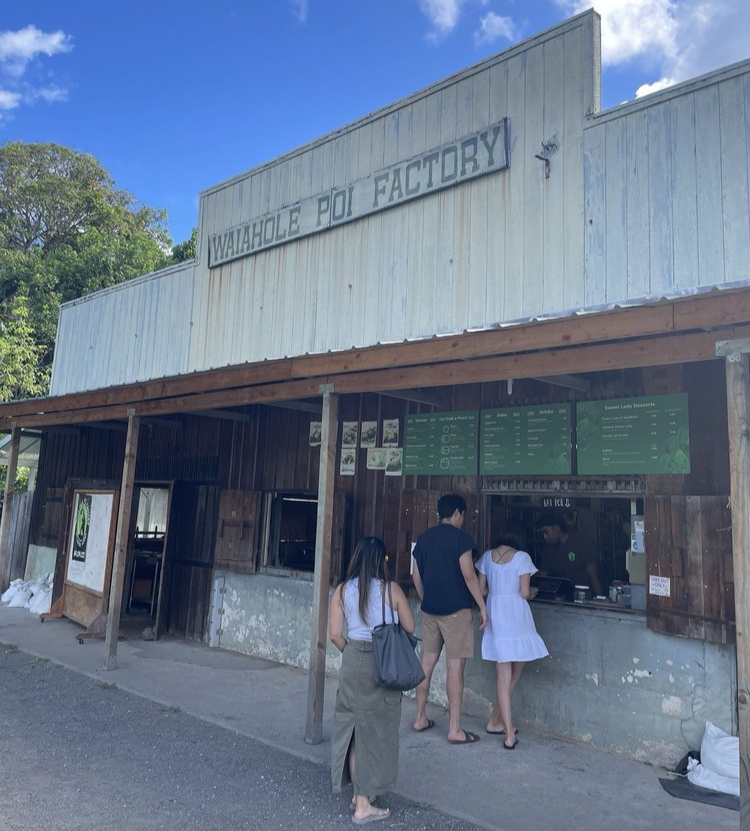
Before you arrive at our storefront, it helps to understand the physical ground you are standing on. Waiāhole Valley possesses a rich agricultural history rooted in that exact ahupuaʻa system. This native land division method ensured natural resources flowed sustainably from the mountain peaks directly down to the ocean. The fresh water from the Koʻolau streams historically fed the expansive loʻi kalo (taro patches) cultivated by early Hawaiians.
Our building stands as a direct physical link to that era. Established over a century ago in 1904, the original structure operated as an industrial poi factory. It provided a centralized location for valley farmers to process their heavy root harvests. Our family restored the space decades later to its original culinary purpose. We are incredibly proud to maintain this historic anchor in Kāneʻohe. By visiting our original valley location, you are stepping into a continuing legacy of Native Hawaiian agriculture.
Midday Nourishment at Waiāhole Poi Factory
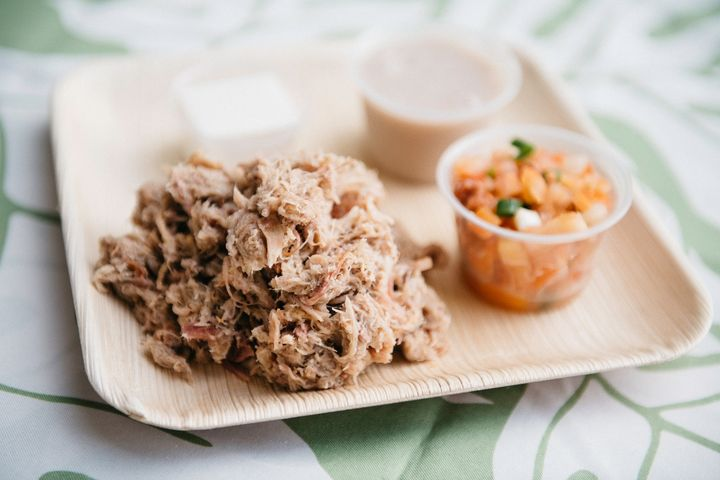
Single Plate: Kalua Pig, Lomi Salmon, Poi
By late morning, you will need substantial fuel. Our kitchen prepares authentic lūʻau staples daily to feed our community. When you sit down to eat, you are partaking in complex culinary traditions. Take our Squid Lūʻau for example. This dish requires slow-cooking mature taro leaves until they break down completely into a rich stew. We combine the leaves with coconut milk to create a dense flavor profile. The natural sweetness of the coconut balances the earthy notes of the leaves perfectly. We then fold in tender pieces of squid for added texture.
Our poi preparation is equally meticulous. We utilize the traditional hand-pounding method on designated production days. Our practitioners strike the steamed kalo root repeatedly with a pōhaku kuʻi ʻai (stone pestle). They add fresh water gradually until the paste reaches the exact required consistency. Fresh poi features a highly sweet profile. If you let it sit for a few days, natural fermentation occurs. This scientific process introduces a tanginess that local residents heavily favor. That specific acidity cuts right through the richness of our slow-roasted meats.
Step-by-Step: Constructing Your Traditional Hawaiian Plate
Building a balanced plate requires understanding how different flavor profiles interact. We recommend following this specific sequence when ordering from our kitchen menu to maximize your experience.
- Select Your Base Starch: Choose fresh poi to experience the subtle natural fermentation of the kalo root. The mild sourness contrasts heavy dishes beautifully.
- Add Your Primary Protein: Our Kālua Pig offers a deep smoky profile. Alternatively, our Laulau provides a rich earthy flavor created by steaming seasoned pork encased tightly in taro leaves.
- Incorporate a Palate Cleanser: Lomi Salmon mixes salted fish with fresh tomatoes. The bright acidity of this side dish resets your taste buds between heavy bites.
- Finish with the Sweet Lady: End your meal with our signature dessert featuring warm kulolo paired with cold haupia (coconut) ice cream.
Choosing Your Afternoon Activity
After lunch, you have several excellent options to complete your itinerary. We created a matrix to help you decide which nearby location best fits your group dynamic.
Option 1: Byodo-In Temple Exploration
Located safely inside the Valley of the Temples Memorial Park, the Byodo-In Temple is a stunning replica of a 900-year-old Buddhist temple in Japan. The founders built this structure entirely without nails in 1968. They established it to commemorate the centennial anniversary of the first Japanese immigrants arriving in Hawaii. The sheer cliffs of the Koʻolau range serve as a dramatic background setting. You can ring the sacred bon-sho bell before walking through the meticulously manicured grounds. The large koi ponds provide a deeply peaceful setting to digest your heavy lunch.
Option 2: Kualoa Ranch Agricultural Tours
If you prefer active engagement, turning back north toward Kualoa Ranch offers excellent guided experiences. This 4,000-acre private nature reserve operates as a massive working cattle ranch. They also host extensive agricultural tours focusing on ancient fishponds. Learning about their dedicated land stewardship aligns perfectly with the food principles we practice at our factory.
Option 3: Hoʻomaluhia Botanical Garden
[Image Placeholder: A lush green landscape shot of Hoʻomaluhia Botanical Garden with a calm lake reflecting the jagged Koʻolau mountain range]
If you choose Hoʻomaluhia for your afternoon session, you will drive straight into 400 acres of protected land. The name itself translates to "to make a place of peace and tranquility." The city established this area in 1982 strictly for municipal flood protection. It eventually evolved into an expansive preservation zone for plants from major tropical regions around the world.
Walking through these gardens connects you directly to the concept of mālama ʻāina (caring for the land). At Waiāhole Poi Factory, our entire mission relies completely on healthy soil. We source our kalo directly from local farmers who practice sustainable agriculture daily. Organizations like the Bishop Museum heavily document the critical importance of these indigenous farming techniques for future generations.
Learning about the local flora provides vital context for the food you just consumed. The large elephant-ear leaves you see growing near the water features are often specific varieties of kalo. The corm (underground stem) of this plant is the singular ingredient in our traditional poi. Visiting the botanical garden allows you to see these exact plants thriving in their natural habitat.
Alternative Evening Plans in Kāneʻohe
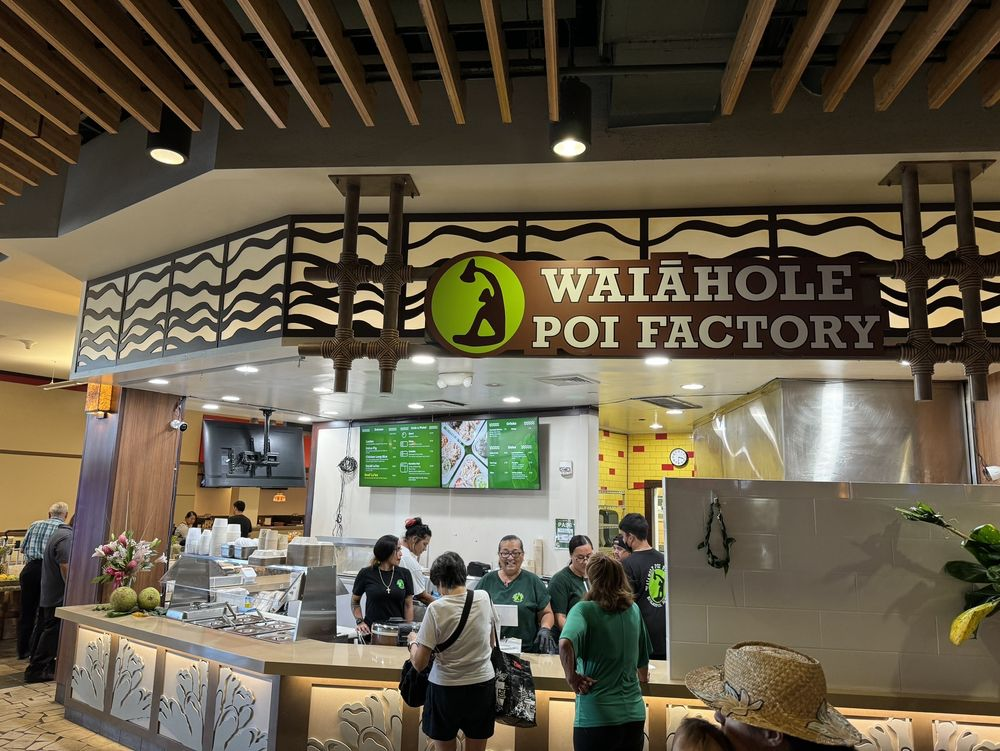
Waiahole Poi Factory: Windward Mall Food Court
Sometimes a Windward Oʻahu day trip itinerary runs long. If your afternoon hiking pushes past our 6:00 PM valley closure time, you do not have to miss out on dinner. We operate a second service counter at the Windward Mall food court. This extension allows us to serve the community during convenient evening hours. You get the exact same authentic recipes with the added benefit of ample mall parking. We transport our slow-cooked meats directly from the valley kitchen to ensure absolute quality consistency.
The Journey Back Over the Koʻolau Range
Your Windward adventure concludes with a drive back toward Honolulu via the Pali Highway. The Nuʻuanu Pali Lookout offers a final sweeping view of the exact coastline you just traveled. The winds at this high elevation are notoriously fierce. The historical significance of this mountain pass is immense because King Kamehameha I fought the pivotal Battle of Nuʻuanu here in 1795.
Taking this route gives you a profound appreciation for the geographic isolation of the Windward side. We cherish our location in Kāneʻohe because it keeps us insulated from heavy urbanization. Our focus remains entirely on community nourishment. "Hānai i ka ʻai, hānai i ke aloha" guides every single meal we serve. We want you to feel that deep connection to our history during your visit.
Ready to taste authentic Hawaiian culture? Secure your meal ahead of time by placing a convenient order for pickup.