
.jpg)
Aloha! If you’ve traveled to Oʻahu seeking authentic Hawaiian experiences, chances are you’ve encountered Hawaiian laulau—that perfectly steamed bundle of savory pork, often paired with a sliver of butterfish, all enveloped in earthy taro leaves. One bite reveals why this dish has endured for generations: the meat is impossibly tender, infused with subtle flavors from the leaves and slow-cooked moisture.
At Waiahole Poi Factory, we honor this tradition daily. Whether you’re a first-time visitor exploring the North Shore drive or a local craving comfort food near town, laulau connects you to Hawaiʻi’s deep culinary roots. This guide explores the history, preparation, and enduring appeal of Hawaiian laulau, with insights into why its ancient steaming method produces such remarkable tenderness.
The Roots of Hawaiian Laulau: A Polynesian Legacy
Hawaiian laulau traces back over a thousand years to the Polynesian voyagers who settled these islands. They brought taro (kalo), pigs, and knowledge of earth ovens called imu. The word "laulau" literally means "leaf leaf," referring to the taro leaves (luau leaves) and outer ti leaves used for wrapping.
In ancient Hawaiʻi, food was more than sustenance—it was tied to community, ceremony, and respect for the ʻāina (land). Laulau was prepared for gatherings, often alongside kalua pig cooked in the imu. The method preserved nutrients and created tender textures without modern tools, relying on natural insulation and slow, moist heat.
This tradition reflects Hawaiian ingenuity. Without metal pots, cooks used leaves as natural wrappers and steam as the cooking medium. Taro leaves, rich in vitamins and minerals, not only protect the filling but become edible and flavorful after cooking—turning a simple wrap into a complete, nourishing package.
Today, families still prepare laulau for special occasions, but places like Waiahole Poi Factory make it accessible every day, using time-honored techniques adapted for modern kitchens while preserving the soul of the dish.
Why Slow Steaming Creates Incredibly Tender Meat
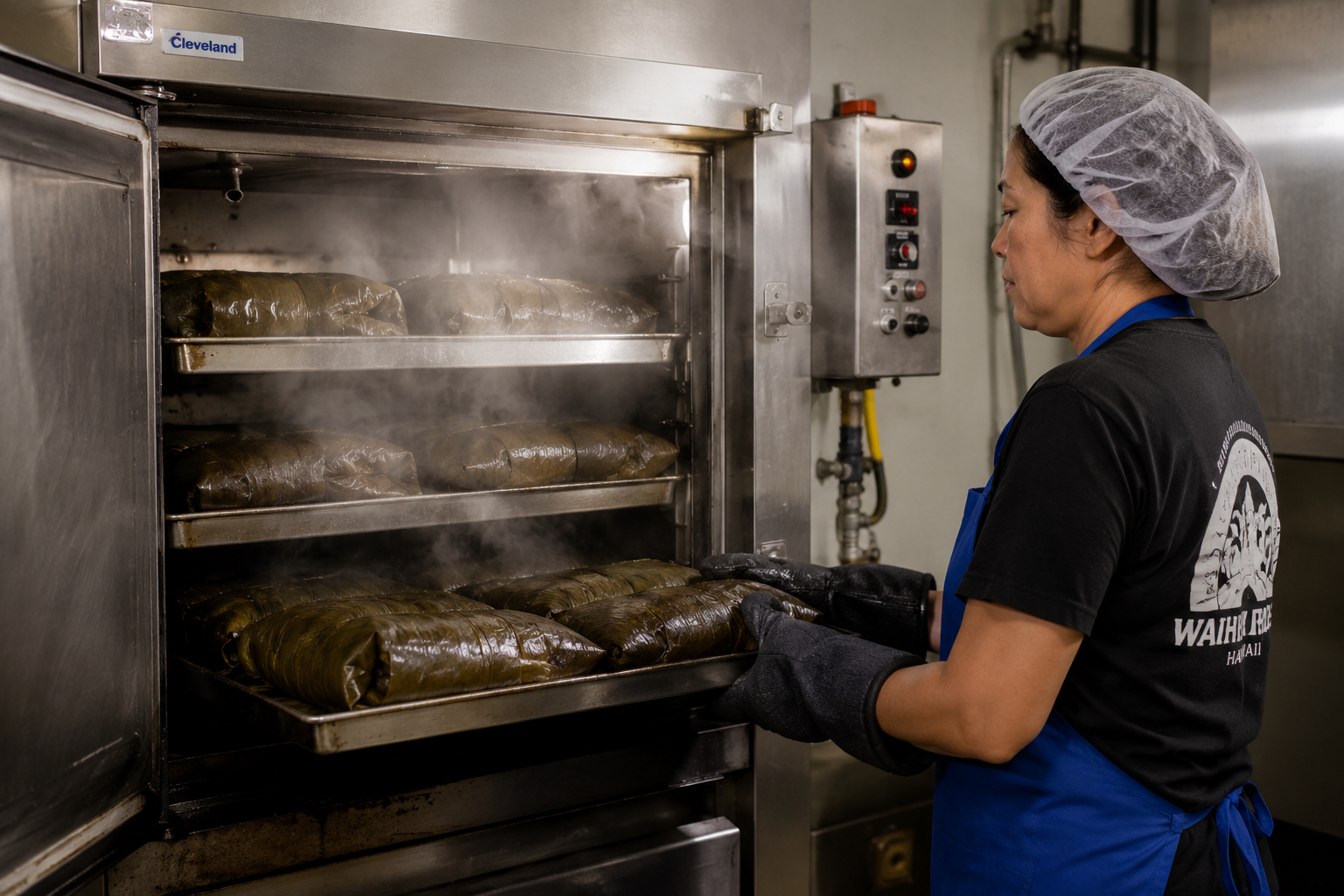
The magic of Hawaiian laulau lies in its cooking method. Wrapping ingredients tightly in taro and ti leaves traps steam and juices, allowing low, slow cooking that breaks down tough connective tissues in pork shoulder or belly without drying out the meat.
Traditional Imu Cooking
In the classic imu, hot volcanic rocks heat a pit lined with banana stumps and leaves. Bundles are placed inside, covered, and left for 4–8 hours (or longer for large feasts). The even, moist heat gently tenderizes the meat while infusing subtle smoky and earthy notes from the leaves and environment.
This method mirrors modern sous-vide or slow-cooking but predates them by centuries. The leaves act as a barrier, preventing direct contact with intense heat and allowing collagen in the pork to convert to gelatin—resulting in that signature fork-tender texture.
Modern Adaptations at Waiahole
We steam our laulau for hours in controlled environments to replicate the imu’s moist heat. The result? Juicy pork that practically melts, paired with butterfish that adds a delicate salinity and richness. The taro leaves absorb flavors and soften into a silky component of the dish.
This slow process ensures food safety while maximizing tenderness—far superior to quick grilling or frying, which can toughen proteins.
Inside a Traditional Hawaiian Laulau: Ingredients and Assembly
A classic Hawaiian laulau features simple, high-quality components that shine through patient cooking:
- Pork shoulder or belly: Fatty cuts that render beautifully during steaming.
- Salted butterfish (often black cod): Provides umami and balances the richness.
- Young taro leaves: Multiple layers wrap the filling; they must be cooked thoroughly to neutralize natural oxalates.
- Ti leaves: Outer wrapper for structure and subtle aroma (not eaten).
- Hawaiian sea salt: The primary seasoning, highlighting natural flavors.
Assembly Steps (simplified for understanding):
- Season pork chunks with sea salt.
- Layer taro leaves flat, place pork and butterfish in the center.
- Fold into a tight bundle.
- Wrap securely in ti leaves and tie.
- Steam slowly until done.
The patience in preparation rewards every bite with balanced flavors and textures.
Hawaiian Laulau Nutrition and Cultural Significance
Beyond tenderness, laulau offers nutritional benefits. Taro leaves provide fiber, vitamins A and C, and iron. Pork supplies protein, while the steaming method retains more nutrients than high-heat cooking. Paired with poi (taro root), it forms a complete, grounding meal rooted in the Hawaiian diet.
Culturally, sharing laulau fosters ohana (family). It appears at lūʻau feasts, family gatherings, and everyday plates, symbolizing abundance and connection to ancestors.
Comparing Laulau to Other Hawaiian Favorites
This table highlights laulau’s unique steaming method, which excels at tenderness while keeping the dish light yet satisfying.
Experiencing Authentic Hawaiian Laulau on Oʻahu
For a scenic, road-trip adventure through lush Waiahole Valley, visit our original location at Waiahole Poi Factory. Surrounded by mountains and taro fields, it offers the perfect setting to savor Hawaiian laulau amid natural beauty—ideal for tourists and food enthusiasts wanting an immersive experience.
For convenience in town, especially for weeknight dinners or office catering, head to our Windward Mall location. Quick service and ample seating make it easy to enjoy a plate without the drive, while still delivering the same traditional quality.
Both spots feature our traditional Hawaiian food menu, with generous portions of laulau alongside kalua pig, squid luau, and more. Many visitors build the ultimate combo: laulau with poi and lomi salmon.
Pairings and Serving Suggestions
Hawaiian laulau shines alongside classics:
- Poi: The perfect neutral base to scoop up the savory juices.
- Lomi lomi salmon: Fresh, cooling contrast.
- Haupia: Coconut pudding for a sweet finish.
For home cooks inspired by your visit, try adapting the method with a slow cooker or steamer—though nothing quite matches the real deal from experts preserving the tradition.
The Timeless Appeal of Hawaiian Laulau
From ancient imu pits to modern tables, the slow-steaming method behind Hawaiian laulau continues to deliver incredible tenderness and flavor. It’s more than food; it’s a living connection to Hawaiʻi’s past, crafted with respect for ingredients and ancestors.
Next time you’re on Oʻahu, make time for this beloved dish. Whether in the valley or at the mall, Waiahole Poi Factory welcomes you with open arms and plates full of tradition.
Order online for pickup or catering through our Toast Online Ordering Portal and bring authentic Hawaiian laulau to your next gathering: Order Now via Toast.
Mahalo for reading and for supporting local Hawaiian food traditions. We look forward to serving you soon!