
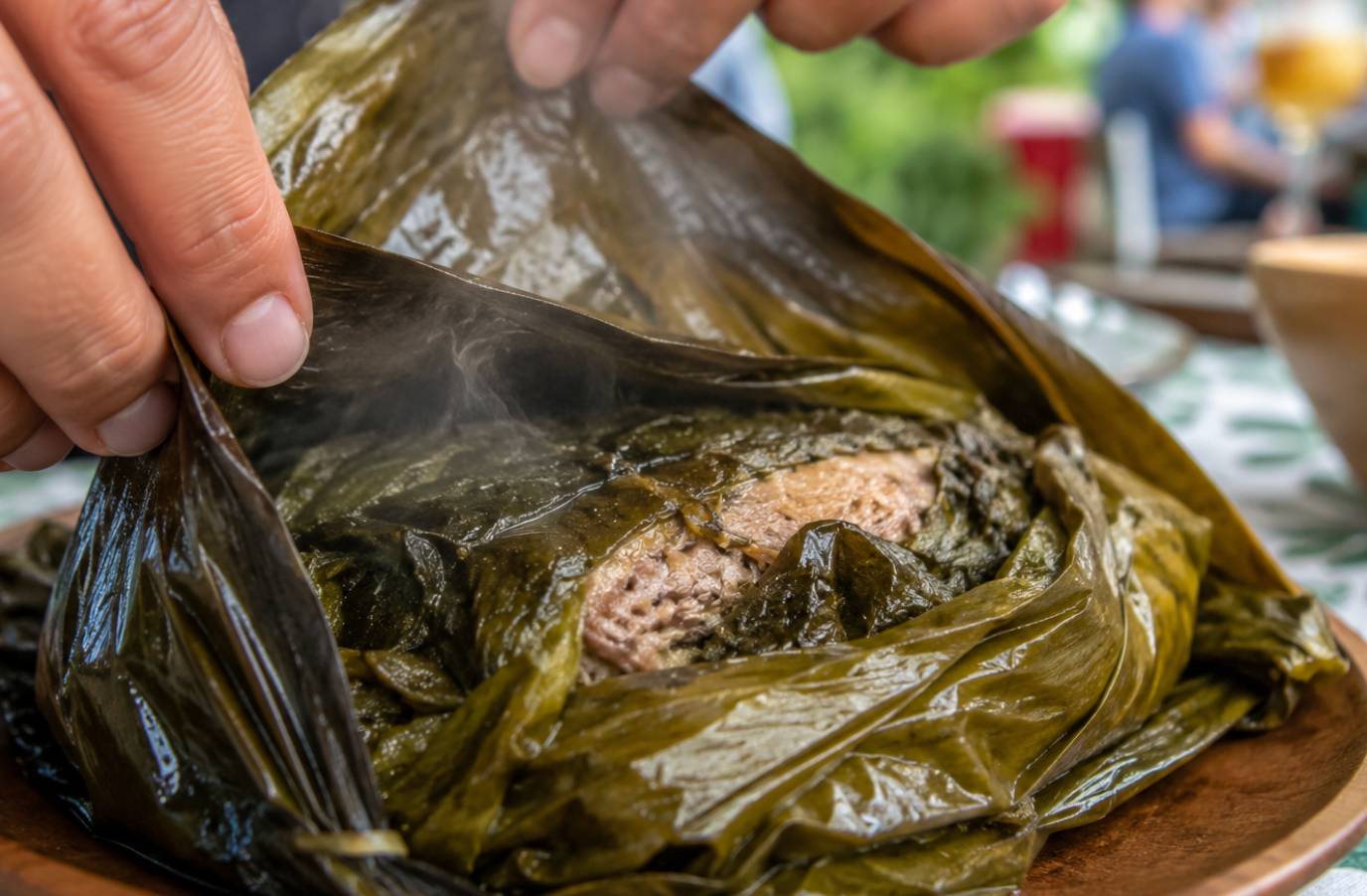
If you’ve ever wondered what makes laulau different from other Hawaiian dishes—or whether those leaves are actually edible—you’re not alone. This traditional steamed bundle of pork, butterfish, and taro leaves carries centuries of Hawaiian cooking wisdom. Understanding how it’s made shows why shortcuts never work. At Waiahole Poi Factory, rooted in a building constructed in 1905 in Waiahole Valley and revived by the Native Hawaiian Hoe family, we still prepare laulau the patient, respectful way: hand-wrapped and steamed for hours so the meat falls apart and the greens turn silky.
Here’s what you need to know about preparing, serving, and truly appreciating this iconic island dish—and how it fits into the full traditional plates we serve every day.
What Makes Laulau Distinctly Hawaiian
Laulau is pork and a touch of butterfish wrapped in taro (lu‘au) leaves, then enclosed in ti leaves and steamed for three to four hours. The name comes from “lau,” the Hawaiian word for leaf—laulau literally means “leaf leaf,” referring to the layered wrapping that creates a self-basting package.
Ancient Hawaiians cooked laulau in underground imu ovens, a method dating back to pre-1778 Polynesian settlers. The process turned meal preparation into a community event. Families gathered to wrap bundles together, embodying the concept of ‘ohana. The dish itself became a vehicle for passing techniques across generations.
This continuity matters. The traditional method demonstrates Hawaiian sustainability: the taro corm becomes poi, the leaves become laulau, and nothing goes to waste. When you eat laulau from Waiahole Poi Factory—where we also hand-pound poi and serve other luau classics—you’re tasting a preparation that predates statehood by centuries. That continuity shows up in the texture: properly made laulau has a richness that cannot be rushed.
Why These Specific Ingredients Matter
The protein combination is deliberate. Traditional laulau uses a generous amount of pork with a touch of butterfish. The fish’s fat melts during steaming and bastes the pork from the inside. Pork shoulder or similar cuts provide enough fat (around 20–30%) to stay moist through hours of heat.
Taro leaves—called lu‘au leaves—are non-negotiable for authenticity. Raw taro leaves contain calcium oxalate crystals that cause severe mouth irritation, which is why they must cook thoroughly (at least 45 minutes, ideally the full three-plus hours). Once cooked, they become safe, nutritious, and delicious—richer in protein and certain vitamins than spinach, with a mineral, slightly bitter flavor that balances the rich meat.
Ti leaves form the outer wrapper. They are not eaten, but they are more than packaging. They impart a subtle earthy note and keep the bundle intact. Hawaiian sea salt is typically the only seasoning; its mineral profile differs enough from table salt that the difference is noticeable.
At Waiahole Poi Factory we source with care, supporting local farmers and using ingredients that belong to the same ecosystem that shaped the original recipes. That connection is the difference between food that feels rooted and substitutes adapted after the fact.
How Traditional Steaming Creates the Right Texture
Start by removing the thick stems from taro leaves—the stems stay tough and bitter even after cooking. Season the pork and fish lightly with Hawaiian sea salt, then layer three to four taro leaves with the protein in the center. Fold the leaves over to create a tight package, then wrap the whole bundle in ti leaves with a solid overlap. Secure with kitchen twine.
The traditional method requires three to four hours of steaming. This is not simply about cooking the meat through—pork reaches safe temperature much sooner. The extended time breaks down collagen into gelatin, creating the falling-apart texture that defines good laulau. There is no reliable shortcut.
After cooking, let the bundles rest for 10–15 minutes so the juices redistribute. Cutting in too early means those juices end up on the plate instead of in the meat.
The same principle of time and gentle heat that we apply to our kulolo (steamed for a full 24 hours) scales to laulau: patience develops complexity that high heat alone cannot.
What to Eat and What to Unwrap
Remove the ti leaves entirely before eating—they are tough, fibrous, and meant only as wrappers. The taro leaves underneath are fully edible once cooked. They have a texture similar to very tender spinach and a slightly bitter, mineral flavor that balances the rich pork and fish.
Properly cooked laulau should be pulled apart with a fork. The pork will be tender enough to shred or fall into soft chunks, the fish will flake, and the taro leaves will be soft with no trace of the scratchy irritation raw leaves cause. If the leaves still feel rough on your tongue, they need more time.
Serve laulau with poi and rice. The starchy sides offset the fatty protein. When you eat at a place that makes hand-pounded poi on-site, the pairing shows how the same plant—taro—creates two completely different textures depending on which part you use and how you prepare it. Lomi salmon on the side adds bright acidity that cuts through the richness. Many of our guests also enjoy pairing laulau with squid luau or beef luau for an even deeper taro-leaf experience.
Laulau vs. Luau: The Terms Are Not Interchangeable
Laulau is the food—the wrapped bundle you unwrap and eat. Luau has several meanings: young taro leaves, the feast itself, or a separate dish made with taro leaves and coconut cream (our Squid Lu‘au and Beef Lu‘au). The confusion exists because laulau is often served at luau celebrations, and both words share the root “lau” (leaf).
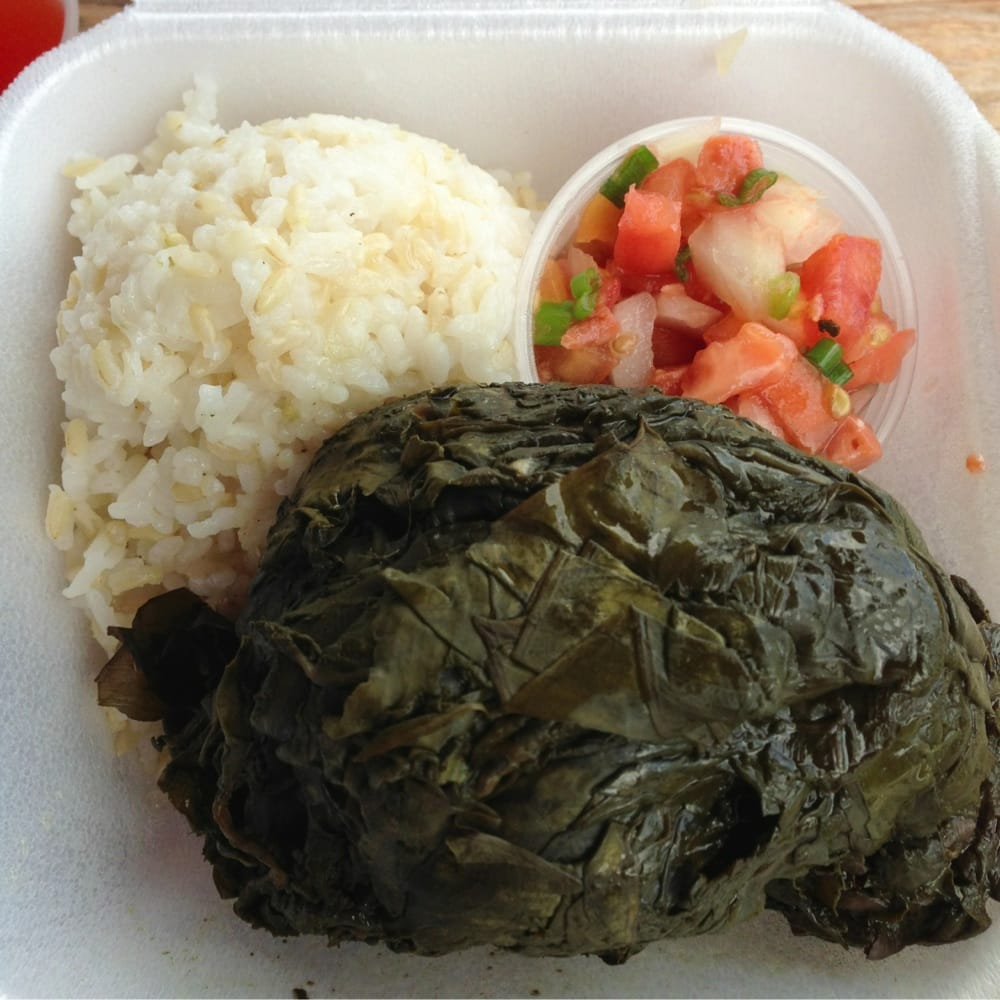
The term “luau” for a feast became common in the 1850s–1900s. Before that, Hawaiians called these gatherings ‘aha‘aina. So when someone says they had laulau at a luau, they are describing two related but distinct things that often appear together on the same table.
How Laulau Fits Into the Waiahole Poi Factory Menu
We offer laulau as a single plate, as part of combo plates, and in our signature Kanaka Nui (“The Works”). Here is a clear view of how it appears alongside our other traditional offerings:
Other favorites that round out a meal include Chicken Long Rice, Ho‘io Salad (vegan option available by request), and our signature Sweet Lady of Waiahole—warm house-made kulolo topped with haupia ice cream. We also offer catering for backyard gatherings, family reunions, and larger events so you can bring the same authentic laulau and kalua pig to your own table.
Where to Find Laulau Made the Right Way
Authentic laulau comes from places that wrap by hand, steam for hours, source carefully, and maintain Hawaiian ownership and cultural intention. On Oahu we operate two locations: the original historic building in Waiahole Valley (48-140 Kamehameha Hwy, Kāne‘ohe) and our Windward Mall food-court location for convenient everyday visits. Both serve the same traditional menu.
Look for poi factories and places that still make poi on-site rather than generic restaurants. The businesses that treat taro with respect usually treat laulau the same way—technique over speed. Quality indicators include a heavy, moist bundle, dark green-to-black taro leaves after cooking, and pork that shreds or pulls apart easily without sawing. Transparency about ingredients and method usually correlates with quality.
We also prepare food for catering and bulk orders so you can serve the same laulau, kalua pig, and hand-pounded poi at home or at gatherings.
Common Questions About Laulau
The most frequent questions we hear are practical:
- Do I eat the leaves? Yes—the inner taro (lu‘au) leaves are meant to be eaten. Discard only the outer ti leaves.
- Is there fish in it? Traditionally yes—a small piece of butterfish adds fat and flavor. Let our staff know about any allergies.
- Why does it take so long? Time converts collagen to gelatin and fully cooks the leaves so they are safe and silky.
- Can I reheat it? Steam is best—15–20 minutes in a steamer basket keeps the moisture. Avoid microwaving if possible; it can dry the meat and make the leaves rubbery.
Outside Hawai‘i, true ti leaves can be hard to find. Banana leaves (often sold frozen in Asian or Latin markets) are a workable substitute for home cooks, but the flavor and texture of authentic steamed taro leaves remain unmatched.
Making Laulau Part of Your Own Kitchen or Celebration
If you want to try making a small batch at home, start with one test bundle: six to eight ounces total protein (roughly two-thirds pork, one-third high-fat fish if available). Season simply, wrap tightly, and commit to the full steaming time. Chicken laulau works best with skin-on thighs rather than lean breast meat.
Even better, come taste the real thing first so you know the target texture and flavor. Then, whether you are cooking for family or ordering catering for a backyard luau, you will recognize the difference that patience and proper ingredients make.
Laulau teaches the same lesson our hand-pounded poi and 24-hour kulolo teach: some of the best textures and flavors only develop when you give the process the time it requires. That is the point.
Experience Authentic Laulau at Waiahole Poi Factory
Ready to taste laulau the way it has been prepared for generations—hand-wrapped, steamed for hours, and served with fresh poi, lomi salmon, and the rest of the traditional plate?
Visit us at the original Waiahole Valley location or the Windward Mall food court. Order a single laulau plate, a combo with kalua pig, or the full Kanaka Nui. Prefer to host at home? Explore our catering options for bulk laulau, kalua pig, squid luau, and gallons of hand-pounded poi.
Order online today or stop by and talk about the story.
Original location: 48-140 Kamehameha Hwy, Kāne‘ohe
Windward Mall: Upper-level food court
Mahalo for supporting local farmers, Native Hawaiian ownership, and the living traditions of Hawaiian food. Hānai i ka ‘ai, hānai i ke aloha—nourished by the food and spirit of our ancestors.