
.jpg)
Searching for “food in Hawaii” returns thousands of results, but most lead you straight to tourist traps serving watered-down versions of local classics. Authentic Hawaiian food tells the story of Native Hawaiian traditions, the land of Waiahole Valley, and preparation methods that refuse shortcuts. This guide walks you through the essential dishes locals actually eat, what makes them special, and why a stop at Waiahole Poi Factory delivers the real thing.
What Makes Hawaiian Food Different From Anything on the Mainland
Hawaiian cuisine exists because Native Hawaiians cultivated taro (kalo) for centuries in the valleys of these islands, and later waves of plantation workers from Japan, the Philippines, China, Portugal, and Korea shared techniques and ingredients. That fusion lives on every plate. Yet what separates authentic Hawaiian food from mainland interpretations is the emphasis on locally sourced ingredients and traditional preparation methods that take time.
.jpg)
Taro grown in Waiahole Valley tastes different from taro grown anywhere else. Fresh ahi caught in Hawaiian waters and served the same day has a texture you cannot replicate with frozen fish. Places like Waiahole Poi Factory—originally built in 1905 as a poi factory, Native Hawaiian owned, and still producing hand-pounded poi—represent this commitment to authenticity. When ingredients come from the land and preparation follows methods passed down through generations, you taste something that cannot be mass-produced or franchised.
At Waiahole Poi Factory the motto is “Hānai i ka ‘ai, hānai i ke aloha”—to nourish with food, to nourish with love. Every dish honors that idea.
The Essential Dishes That Define Hawaiian Cuisine
Poi is the foundation. Made from steamed and pounded taro root, it is classified by consistency: one-finger, two-finger, or three-finger, referring to how many fingers you need to scoop it. Fresh poi tastes slightly sweet. As it ferments over a couple of days it develops a tangy, sourdough-like flavor that many locals prefer. Traditional hand-pounded poi requires patient, continuous work. Commercial versions finished in minutes lack the same texture and fermentation character. In Native Hawaiian culture, taro is considered a physical manifestation of the god Hāloa, making poi sacred—not just a side dish.
Waiahole Poi Factory still offers both hand-pounded and milled poi made from local taro. Guests regularly choose poi over rice for the most authentic experience and mix a little with their kalua pig or laulau.
Kalua pig at Waiahole is pork butt slow-cooked and smoked for twelve hours until it reaches fall-off-the-bone tenderness, then shredded and seasoned with Hawaiian sea salt. The result is smoky and deeply savory—the kind of flavor that only long, careful cooking delivers.
Laulau wraps a generous amount of pork and a touch of butterfish in taro leaves, then steams the bundle until the leaves become tender and the fish melts into the meat. It is earthy, rich, and unlike anything most visitors have tasted before.
Beef luau is a savory stew of braised beef chuck, onions, ginger, and taro leaves cooked until tender and packed with umami. Squid luau (actually octopus) simmers thinly sliced octopus in rich coconut milk with taro leaves and sea salt—a local favorite at every Hawaiian gathering. Chicken long rice offers a lighter alternative: chicken and rice noodles in a ginger-chicken broth.
Lomi salmon—diced tomatoes, onion, green onion, and salt-cured salmon—brings a refreshing, salty contrast to every plate. No traditional Hawaiian plate is complete without it.
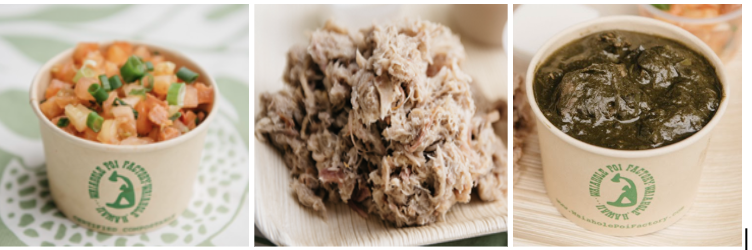
Plate Lunch Culture: The Real Local Experience
The plate lunch format—protein with rice or poi, plus traditional sides—grew directly from the practical needs of working people who required high-calorie, affordable meals. At Waiahole Poi Factory the plates stay true to that heritage while remaining generous and straightforward.
Here is how the plates are structured:
Pro local tip: Choose poi instead of rice. Many regulars mix a spoonful of poi with their kalua pig or laulau for perfect balance.
Desserts Worth the Trip
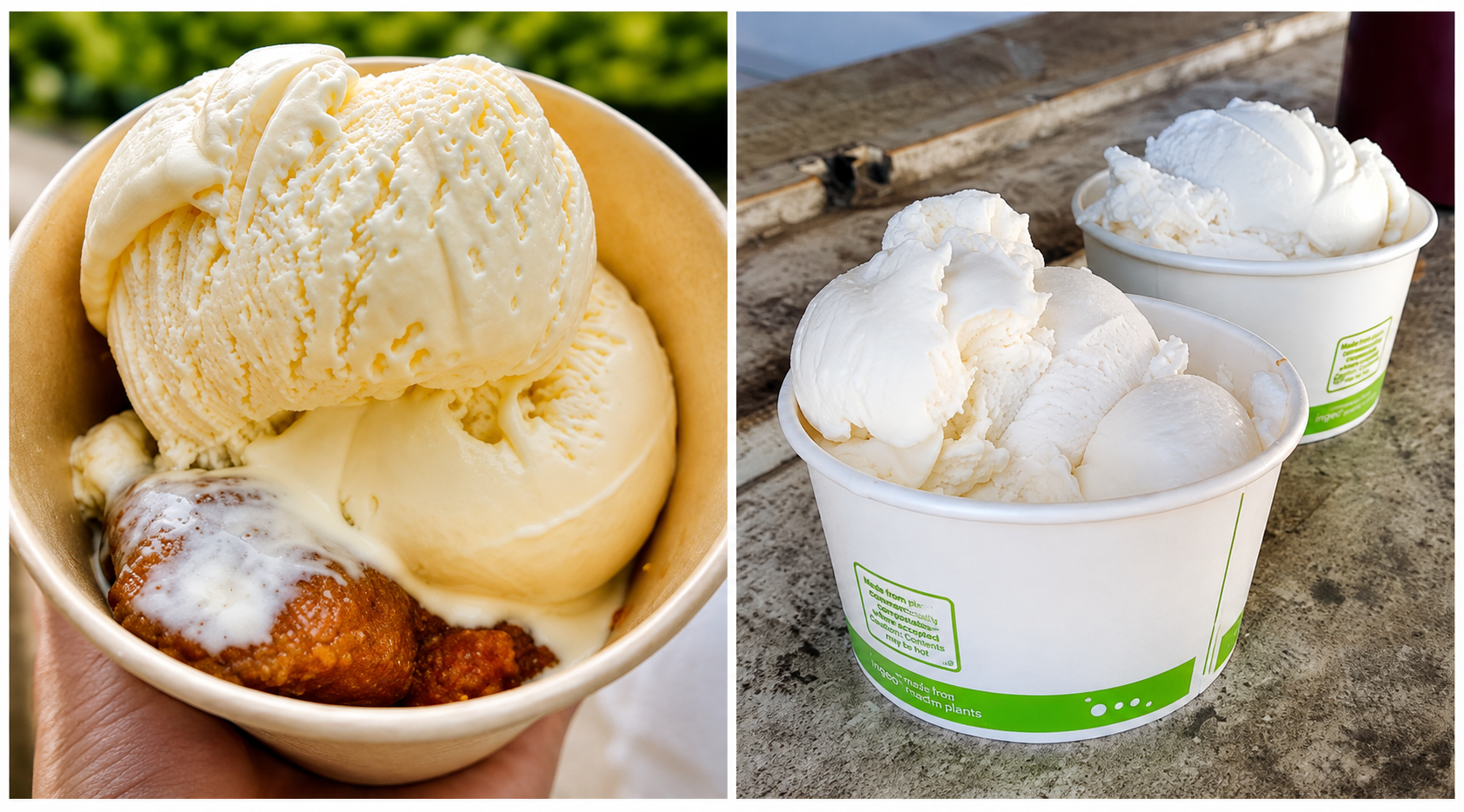
Haupia is the classic coconut milk dessert with a light, custard-like texture. Kulolo takes patience even further: taro root, coconut milk, and sugar are steamed for twenty-four hours until it becomes a dense, slightly sweet, gooey treat. Waiahole Poi Factory’s signature dessert, the Sweet Lady of Waiahole, pairs warm house-made kulolo with creamy haupia-flavored ice cream. The Tahitian Sweet Lady offers warm banana po‘e with the same ice cream. Both are available as single or double scoops.
These are not afterthoughts. They are the sweet expression of the same commitment to traditional ingredients and time-honored methods.
Sides, Drinks, and the Everyday Details
Beyond the main plates you will find Ho‘io salad (a refreshing fern salad with onions, tomatoes, and dried shrimp—easily made vegan by holding the shrimp), extra portions of any entrée, and house-made drinks at the original location: fresh limeade, mamaki tea (brewed with mamaki leaves and lemongrass, sweetened or unsweetened), and traditional ‘awa. These details matter. They show a kitchen that cooks for the neighborhood, not just for visitors.
Waiahole Poi Factory operates two locations. The historic original sits at 48-140 Kamehameha Highway in Waiahole Valley (open Wednesday–Monday, 10 a.m.–6 p.m.). The Windward Mall food-court location in Kāne‘ohe stays open seven days a week with extended evening hours, perfect for a Tuesday craving.
Where to Find Authentic Food (And Skip the Tourist Traps)
Authentic local spots have lines of regulars, offer plate-lunch formats, and focus on the food rather than glossy presentation. Neighborhood places that have been feeding families for decades remain the best indicators of quality. Farmers markets and long-standing food trucks are reliable too. Okazuya-style counters serving ready-to-go trays are another everyday local option.
Waiahole Poi Factory stands out because its ingredients come from Waiahole Valley, its poi is still produced on-site, and its recipes follow the foods served at traditional Hawaiian lū‘au. The building itself has over a century of history. Originally a full poi factory from 1905 until 1971, it later served as an art gallery and community kitchen before returning full-time to handmade Hawaiian food and poi in 2009. That continuity is rare.
Budget Reality: What You’ll Actually Spend
Hawaii’s food costs run higher than the mainland because so much is imported. A solid plate lunch at a place like Waiahole remains one of the most satisfying and relatively affordable ways to eat well. Single plates start around $16–17, combos around $20, and the full Kanaka Nui under $30—all including traditional sides. Add a Sweet Lady of Waiahole and a cold drink and you still stay well below the prices of tourist-oriented restaurants charging for location rather than quality.
You can stretch a budget further with grocery-store poke, farmers-market snacks, and plate lunches instead of sit-down dinners every night. Fresh local fish and traditional preparations, however, are worth the investment. At Waiahole you are paying for time, local taro, and methods that cannot be rushed.
Start With the Dishes That Tell the Story
Prioritize hand-pounded or fresh poi, kalua pig, laulau, and a proper plate that includes lomi salmon and haupia. Mix a little poi with your meat. Try the Sweet Lady of Waiahole. Visit the original location in the valley if you can, or the convenient Windward Mall spot when time is short. Order online for pickup or simply walk in and experience the aloha that has kept this place going for more than a hundred years.
Hawaiian food is not about individual dishes alone. It is about the fusion of cultures, the commitment to local ingredients, the preservation of techniques that take time, and the act of nourishing both body and spirit. Waiahole Poi Factory continues that work every day.
Come taste the difference traditional methods make. Book a Hawaiian food tour, stop by for a plate, or order online. Hānai i ka ‘ai, hānai i ke aloha.