
In the modern, fast-paced world of the 21st century, the word "Aloha" is frequently utilized as a simple greeting, a casual farewell, or a catchy marketing slogan for the global travel industry. However, for those of us whose roots are deeply embedded in the volcanic soil of the Windward side of Oahu, Aloha is a much more profound and multifaceted spiritual concept. It represents the "breath of life," a sacred commitment to living in harmony with one's surroundings, and an ancestral responsibility to care for the land (‘āina) and its people. At Waiahole Poi Factory, our mission extends far beyond the simple act of serving a meal; we serve as a vital center for perpetuating Hawaiian culture.
Every bowl of hand-pounded poi and every steaming, leaf-wrapped laulau we serve is an active manifestation of Kuleana (responsibility). We understand that we are the guardians of a historic 100-year-old legacy, and we carry that weight with immense pride and dedication. In this guide, we invite you to look behind the scenes and see how we celebrate the Spirit of Aloha daily—not through words alone, but by keeping our ancestral traditions vibrant and relevant in a rapidly changing world.
The Pillars of Culture: Ku‘i Kalo and the Heartbeat of the Valley
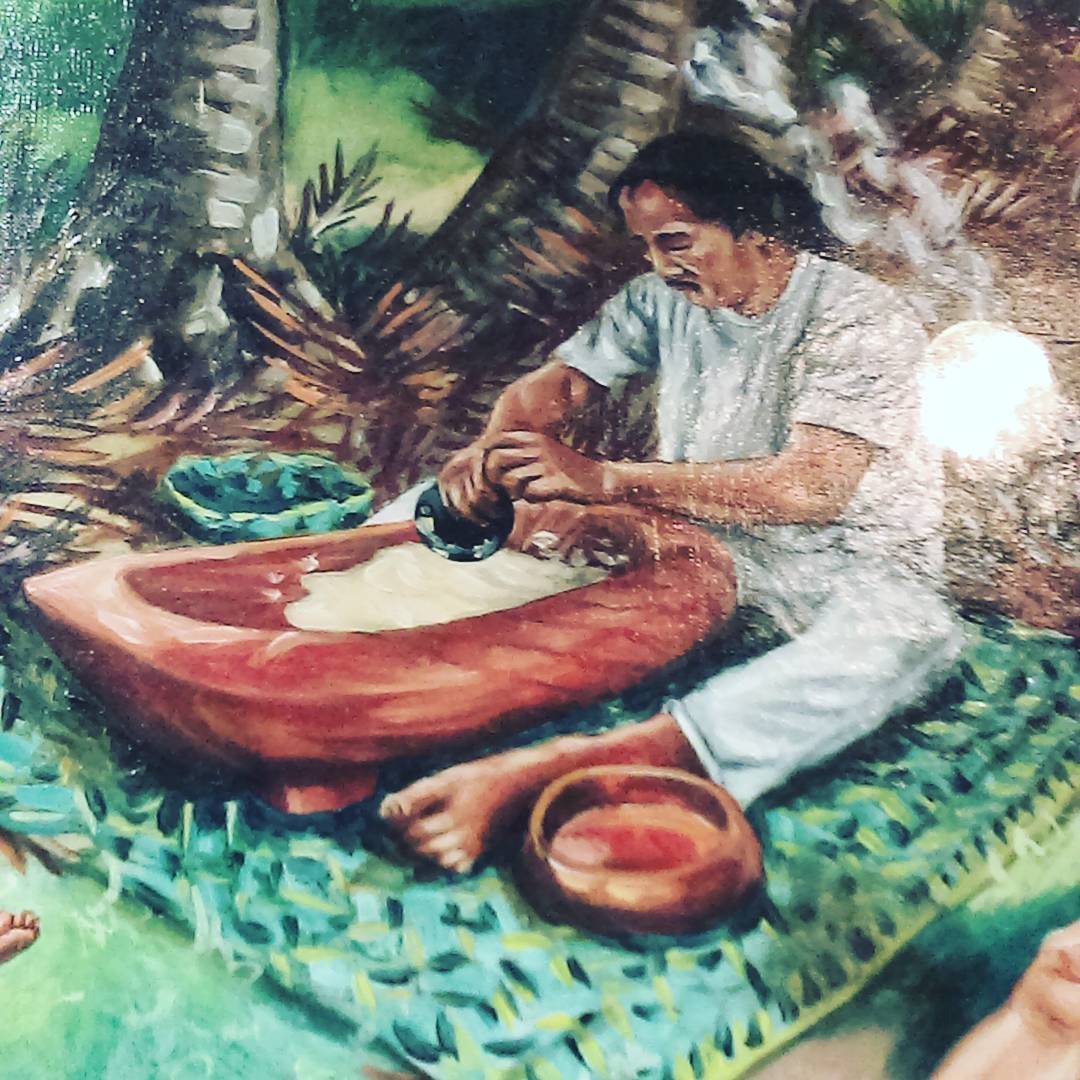
The most visible and visceral way we perpetuate our heritage is through the daily practice of Ku‘i Kalo (the act of pounding taro). In an era dominated by industrial efficiency and mechanical shortcuts, where the vast majority of commercial poi is processed by high-speed stainless steel machinery, we intentionally choose to remain anchored to the pōhaku (stone) and the papa (wooden board).
Why Traditional Methods are Non-Negotiable
To a casual observer or a tourist passing through, hand-pounding might look like a well-choreographed performance for the cameras. To our practitioners, however, it is a form of active meditation and prayer. When our artisans strike the steamed kalo with a stone pounder, they are participating in an unbroken lineage that dates back over a millennium.
- The Ancestral Connection: In the Hawaiian creation story, the taro plant (Haloa) is recognized as the elder brother of the Hawaiian people. By choosing to pound by hand, we maintain a physical and spiritual connection to that elder brother. We believe that this manual labor transfers a specific energy—a mana—into the food that a machine simply cannot replicate.
- Preserving the Soundscape: The rhythmic "thump-thump" of the basalt stone hitting the wooden board is often described by elders as the "heartbeat of the valley." By keeping this sound alive and resonant at our original valley location, we ensure that the cultural vibration of Waiahole remains unchanged despite the noise of the modern world.
Teaching the Next Generation of Practitioners
We do not just pound poi to fill containers for our customers; we pound to ensure the skill does not vanish. We frequently host demonstrations where the keiki (children) and youth of our community can see, smell, and taste the literal fruits of traditional labor. We firmly believe that culture only truly lives if it is practiced in the present, not just curated in a museum or a history book. By involving the community in the process, we are training the next generation of cultural practitioners.

Living Aloha through Sourcing and Environmental Stewardship
You cannot truly celebrate or perpetuate Aloha without an unwavering commitment to caring for the ‘āina (land) that provides your sustenance. Our commitment to cultural preservation extends beyond the kitchen and into the muddy, life-giving waters of the lo‘i (taro patches).
Supporting the Local Mahi‘ai (Farmers)
We prioritize sourcing our raw taro from local family-owned farms right here in the Waiahole Valley. This is not merely a "buy local" initiative; it is a vital strategy for preserving a traditional way of life. When we support a local mahi‘ai (farmer), we are helping to keep freshwater rights active, keeping the mountain-to-sea water systems (‘auwai) functioning, and ensuring that fertile agricultural land is not lost to luxury development or urban sprawl.
The "Circle of Aloha" Economic Model
When you visit us, your purchase creates a ripple effect that flows directly back into the health of the Windward community.
- The Guest: You enjoy an authentic, nutrient-dense meal that connects you to the land.
- The Kitchen: We utilize that support to purchase more heritage taro from local farmers at fair prices.
- The Farmer: Our partners can afford to maintain the complex wetland systems and stay on their ancestral lands.
- The Community: The valley remains green, the culture is actively practiced, and the spirit of the islands thrives.
Hospitality as a Cultural Practice: The "Ohana" Environment
At Waiahole Poi Factory, the people who walk through our doors are not viewed as "transactions"—they are treated as guests and ‘ohana (family). Whether you are stopping by our modern Windward Mall location in Kaneohe or visiting our historic red building deep in the valley, we strive to offer an experience rooted in Ho‘okipa (hospitality).
Traditional Hawaiian hospitality is a rigorous cultural practice. it means ensuring that every person who enters our space leaves more "filled" than when they arrived—not just in their stomach, but in their spirit. This is why we maintain outdoor communal picnic tables at our valley location. These tables encourage spontaneous conversation between local residents and world travelers, fostering the community bonds and shared stories that have always been the foundation of island life.
The Art of the Pōhaku
To truly visualize how we perpetuate our culture every single day, we invite you to watch this short feature on our traditional hand-pounding process. See the sweat, the stone, and the spirit that goes into every batch.
FAQ: Understanding Our Cultural Commitment
1. Is "hand-pounded" really that different from "milled" in terms of culture? Absolutely. While milled poi is a mechanical, industrial process aimed at mass production, hand-pounded poi is an artistic, physical, and spiritual one. Culturally, it represents the human touch and the intention of the maker. From a culinary standpoint, the texture and natural elasticity of hand-pounded poi are far superior because the taro isn't diluted with the high volumes of water required to run industrial grinders.
2. Is the knowledge of poi pounding open to everyone? Traditional knowledge was historically passed down through ‘ohana lineages. While we don't offer formal "classes," we consider our kitchen an open book. We encourage visitors to watch our practitioners, ask respectful questions, and learn the history of the kalo. Understanding the struggle to preserve this art is the first step toward becoming a supporter of the culture.
3. Why do you continue to use ti leaves for wrapping your food? The ti leaf is a sacred plant in Hawaiian culture, traditionally used for protection, healing, and cleansing. Using them to wrap our Laulau isn't just about the flavor they impart; it’s about maintaining the traditional, biodegradable "vessel" that our ancestors used for centuries. It is an exercise in sustainability and cultural continuity.
4. How does the Windward Mall location maintain this cultural vibe? Even in a modern shopping center, the spirit remains the same. We bring the exact same locally sourced ingredients and traditional recipes to the mall. Culture isn't confined to a specific historic building; it lives in the hearts of the people who prepare the food and the ancient methods they refuse to abandon.
Join the Movement to Preserve the Heart of Hawaii
When you choose to dine at Waiahole Poi Factory, you are making a conscious choice to support the perpetuation of a living culture. You are helping us keep the "thump-thump" of the stone alive in the valley for the next hundred years and beyond. Your presence helps ensure that Hawaiian traditions are not just a thing of the past, but a thriving part of our future.
Experience the true Spirit of Aloha today:
- View Our Cultural Menu of Traditional Plates
- Order Online for Pickup at the Valley Location
- Read More About Our 100-Year Journey