
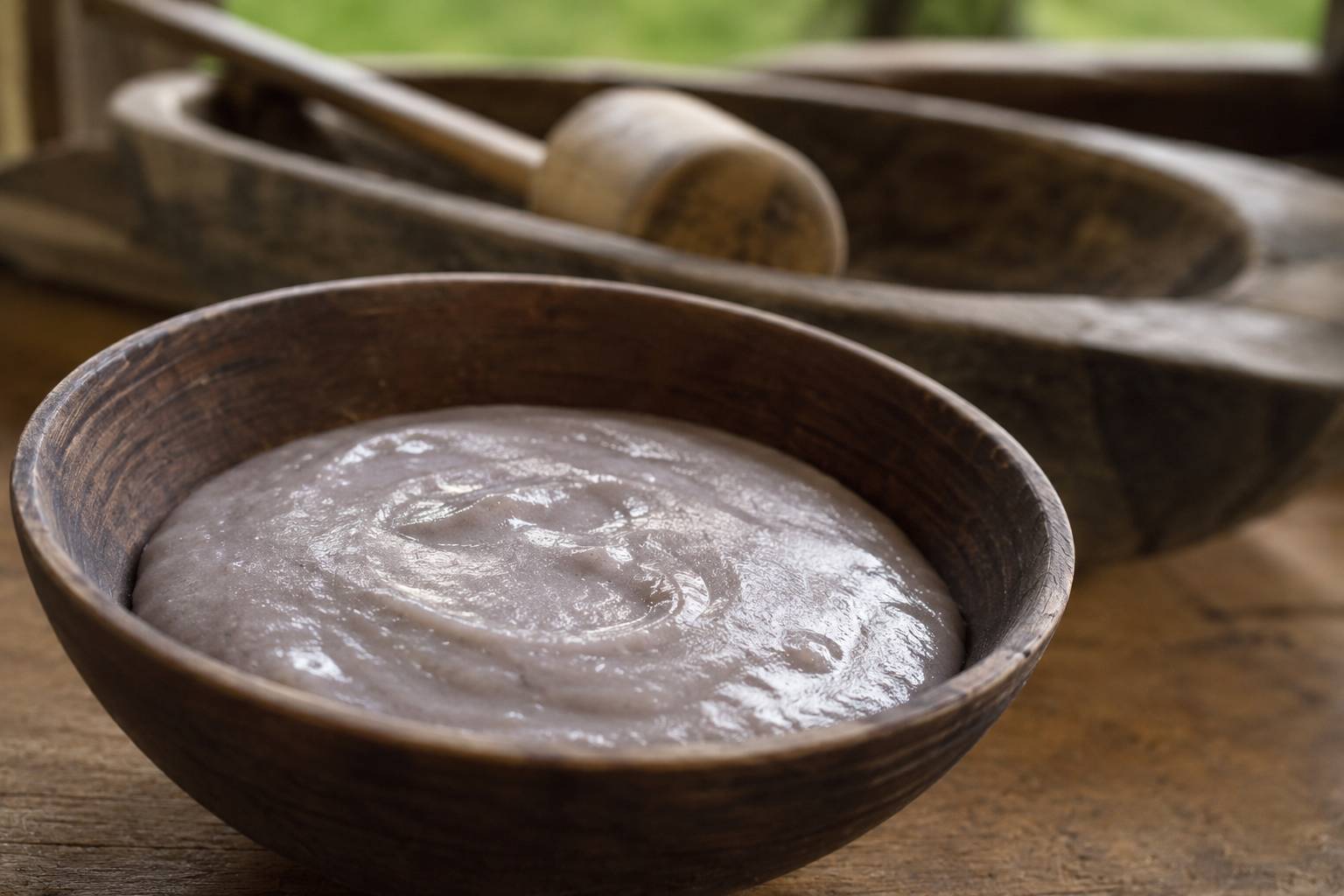
If you’ve seen poi listed on a Hawaiian plate lunch or solved a crossword clue for a “4-letter poi source,” the answer is taro—or kalo in Hawaiian. Yet the story of quality poi runs far deeper than a single word. For more than a thousand years, poi has nourished Native Hawaiian families. Today it is gaining fresh attention for nutritional strengths that modern research continues to confirm. This guide explains what poi truly is, why the source of the taro matters, how traditional hand-pounding differs from commercial methods, and how Waiahole Poi Factory has kept the practice alive since 1905.
At Waiahole Poi Factory, poi is not a side note. It is the heart of the menu, made daily from locally sourced taro and served alongside the classic Hawaiian plates that regulars return for week after week.
What Is Poi and Why It Matters
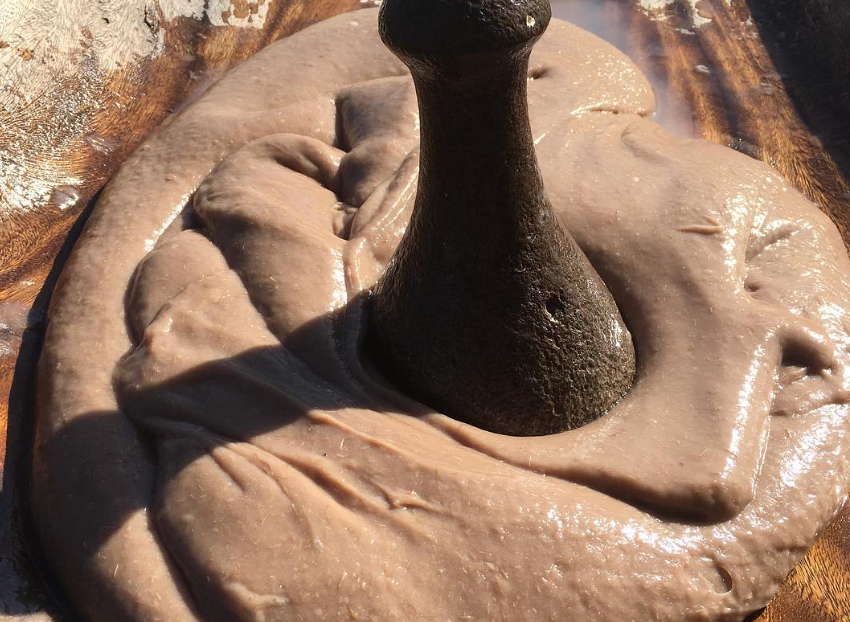
Poi is a fermented paste made from cooked taro root. It has been the primary carbohydrate of Native Hawaiians since the arrival of the first Polynesian settlers. Texture ranges from thick and scoopable to thin and pourable, depending on how much water is worked in during preparation. Fresh poi tastes mildly sweet with gentle earthy notes. Over two to three days, natural lactic acid bacteria develop, bringing a pleasant tang and beneficial probiotics.
In Hawaiian cosmology, kalo is the elder brother of the Hawaiian people, rooted in the Kumulipo creation chant. That sacred relationship shaped daily life. When the poi bowl was uncovered at the table, raised voices stopped—a practice known as hoʻomalu i ka ʻai. Historical records from the 1800s show many Native Hawaiians ate five to ten pounds of poi each day, making it the central caloric foundation of the diet.
Nutritionally, poi stands apart. University of Hawaiʻi research describes it as roughly 79 percent water, 20 percent carbohydrate, and less than 1 percent fat, along with B vitamins, calcium, phosphorus, and iron. The steaming and pounding process pre-gelatinizes the starch, creating one of the most easily digestible carbohydrates available. Its hypoallergenic nature has made it a traditional first solid food for Hawaiian infants for generations.
Waiahole Poi Factory has produced poi since 1905 in the historic Waiahole Valley building. Under Native Hawaiian family ownership, the team continues daily hand-pounding on-site, using taro grown in local loʻi. That continuity of place, method, and family knowledge is rare—and it shows in every scoop.
The Poi Source: Why Taro Variety and Growing Conditions Matter
Not all taro produces the same poi. Of the more than 300 named varieties once cultivated in Hawaiʻi, fewer than 100 remain in active production. Traditional Hawaiian varieties such as Lehua (maoli) are preferred for poi because they yield superior flavor and texture compared with Chinese taro or other commercial types.
Growing conditions shape the final product. Wetland taro thrives in loʻi—flooded paddies with continuous flowing water—for nine to twelve months before harvest. The mineral content of the water, the composition of the soil, and the care of the farmer all influence taste. Waiahole Valley’s water and soil have supported premium kalo for generations, which is why the factory sources locally whenever possible.
A mature taro corm typically weighs one to five pounds. One pound of cooked taro yields roughly two to three pounds of poi, depending on water content. That conversion ratio, combined with nearly a year of careful cultivation, explains why authentic hand-pounded poi carries a higher price than mass-produced versions. The labor begins long before the pounding stone ever touches the board.

Hand-Pounded vs. Commercial: How Production Method Changes Everything
Traditional poi starts with harvesting mature corms, steaming them until tender, and peeling away the fibrous skin. The cooked taro is placed on a papa kuʻi ʻai (pounding board) and worked with a pōhaku kuʻi ʻai (pounding stone) in a steady, rhythmic motion. Water is added gradually until the desired consistency appears.
Hand-pounding creates longer starch chains that give poi its signature smooth, slightly sticky mouthfeel. Machine processing is faster and less expensive, but it often leaves a grainier texture and a flatter flavor. Anyone who has tasted both notices the difference immediately.
At Waiahole Poi Factory the poi is hand-pounded on-site each day. Fresh poi appears light purple-gray to soft lavender. Within 24 to 48 hours, fermentation begins: the pH drops from about 5.5–6.5 to 3.5–4.0, the color deepens slightly, and a thin layer of water may form on top. These are normal, healthy signs. The acidic environment actually inhibits harmful bacteria, making properly fermented poi remarkably stable.
Consistency is traditionally measured by fingers:
Most guests at Waiahole choose two-finger or one-finger poi to pair with kalua pig, laulau, or squid lūʻau. Preference is personal—thicker for direct scooping, thinner for blending with other flavors.
Where to Buy Fresh Poi and What to Look For
Quality begins with the production date. Fresher poi offers the mild, slightly sweet profile; many kamaʻāina prefer the tang that develops after two or three days. Look for a smooth texture without separation and confirm the product has been kept refrigerated at 40°F or below.
Hand-pounded poi costs more than machine-processed versions because of the labor and the quality of the taro. At Waiahole the investment reflects tradition rather than markup. The factory operates two convenient locations: the original historic site at 48-140 Kamehameha Highway in Waiahole Valley and the Windward Mall food-court counter. Both locations offer online ordering, and the factory also supplies restaurants and retailers who want authentic, locally sourced poi.
Refrigerated poi keeps for three to five days. It freezes well for up to six months, though the texture may become slightly grainier after thawing. First-time buyers are wise to start with a smaller portion so they can decide whether they prefer fresh or fermented and which consistency suits their plate.
Beyond retail, Waiahole Poi Factory provides catering for family gatherings, company events, and larger celebrations. Bulk orders of poi, kalua pig, laulau, and the classic sides travel well and arrive ready to serve.
Other Traditional Taro Preparations at Waiahole
Taro’s usefulness extends far past the poi bowl. Kulolo—a dense, fudge-like dessert of grated taro, coconut milk, and sugar—requires a full 24 hours of steaming. Waiahole prepares it the traditional way, producing a sweet, chewy treat that many guests consider essential.
The factory’s signature dessert, the Sweet Lady of Waiahole, pairs warm house-made kulolo with a scoop (or two) of creamy haupia ice cream. A Tahitian Sweet Lady variation substitutes banana poʻe. Both desserts introduce taro in a form that wins over even hesitant first-timers.
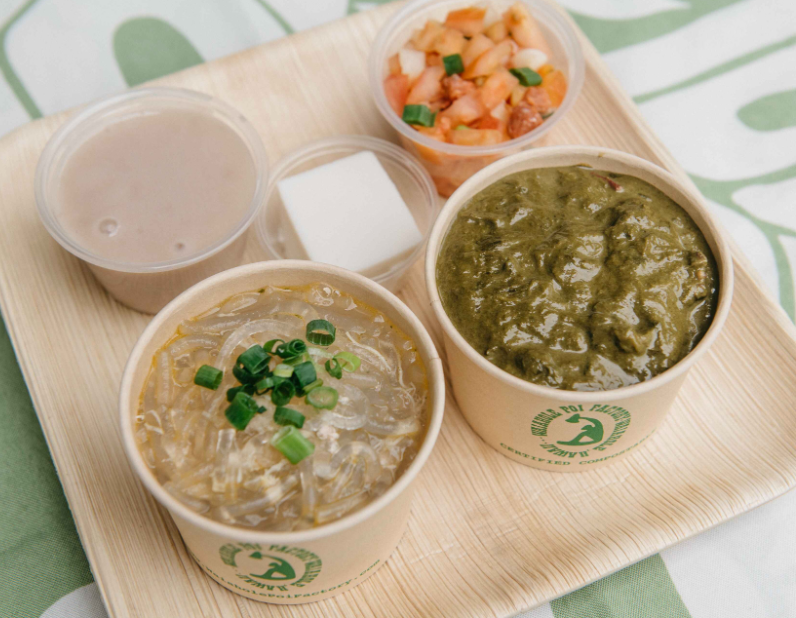
On the savory side, taro leaves (lūʻau) wrap pork and butterfish in classic laulau, then steam for hours until the leaves turn tender and spinach-like. The same leaves appear in Squid Lūʻau and Beef Lūʻau, slow-cooked with coconut milk or braised beef until rich and savory. These dishes sit at the center of the plate-lunch menu:
- Kanaka Nui (“The Works”) – Laulau, kalua pig, chicken long rice, choice of beef or squid lūʻau, rice or poi, plus lomi salmon and haupia.
- Combo Plate – Any two entrées with rice or poi, lomi salmon, and haupia.
- Single Plate – One entrée with the same traditional sides.
- Bowl – One entrée over rice for a lighter option.
Sides and a la carte items include Hoʻio salad, extra poi or rice, and house-made drinks such as limeade, mamaki tea, and traditional ʻawa at the original location.
The Health Benefits Drawing Modern Attention
Poi’s reputation as a healing food rests on both tradition and clinical observation. Medical literature from the 1930s through the 1960s documented its use in elimination diets for gastrointestinal disorders, food allergies, and malabsorption, with consistently strong results.
The hypoallergenic profile is exceptional. Poi has long served as a first solid food for infants because allergic reactions are rare. For children with multiple sensitivities it often remains one of the few safe starches.
Fermented poi develops natural Lactobacillus cultures that support gut health. Resistant starch in cooked and cooled taro (roughly 3–5 percent) acts like dietary fiber, feeding beneficial bacteria. The glycemic index of poi falls in the approximate range of 55–65—lower than white rice or white bread—making it a steadier carbohydrate choice. It also supplies more potassium than bananas on a weight-for-weight basis and more calcium than most grain-based starches.
Because the starch is already pre-gelatinized, poi requires minimal digestive effort. It is naturally gluten-free, extremely low in fat, and gentle on sensitive systems. These qualities made it invaluable in earlier centuries and keep it relevant for modern diners managing food sensitivities or seeking nutrient-dense, traditional foods.
Experience Poi the Right Way
Understanding the source is only the beginning. The real appreciation comes from tasting hand-pounded poi made with local Hawaiian taro, prepared with methods refined across generations. Choose your consistency according to how you plan to eat it. Pair it with salty, rich foods—kalua pig, laulau, or lomi salmon—so the mild starch can balance and refresh the palate. Do not shy away from the tang of lightly fermented poi; that flavor is traditional and carries the probiotic benefits many modern diets lack.
Whether you are exploring Hawaiian culture, navigating food sensitivities, or simply seeking one of the world’s oldest and most nourishing staples, quality matters. At Waiahole Poi Factory you will find daily hand-pounded poi, the full range of classic plate-lunch entrées, house-made kulolo, the famous Sweet Lady of Waiahole, and the warm aloha that has welcomed guests to the valley since 1905.
Visit the original location in historic Waiahole Valley or the convenient Windward Mall counter. Order online for pickup, inquire about catering, or simply stop by for a plate and a scoop of poi that still carries the taste of the land.