.jpg)
Nestled along the winding Kamehameha Highway in Waiahole Valley on Oahu’s windward side, the Waiahole Building stands as more than just a place to grab a plate lunch. It is a living testament to resilience, cultural continuity, and the deep connection between land, food, and community. For Oahu residents seeking an authentic escape, town professionals needing reliable family-style catering pans for weeknight dinners or office events, and mindful travelers craving genuine farm-to-table Hawaiian experiences, this historic structure offers far more than a meal—it invites you to tell a story with the past.
The building’s weathered wooden facade, simple lines, and functional design reflect early 20th-century Hawaiian industrial architecture adapted to the island’s agricultural rhythms. Built around 1904-1905, it was engineered for practicality amid the taro-rich lo‘i (wetland fields) of Waiahole Valley. Thick walls helped regulate humidity for processing kalo, while open layouts facilitated the labor-intensive work of turning the sacred root into poi. Its preservation through multiple eras—industrial factory, art gallery, community incubator, and now a beloved eatery—embodies the Hawaiian value of mālama (caring for and preserving) both place and tradition.
The Origins: A 1905 Poi Factory Rooted in the Land
The Waiahole Building’s story begins in the abundant taro fields of Waiahole Valley. Constructed primarily as a working poi factory, it processed fresh kalo grown in the surrounding ahupua‘a (traditional land divisions from mountain to sea). For nearly 70 years, the hum of grinders and steam engines filled the air as workers transformed the starchy corm into the thick, nourishing paste known as fresh Hawaiian poi—the cornerstone of traditional meals.
Kalo holds profound cultural significance in Hawaiian tradition. Legend tells of Hāloa, the elder sibling of humankind, born from the earth. Poi, made by pounding or grinding the cooked corm with water, symbolizes family unity and sustenance. Families once collected poi in large wooden barrels from this very building. The architecture supported this: sturdy foundations for heavy equipment, spaces for cleaning and storage, and proximity to the fields ensured minimal time between harvest and processing, preserving flavor and nutrients.
This era established the building as a community hub, sustaining local farmers and families with a staple that nourished body and spirit. Today, visitors to the windward side road trip can still sense this agricultural heartbeat in every bite of hand-pounded or fresh poi.
Preservation Through Transition: The 1971 Art Gallery Era
By 1971, industrial operations faced closure amid changing economics. Rather than allowing the structure to deteriorate, Charlene and Calvin Hoe took over the lease and transformed it into a Native Hawaiian art gallery. This pivot during the Hawaiian Renaissance preserved the building while shifting its purpose toward cultural revitalization.
The architecture lent itself beautifully to this new life. Open, flexible interiors once used for production now hosted potters, woodworkers, painters, and artisans crafting instruments like the ‘ohe hano ihu (bamboo nose flute) and ipu (gourd drum). The building’s unpretentious design—wooden beams, natural light, and connection to the valley—created an authentic space for community gatherings and artistic expression.
This period was vital for preservation. It prevented demolition or neglect common to many historic industrial sites and reinforced the building’s role as a gathering place. The Hoes’ vision ensured that the Waiahole Building continued nourishing the community, now through creativity alongside its agricultural roots.
The Incubator Years and Return to Roots in 2009
In the 1980s, the kitchen was refurbished, turning the building into an incubator for local food businesses using valley-grown produce. This non-profit-aligned phase supported farmers and small entrepreneurs, maintaining agricultural presence in Waiahole.
In 2009, under the leadership of the next generation, notably Liko Hoe (and family including Keliko), the building fully returned to its original purpose: producing and serving traditional Hawaiian food. The family revived hand-pounded poi techniques alongside modern methods, ensuring authenticity while meeting demand. The architecture, with its durable, adaptable layout, seamlessly supported this revival—kitchens integrated into the historic shell without compromising integrity.
Today, the Waiahole Building continues as a pillar of windward Oahu, offering a scenic stop for road trips. Its preservation highlights thoughtful stewardship: honoring original industrial bones while adapting for contemporary use without flashy renovations.
Traditional Hawaiian Food Menu: Flavors Steeped in Tradition
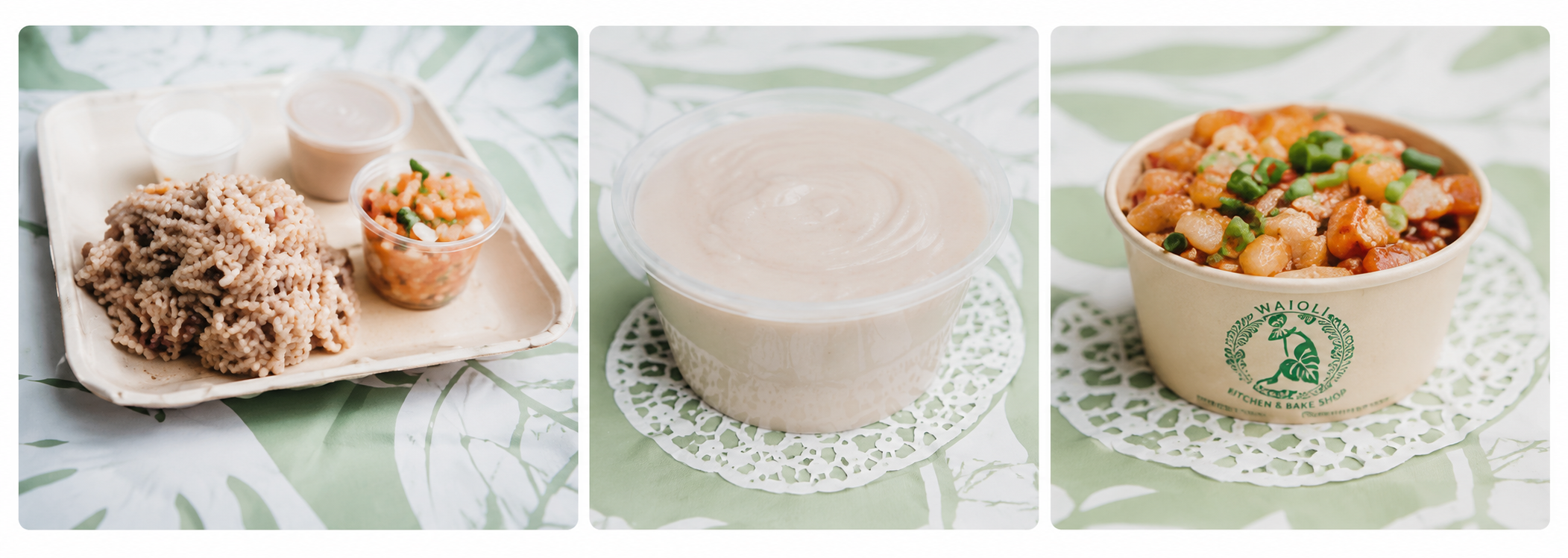
Step inside (or order online) and the building’s legacy comes alive on the plate. Every dish draws from luau-inspired traditions using fresh, local ingredients.
Signature items include:
- Fresh Hawaiian poi and kūlolo (taro pudding) — made from valley kalo.
- Kalua pig — tender, smoky pork traditionally imu-cooked.
- Lomi salmon — refreshing, massaged salmon with tomatoes and onions.
- Chicken long rice and squid luau — comforting, leafy stewed dishes.
- Haupia — creamy coconut dessert.
The famous “Sweet Lady of Waiahole” combines warm kūlolo with haupia ice cream—a perfect sweet finish.
For a deeper dive, explore the traditional Hawaiian food menu.
Windward Road Trip vs. Town Hub Convenience
The Waiahole Building shines for those embracing the windward side road trip. Drive from Honolulu through lush pali views, past beaches and valleys, to this scenic destination. It’s ideal for mindful travelers seeking farm-to-table authenticity and a slower pace immersed in nature and history.
For Oahu residents and town professionals, the second location at Windward Mall serves as a convenient town hub. Perfect for quick weeknight dinners, office catering with family-style catering pans, or grabbing plates without the full drive. Both locations share the same commitment to quality, allowing you to enjoy authentic flavors whether scenic or speedy.
Historic Timeline of the Waiahole Building
This table illustrates the building’s adaptive yet consistent spirit.
Why Preservation Matters for Future Generations
Preserving structures like the Waiahole Building sustains more than architecture—it safeguards intangible heritage. In a rapidly developing Oahu, such sites remind us of sustainable food systems tied to kalo cultivation, respect for ‘āina (land), and communal values. For families, it offers a tangible link to ancestors. For travelers, an authentic counterpoint to commercialized experiences.
The building’s simple, enduring design—practical yet beautiful in its context—teaches lessons in sustainability. Minimal alterations over decades prove that thoughtful care allows historic spaces to evolve without losing soul.
Planning Your Visit: Road Trip or Quick Town Stop
Whether planning a windward side road trip or a convenient town meal, the Waiahole experience fits seamlessly. Pair your visit with a drive along the coast or use the mall location for easy access after work. Both offer the same ono (delicious) plates rooted in tradition.
Order ahead for catering or takeout to make weeknights effortless. Support local farmers and cultural preservation with every bite.
Ready to nourish with food and aloha? Place your order now through the official Toast Online Ordering Portal for fresh Hawaiian favorites delivered to your table or picked up with ease.