
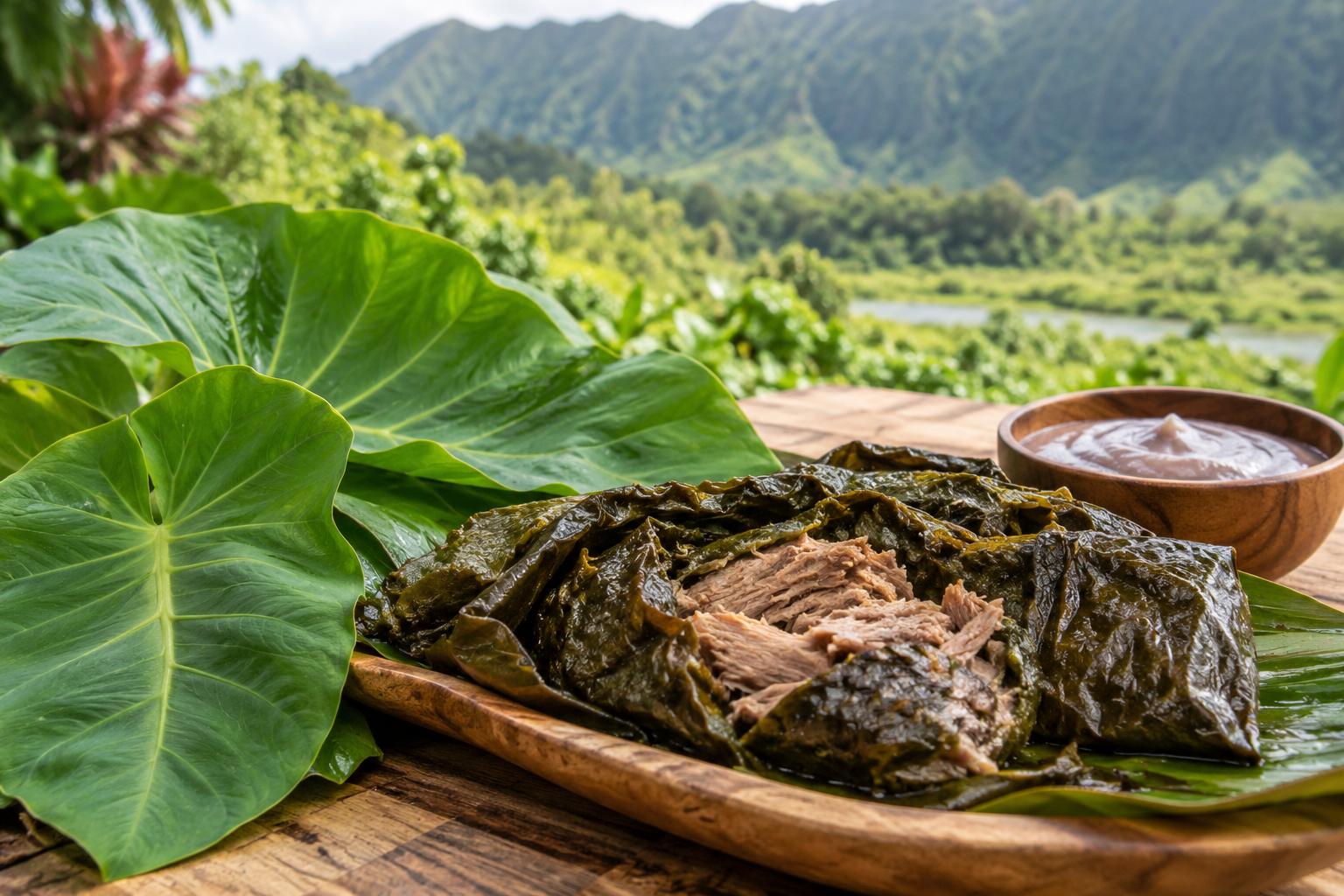
If you've ever enjoyed a traditional Hawaiian laulau, you know there's more to it than the meat inside. The soft, dark green leaves surrounding the filling are an important part of the dish. They're taro leaves, also called lūʻau leaves, and they're meant to be eaten.
At Waiāhole Poi Factory, we prepare our laulau with pork and a touch of butterfish, wrapped and steamed in taro leaves. The leaves become tender as they cook, adding their own mild, earthy flavor to the rich filling.
Whether you're learning to make laulau at home or trying it for the first time, understanding the role of taro leaves helps you appreciate what makes this traditional Hawaiian dish special.
Why Taro Leaves Are Essential to Traditional Laulau
Taro, known as kalo in Hawaiian, has a long history in Hawaiian food and culture. The starchy underground portion of the plant is used to make poi, while its leaves are used in dishes such as laulau and lūʻau.
In Hawaiian tradition, kalo also represents an ancestral connection. The story of Hāloa describes the relationship between the first kalo plant and the Hawaiian people, reflecting the importance of caring for the land and the food it provides.
Laulau brings another part of the kalo plant to the table.
When properly cooked, lūʻau leaves soften around the pork and fish inside the bundle. Their earthy flavor complements the filling without overpowering it.
This is what distinguishes traditional laulau from a dish that simply uses leafy greens to wrap meat. The taro leaves are part of the food, not just something that holds it together.
For us, preparing Hawaiian food is also a way to share the traditions behind the ingredients. That's part of the purpose that brought our family back to preparing Hawaiian food at the historic Waiāhole Poi Factory.
Taro Leaves vs. Ti Leaves: What's the Difference?
One of the most common questions from people trying laulau for the first time is whether they should eat the leaves surrounding the meat.
The answer depends on which leaves you're looking at.
Traditional laulau commonly uses two different kinds of leaves, each serving a different purpose.
When your laulau is ready, remove any outer ti leaves before eating. The cooked taro leaves inside are part of the meal.
If you're used to eating spinach or other leafy vegetables, the texture of properly prepared lūʻau may seem familiar. The leaves are soft and tender, with a character that works particularly well alongside savory Hawaiian dishes.
Can You Use Spinach Instead of Taro Leaves?
If you're making laulau at home and can't find taro leaves, you might consider spinach, collard greens, or another leafy vegetable.
These greens can be used in other steamed dishes, but they won't produce the same result as traditional laulau.
Spinach cooks down quickly and has a different texture. Collard greens are firmer and have their own distinct flavor.
Taro leaves offer the combination of texture and taste associated with laulau. As they cook, they become tender and complement the pork or fish without taking attention away from the filling.
If your goal is to make traditional Hawaiian laulau, look for edible taro leaves specifically intended for cooking rather than relying on a substitute.
How to Choose and Prepare Taro Leaves for Laulau
If you're preparing laulau at home, choosing suitable leaves and cooking them properly are important steps.

Choosing Taro Leaves
Look for young, healthy taro leaves without significant discoloration or damage.
Younger leaves are generally preferred for cooking because they tend to be more tender. Very mature leaves may have a tougher texture and can retain an unpleasant acrid quality.
The University of Hawaiʻi's Pacific Food Guide to taro recommends selecting young leaves and provides guidance on storing and preparing them.
When purchasing leaves, confirm that they are edible taro intended for food preparation. Don't assume that any large, heart-shaped ornamental leaf is suitable for eating.
Why Taro Leaves Must Be Cooked Thoroughly
Never eat raw or undercooked taro leaves.
Taro contains calcium oxalate crystals associated with an irritating, scratchy sensation in the mouth and throat when the plant is not prepared correctly.
Thorough cooking is essential.
The University of Hawaiʻi's Hawaiʻi Nutrition Center guidance for Beef Luʻau explains why lūʻau leaves require careful cooking and provides a tested preparation method.
If you're making laulau, use a reliable recipe designed specifically for taro leaves. Cooking times depend on the preparation method, so don't rely on appearance or a short, fixed steaming time as a guarantee that the leaves are ready.
If the leaves produce an irritating sensation, stop eating them. Do not serve inadequately cooked taro leaves.
Storing Leaves Before Cooking
If you're not preparing your laulau immediately, keep the leaves refrigerated and use them while they're still in good condition.
The University of Hawaiʻi's Pacific Food Guide recommends refrigerated storage in a ventilated plastic bag as one option.
Before cooking, inspect the leaves and wash them thoroughly. Remove damaged portions and follow your recipe's instructions for trimming and preparing them.
How We Use Taro Leaves in Our Hawaiian Dishes
Laulau is one of several dishes on our menu that feature taro leaves.
Each preparation shows a different way lūʻau can be enjoyed.
Laulau
Our laulau features a generous amount of pork and a touch of butterfish, wrapped and steamed in taro leaves.
The combination creates a rich, savory dish where the greens are just as important as the filling.
If you're trying laulau for the first time, enjoy the cooked leaves together with the pork and fish. Pairing it with poi or rice makes a satisfying Hawaiian meal.
Beef Lu'au
Our Beef Lu'au combines braised beef chuck with onions, ginger, and taro leaves that are slow-cooked until tender.
Unlike laulau, where the leaves surround the filling, Beef Lu'au incorporates the greens throughout the dish.
It's another way to experience the flavor and texture of cooked lūʻau leaves.
Squid Lu'au
Our Squid Lu'au features thinly sliced octopus with slowly cooked taro leaves in a rich coconut milk preparation, seasoned with Hawaiian sea salt.
The coconut milk gives the dish a creamy consistency, while the taro leaves contribute their familiar earthy character.
You can explore these dishes and other Hawaiian favorites on our menu.
Experience Traditional Laulau at Waiāhole Poi Factory
Our connection to Hawaiian food goes back to the history of our Waiāhole location.
The building was originally constructed as a poi factory in 1905. Our family took over the space in 1971, and in 2009 we began operating it as a full-time Hawaiian food and hand-pounded poi restaurant.
The goal was to create a place where people could enjoy Hawaiian food while learning about the traditions behind it.
You can read more about that journey in our family history.
Today, you can enjoy our laulau as an individual side or as part of a Hawaiian plate.
Our Single Plate lets you choose laulau as your entrée, served with your choice of rice or poi, along with Lomi Salmon and Haupia.
If you'd like to enjoy more than one dish, our Combo Plate lets you choose two entrées. Laulau can also be enjoyed as part of our Kanaka Nui plate, which includes Kalua Pig, Chicken Long Rice, and your choice of Beef Luau or Squid Luau, along with the accompanying sides.
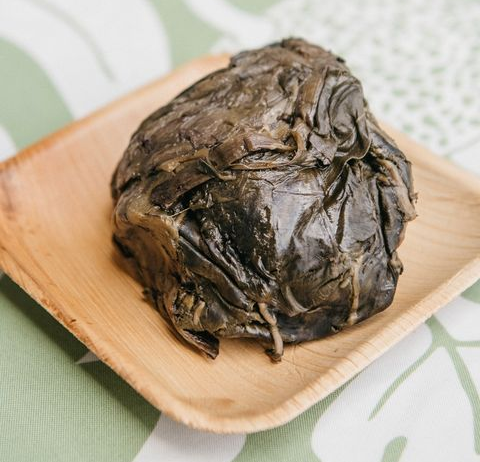
Waiahole Poi Factory’s Laulau
Planning a Family Gathering? Add Laulau to the Menu
Laulau is also a familiar part of Hawaiian family meals and gatherings.
If you're organizing a get-together and would rather spend time with your guests than prepare each bundle yourself, we offer laulau through our catering menu.
Our catering service accommodates company lunches and family gatherings, with laulau available by the piece alongside other Hawaiian dishes.
We ask for at least 48 hours' notice for catering orders and one week's notice for parties with more than 40 people.
You can review our Hawaiian food catering options or contact us at (808) 239-2222 to discuss your order.
Where Can You Buy Fresh Taro Leaves for Laulau?
If you're planning to make your own laulau, ask farmers or produce sellers who specialize in edible kalo whether they carry lūʻau leaves.
Availability can vary, so it's worth checking before making a trip. Make sure the leaves are intended for culinary use, and ask about proper handling if you're unfamiliar with preparing them.
Our published menu features prepared dishes made with taro leaves, including Laulau, Beef Lu'au, and Squid Lu'au. We don't currently list uncooked taro leaves as a regular retail product, so we recommend calling before visiting if you're specifically looking for leaves to prepare at home.
If you'd rather enjoy laulau without the preparation, we're happy to welcome you at either of our locations.
Visit Us for Traditional Hawaiian Food
Whether you grew up eating laulau or are just discovering it, the taro leaves are an important part of what makes the dish special.
At Waiāhole Poi Factory, we're proud to share Hawaiian food and the traditions that give it meaning.
Visit us at our original Waiāhole Valley location or our Windward Mall food court counter. You can also order prepared food online for pickup.
Our locations:
48-140 Kamehameha Hwy, Kāneʻohe, HI 96744
Wednesday through Monday, 10:00 AM to 6:00 PM. Closed Tuesdays.
Phone: (808) 239-2222
46-056 Kamehameha Hwy, Kāneʻohe, HI 96744
Monday through Thursday, 10:00 AM to 8:00 PM; Friday and Saturday, 10:00 AM to 9:00 PM; Sunday, 10:00 AM to 6:00 PM.
Phone: (808) 235-7685
Explore our Hawaiian food menu and enjoy laulau with us.
Hānai i ka ʻai, hānai i ke aloha.
To nourish with food, to nourish with love.