

In the global landscape of dietary staples, the humble potato has long reigned supreme as the go-to starch for everything from French fries to mash. However, for those seeking optimal health, sustained physical performance, and deep cultural roots, there is a traditional powerhouse that outperforms the common spud in almost every nutritional category: Kalo (taro). At Waiahole Poi Factory, we have seen firsthand how this ancient tuber sustains our community, providing a level of vitality that processed starches simply cannot match.
When we compare taro vs. potato, we aren't just looking at two different vegetables; we are comparing a standard commodity to a nutritional superfood. Kalo is the heart of the Hawaiian diet, a sacred plant that has fueled warriors, farmers, and voyagers for over a millennium. As modern nutritional science catches up with indigenous wisdom, it is becoming clear that taro is the superior choice for anyone looking to optimize their intake of complex carbohydrates. Whether you are an athlete in training or simply looking to improve your daily energy levels, understanding the benefits of taro will change the way you look at your plate.
The Science of the Glycemic Index: Sustained Energy vs. Sugar Spikes
The most significant difference between taro and potatoes lies in how your body processes their energy. Most white potatoes have a high Glycemic Index (GI), meaning they break down rapidly into glucose, causing a sharp spike in blood sugar followed by an inevitable "crash." This cycle can lead to fatigue, cravings, and long-term metabolic stress.
In contrast, Kalo is a quintessential complex carbohydrate with a significantly lower GI. Because the starches in taro are structured differently, your body digests them much more slowly. This provides a steady, metered release of energy into the bloodstream, keeping your stamina high and your focus sharp for hours. This is why a bowl of hand-pounded poi is the preferred pre-activity meal for surfers and hikers on Oahu’s Windward side—it offers the "slow-burn" fuel required for endurance without the heaviness of processed grains.
Nutritional Breakdown: Taro vs. White Potato
The Fiber Factor: Better Digestion and Heart Health
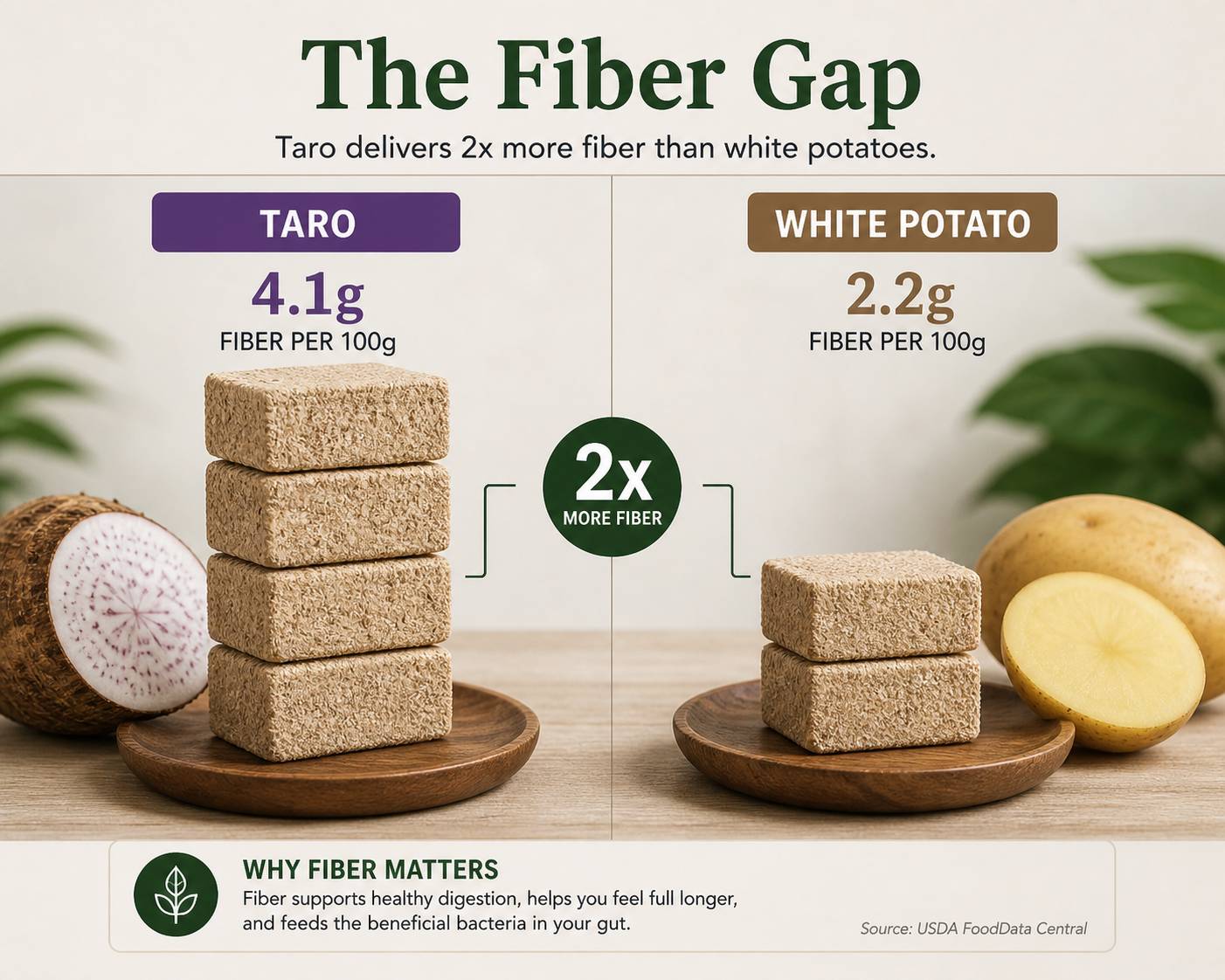
If you are looking to increase your fiber intake, taro is the clear winner. Fiber is critical not only for maintaining a healthy digestive tract but also for heart health and weight management. Kalo contains nearly double the amount of fiber found in a standard white potato. This high fiber content serves several vital functions in the body:
- Digestive Regularity: The natural fiber in taro helps maintain consistent bowel movements and prevents constipation.
- Cholesterol Management: Soluble fiber is known to assist in lowering "bad" LDL cholesterol levels by binding to it in the digestive system.
- Weight Control: High-fiber foods like taro are more satiating, meaning you feel full longer and are less likely to overeat throughout the day.
- Blood Sugar Stability: The fiber further slows the absorption of sugars, providing an extra layer of protection against insulin spikes.
At our original valley location, we serve our taro as nature intended—whole and minimally processed. This ensures that every bite of your Hawaiian food plate is packed with the roughage your body needs to thrive.
Micronutrient Density: More Than Just Starch
While potatoes offer some Vitamin C and potassium, taro provides a much wider spectrum of essential vitamins and minerals. Kalo is particularly rich in Vitamin E, a powerful antioxidant that supports skin health and immune function—a nutrient that is almost entirely absent in potatoes.
Taro is also a superior source of potassium and magnesium, minerals that are crucial for electrolyte balance and muscle recovery. For those living in the tropical heat of Hawaii, these minerals are essential for staying hydrated and preventing muscle cramps. Furthermore, the iron and copper found in locally sourced taro are vital for the production of red blood cells and improved oxygen circulation, which directly impacts your overall energy and vitality levels.
Hypoallergenic and Gentle: The Digestive Miracle
For many people, potatoes can be problematic due to their status as a "nightshade" vegetable, which some find can trigger inflammation or joint pain. Kalo, however, is one of the most hypoallergenic foods on the planet. Its starch granules are incredibly small—much smaller than those in a potato—which makes it exceptionally easy for the human stomach to break down.
This is why poi has been used for centuries as a "miracle" food for those with sensitive stomachs, from infants to the elderly. It is naturally gluten-free and lacks the complex proteins that often cause food sensitivities. When you choose taro over potatoes, you are choosing a starch that works with your digestive system rather than against it.
What the Community is Saying: Real Results from Real Food
The shift from processed starches back to traditional Kalo isn't just a trend; it’s a return to what works. Our guests frequently note the difference in how they feel after a meal at Waiahole.
"If you want to try poi, you must come here to try it. It’s light on the stomach but keeps you full for hours. You can really feel the mineral richness in the food compared to what you get at a regular restaurant." — Kaiulani, TasteAtlas Review
"The food here is the real deal. After eating a full plate with poi and kalua pig, I don't feel that heavy 'food coma' I get from burgers and fries. It’s clean energy that lasts all day." — Tim, Google Reviews
FAQ: Frequently Asked Questions About Taro Nutrition
1. Is taro higher in calories than a potato? Taro is slightly more calorie-dense than a potato, but because of its high fiber and low GI, those calories are used more efficiently by the body. You often need to eat less taro to feel satisfied compared to potatoes.
2. Can I use taro as a direct substitute for potatoes in recipes? Yes! You can steam, boil, or roast taro just like a potato. At the Windward Mall location, we focus on traditional preparations, but taro's versatility makes it a great addition to any home kitchen.
3. Is taro safe for people with nightshade sensitivities? Yes. Unlike potatoes, tomatoes, and peppers, taro is not a nightshade. It is a root vegetable from the Araceae family, making it a safe alternative for those avoiding nightshades due to inflammation.
4. Why is taro considered a 'warrior food'? Ancient Hawaiian warriors relied on the sustained energy and high mineral content of kalo to maintain their strength and endurance during long voyages and battles.
5. Does the way taro is prepared affect its nutrition? Traditional steaming and hand-pounding (to make poi) is the best way to preserve the nutritional integrity of the taro. This is the method we have perfected over 100 years at our factory.
Experience the Superior Choice Today
The debate between taro and potato is settled by the body’s response. While the potato is a fine companion, Kalo is a life-sustaining force. By choosing taro, you are not only choosing better energy, better digestion, and better health—you are choosing to honor a tradition that has thrived for centuries.
Fuel your body with the best:
- Browse Our Menu of Traditional Kalo Dishes
- Order Online for Pickup in Waiahole Valley
- Visit our Windward Mall Location for Fresh Poi on the Go