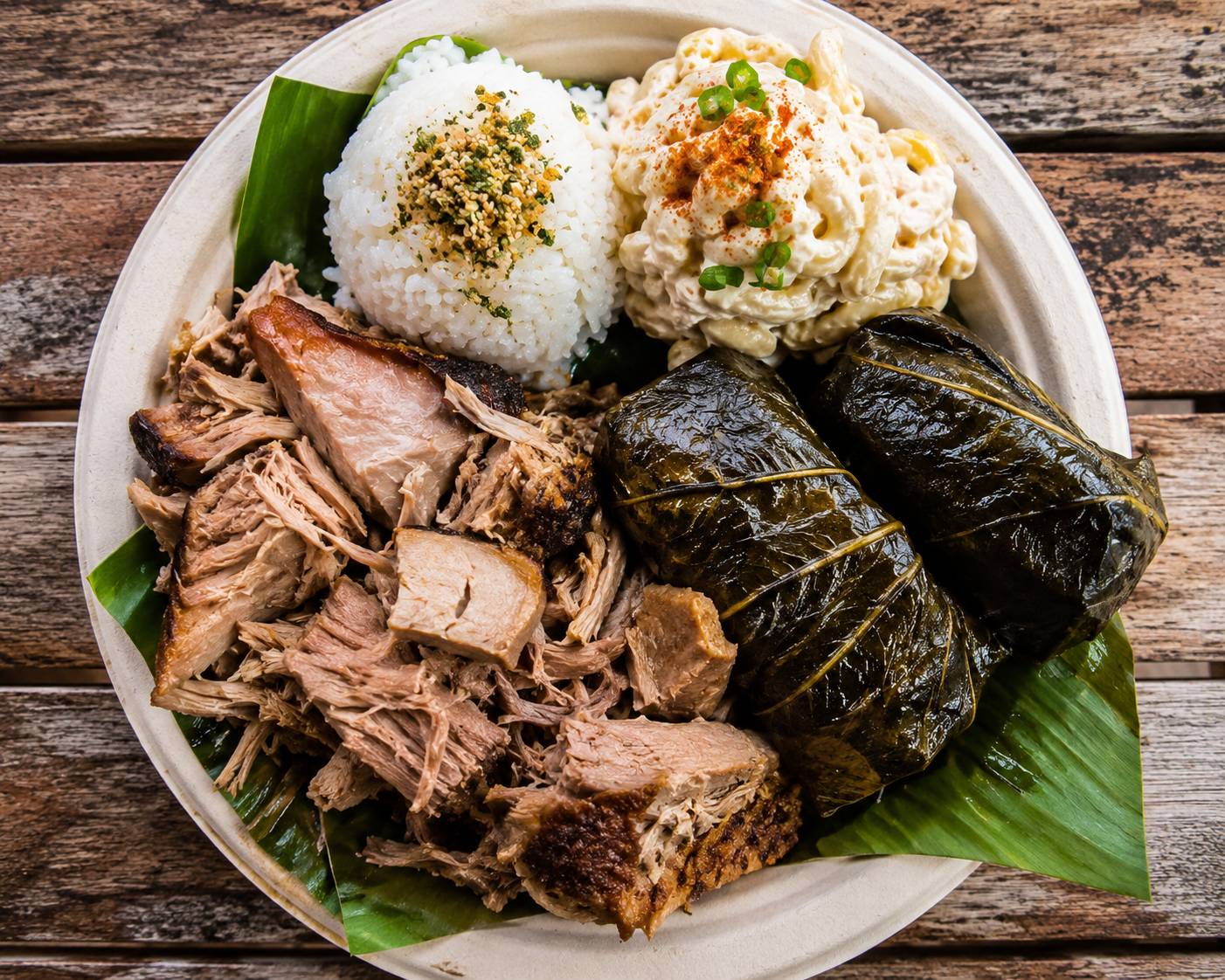
If there is one culinary icon that represents the "melting pot" culture of the islands, it is the Hawaiian plate lunch. To the uninitiated, it may look like a simple, heavy meal, but at Waiahole Poi Factory, we view the plate lunch as a historical map. Every scoop of white rice, every creamy bite of macaroni salad, and every tender shred of kālua pig tells a story of immigration, labor, and the blending of cultures on the Windward side of Oahu.
Understanding the evolution of the plate lunch is essential for anyone seeking the best authentic Hawaiian food on Oahu. While our menu stays true to our roots with hand-pounded poi, the structure of the "plate" itself is a fascinating relic of Hawaii’s plantation era. This blog dives into the history of this island staple and how we’ve curated our menu to honor both the traditional Hawaiian diet and the diverse influences that followed.
The Plantation Roots: The Birth of a Legend
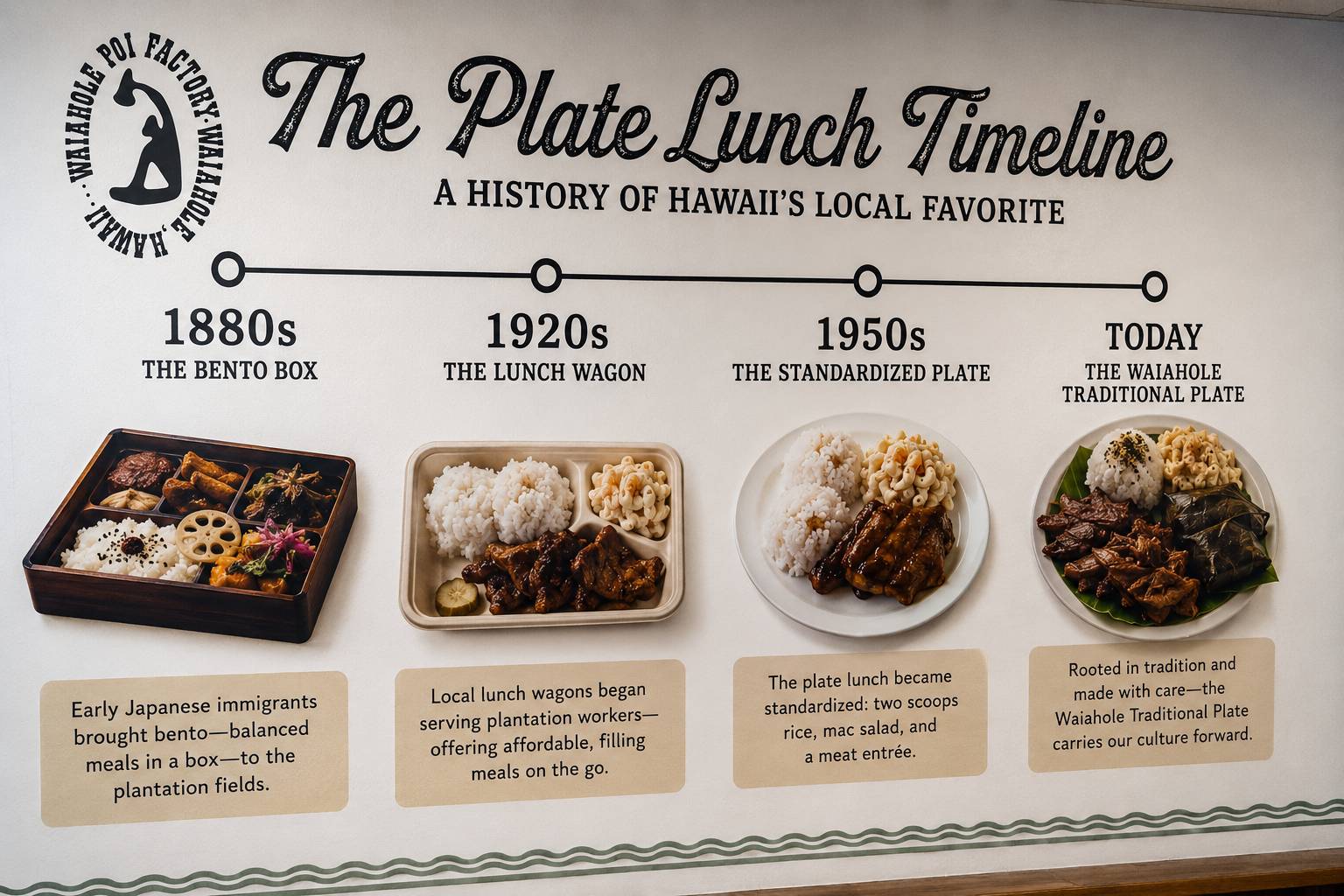
The story of the plate lunch begins in the late 19th and early 20th centuries, during the height of Hawaii's sugar and pineapple plantation era. Workers from China, Japan, Portugal, the Philippines, and Korea were brought to the islands to work the fields alongside Native Hawaiians.
During lunch breaks, these workers would bring "bento" boxes from home. In a beautiful display of early multiculturalism, workers began sharing their food. A Japanese worker might trade a piece of pickled radish for a Filipino worker’s adobo or a Hawaiian worker’s poi. Eventually, this "mixed plate" evolved into a standard format: a protein, two scoops of white rice (a cheap and filling staple), and a side of macaroni salad (a creamy, Western influence that became an island favorite).
The Anatomy of a Classic Plate Lunch
How Waiahole Poi Factory Honors Tradition
While many modern plate lunch spots in Honolulu focus on "fusion" items like chicken katsu or hamburger steak, Waiahole Poi Factory has made a conscious choice to keep our menu centered on Native Hawaiian staples. We believe that Ho‘okipa (hospitality) is best served through the flavors that have sustained these islands for centuries.
Our menu evolution has been one of "reverse engineering." While we embrace the plate lunch format that everyone loves, we fill that plate with items that were being eaten in Waiahole Valley long before the first plantation was built.
- Laulau: Pork and butterfish wrapped in lu'au leaves and steamed until tender.
- Kālua Pig: Smoky, shredded pork prepared with traditional Hawaiian sea salt.
- Squid Lūʻau: A savory, creamy delicacy of taro leaves and coconut milk.

The "Sweet Lady" and the Modern Palate
History isn't just about the past; it's about how we adapt today. As our menu evolved, we realized we needed a signature finish that represented the sweetness of the Windward side. This led to the creation of the Sweet Lady of Waiahole.
By taking traditional kulolo (taro and coconut fudge) and pairing it with cold haupia ice cream, we created a "modern classic."
Community Voices: Real Reviews of Our Menu
Our customers often mention the sense of history they feel when eating at the factory.
Frequently Asked Questions
1. What makes a "Hawaiian" plate lunch different from other plate lunches? A traditional Hawaiian plate lunch focuses on pre-contact staples like Laulau, Kālua Pig, and Poi, whereas a "local" plate lunch might feature post-contact items like fried chicken katsu, teriyaki beef, or hamburger steak.
2. Why is macaroni salad included in a Hawaiian plate? Macaroni salad became popular during the plantation era when Western managers and residents introduced mayo-based salads. It became an island favorite because its creaminess perfectly balances the salty, smoky flavors of Hawaiian meats.
3. Is there a "correct" way to eat a plate lunch? While there are no rules, many locals recommend mixing a bit of the poi with the kālua pig for the perfect savory-sweet bite. Don't forget to use the lomi salmon as a refreshing "reboot" for your taste buds between bites!
4. Can I customize my plate at Waiahole Poi Factory? Yes! We offer various combo plates and sides so you can try a little bit of everything. Many people choose to add a side of hand-pounded poi to their standard plate for the full experience.
5. How has the menu changed since 1904? The building was originally a factory for processing raw taro. While we no longer act as a large-scale industrial processor, we have transitioned into a kitchen that serves those same taro-based traditions in a ready-to-eat format, keeping the heritage alive for new generations.
Taste the History of the Islands
The next time you open a container from Waiahole Poi Factory, remember that you are holding over 100 years of Hawaiian history. From the early days of the plantation workers sharing their lunches to our modern-day commitment to traditional Hawaiian flavors, every bite is a celebration of the people who shaped these islands.
Ready to try the most authentic plate on the island? Explore our Menu | Online Ordering - Waiahole Location | Online Ordering - Windward Mall Location