
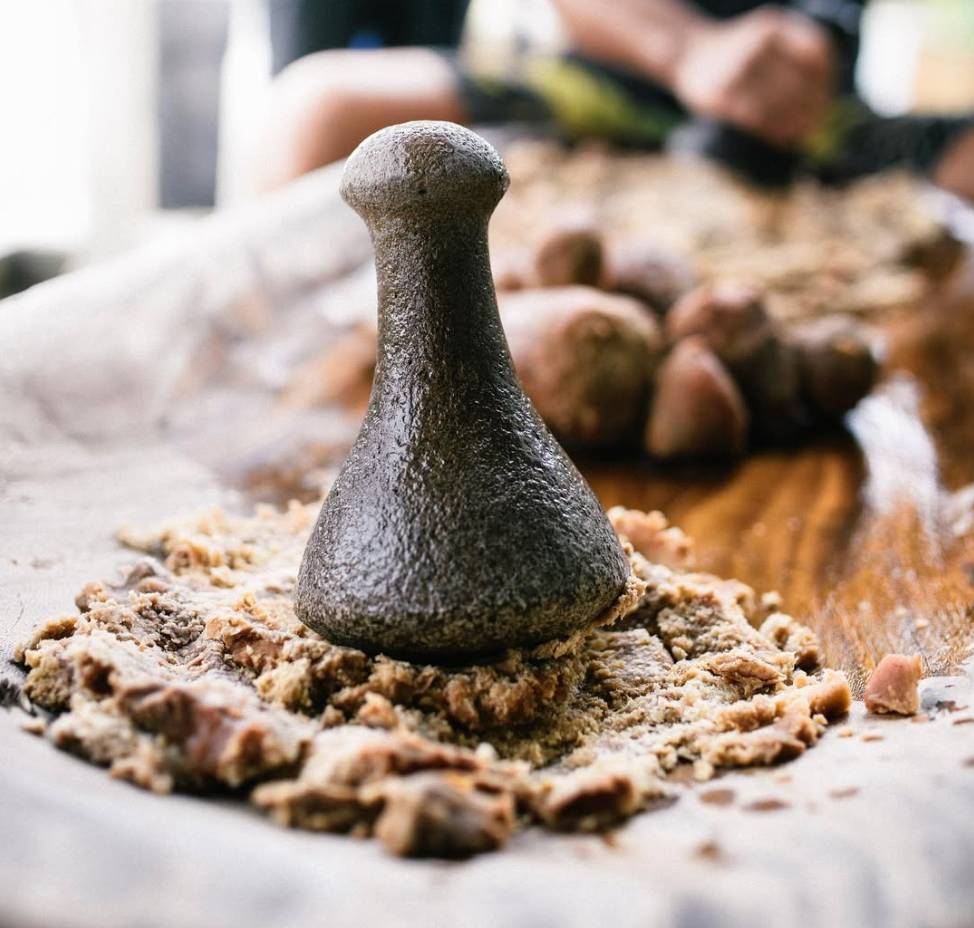
Traditional Hawaiian poi tools consist primarily of the pōhaku kuʻi ʻai (a carved stone pestle) and the papa kuʻi ʻai (a large wooden pounding board). At Waiāhole Poi Factory, our practitioners utilize these exact historical implements to transform steamed kalo (taro) roots into fresh paʻiʻai every single week. We maintain this labor-intensive practice to ensure the cultural heartbeat of our community remains completely intact.
Many modern commercial operations rely entirely on mechanized metal grinders to process their taro. While this modern approach drastically reduces physical labor, it completely severs the spiritual connection between the food and the practitioner. Understanding the specific craftsmanship behind our traditional implements helps you truly appreciate the deep history resting inside your bowl.
The Geological Science of the Pōhaku
The pōhaku kuʻi ʻai is arguably the most sacred tool in the traditional Hawaiian kitchen. You cannot simply walk to a riverbed and pick up a rock to use for pounding. The creation of this implement requires a profound understanding of local geology.
Ancient carvers sought out highly specific types of dense basalt to craft these tools. The stone had to be completely devoid of air pockets. If a rock contained hidden vesicles (tiny gas bubbles trapped in the cooling lava), it would eventually crack under the intense repetitive force of pounding. The Bishop Museum houses extensive collections of these ancient stones. Their exhibits demonstrate the immense physical effort required to shape solid basalt without the aid of modern metal chisels. Carvers used harder river stones and abrasive sands to slowly grind the pestle into its final geometric shape.
The physical design of the pōhaku is a masterclass in ergonomic engineering. The base is flared slightly to maximize the surface area striking the kalo. The neck tapers inward perfectly to accommodate the human hand. The very top flares out again into a rounded knob to prevent the tool from slipping downward during a forceful strike.
The Botanical Properties of the Papa Kuʻi ʻAi
The complementary half of this culinary pairing is the papa kuʻi ʻai. This wooden board serves as the foundational canvas for the entire process. Creating a proper papa requires selecting the correct native timber. Wood from the ʻulu (breadfruit) tree remains the most historically prized material for this specific task.
ʻUlu wood possesses a unique cellular structure. It is dense enough to withstand the repeated downward strikes of heavy basalt. However, it is also porous enough to absorb moisture without warping heavily over time. A freshly carved board features a shallow, elongated depression running down the center. This specific trough design keeps the starchy kalo contained securely while the practitioner works the mass from one end to the other.
With years of continuous use, the wood develops a smooth, dark patina. The natural starches of the taro root fill the microscopic grain of the wood. The board essentially seasons itself. A well-maintained papa kuʻi ʻai often survives for multiple generations. It serves as a literal family heirloom passed down to younger practitioners learning the craft.
Analyzing the Complete Pounding Toolkit
While the stone and board are the primary implements, a true practitioner requires a few supporting elements to complete the process effectively. We created a matrix to help you understand the complete traditional toolkit utilized to prepare the fresh poi on our kitchen menu.
The Kinetic Physics of Pounding Food
The physical act of making poi is called kuʻi ʻai (to pound food). This process relies heavily on kinetic physics rather than brute strength alone. If a practitioner simply relies on arm muscles, they will experience severe physical exhaustion within minutes.
A skilled pounder uses their entire core. They let the heavy mass of the pōhaku do the primary work. They lift the stone straight up before driving it cleanly downward into the steamed corm. As the stone makes contact, they execute a slight twisting motion. This precise pivot shears the starchy fibers of the kalo apart. The practitioner constantly dips their free hand into a bowl of fresh wai (water) to wet the bottom of the stone. This critical film of water prevents the highly viscous taro paste from sticking permanently to the basalt.
Step-by-Step: The Transformation from Root to Paste
Producing food with traditional Hawaiian poi tools follows a rigid structural sequence. You cannot skip or rush any phase of this transformation. We follow these exact steps weekly at our historic valley location.
- The Cleaning Phase: The practitioner thoroughly cleans the papa and the pōhaku. They lay out the warm, freshly steamed kalo corms.
- The Initial Break: The practitioner uses the stone to crush the whole corms flat against the wood. This breaks the solid root into smaller, manageable chunks.
- The Kuʻi Phase: The rhythmic pounding begins. The practitioner strikes the mass repeatedly while constantly folding the edges inward to ensure an even texture.
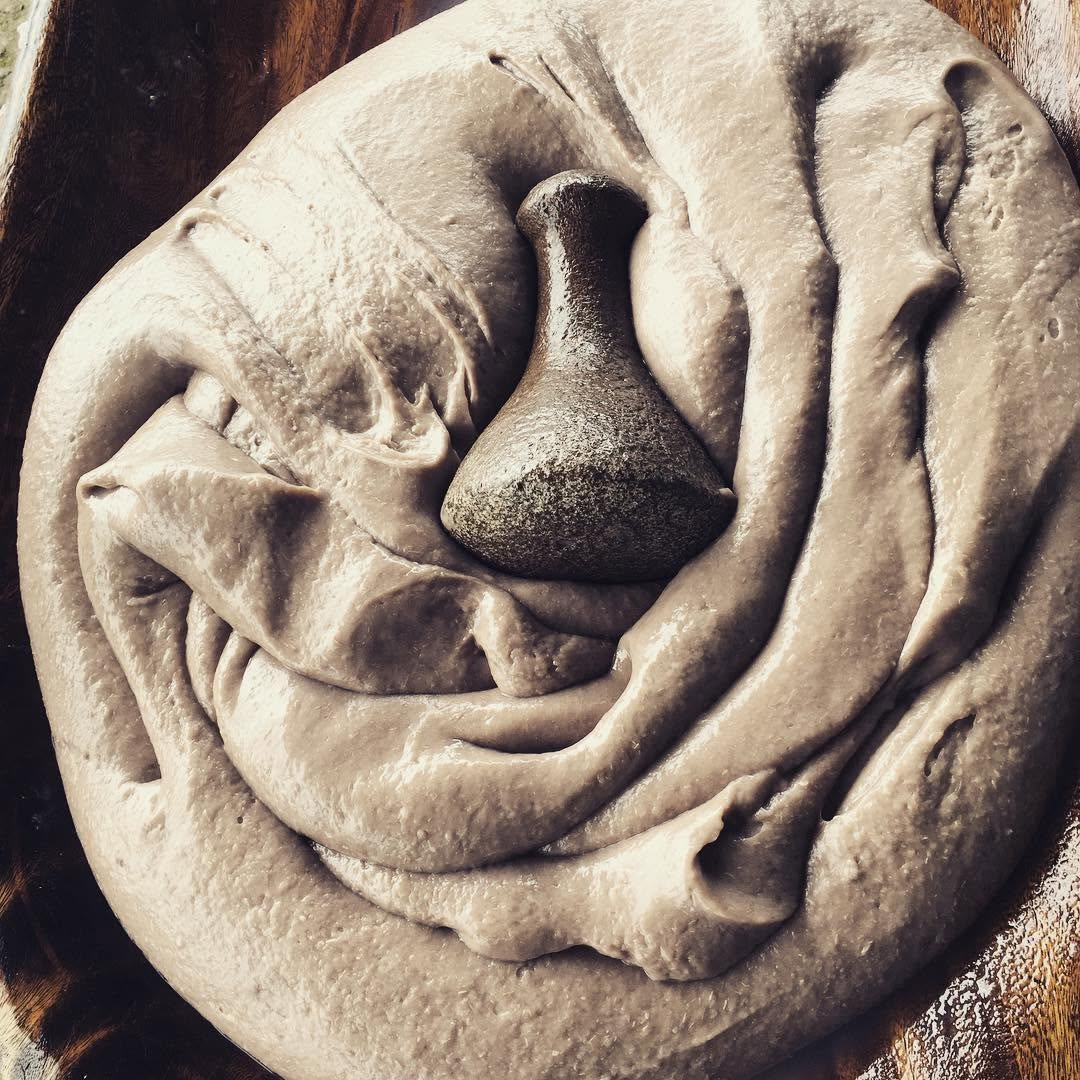
- The Paʻiʻai Formation: The broken chunks gradually meld into a single, solid mass of undiluted taro paste. This thick substance is called paʻiʻai. It contains almost zero added water.
- The Dilution to Poi: The practitioner transfers the dense paʻiʻai to a separate bowl. They slowly incorporate fresh water by hand until the paste reaches the exact desired consistency for eating.
The Behavioral Protocols of the Practice
The use of traditional tools dictates highly specific human behavior. In Hawaiian culture, the kalo plant is revered as Hāloa. Hāloa represents the elder sibling of the human race. Therefore, pounding kalo is treated as a direct interaction with an elder family member.
Strict rules govern the space around the papa kuʻi ʻai. Disagreements or loud arguments are completely forbidden while the work takes place. The practitioner must approach the board with a calm, focused mindset. Any negative energy or anger held by the pounder supposedly transfers directly into the food. We enforce this exact mindset in our commercial kitchen. We ensure every batch of food we produce is created with genuine respect. "Hānai i ka ʻai, hānai i ke aloha." We nourish with food to nourish with love.
Sustaining Local Craftsmanship Today
Choosing to eat traditionally pounded poi creates a powerful economic ripple effect. Procuring these ancient tools today is incredibly difficult. We rely on a small, dedicated network of modern Hawaiian artisans who still know how to carve basalt and shape ʻulu wood.
By maintaining a high commercial demand for hand-pounded food, we provide financial support to the artisans producing the implements. We also heavily support the agricultural workers growing the specific root crops required for this process. Organizations like the Hawaiʻi Department of Agriculture highlight the critical necessity of keeping these specialized heritage trades alive. When you purchase our fresh poi, you directly fund the continuation of this entire cultural supply chain.
Taste the History for Yourself
You can physically taste the difference between machine-ground taro and hand-pounded kalo. The traditional tools create a completely unique, slightly thicker texture that modern blenders simply cannot replicate.
If you are exploring the Windward side of Oʻahu, we invite you to experience this history directly. Stop by our valley storefront to pick up a fresh container of our signature staple. If your schedule runs late into the evening, you can find the exact same meticulously prepared food at our Windward Mall food court location. We package our traditionally pounded items carefully and transport them down the highway to ensure maximum accessibility for our community.
Do not settle for heavily processed imitations. Secure a genuine taste of ancient Hawaiian history by placing your order for fresh poi today.