

Practicing true sustainability in Hawaiʻi requires actively shortening the distance between the farm and the plate while supporting indigenous agricultural methods. At Waiāhole Poi Factory, we source our kalo (taro) directly from local cultivators to ensure our food dollars remain within the Kāneʻohe community. We operate our kitchen strictly on the principle of mālama ʻāina (caring for the land) to protect the environmental health of Oʻahu for future generations.
To fully grasp the importance of our localized food system, you must understand the massive logistical vulnerabilities of our state. The Hawaiian archipelago is the most geographically isolated population center on the planet. Relying on imported ingredients compromises both the cultural integrity of our traditional dishes and the physical security of our community.
The Staggering Reality of Food Miles in Hawaiʻi
The concept of "food miles" refers to the total distance a food item travels from the point of production to the consumer. According to research compiled by the Bishop Museum, Hawaiʻi currently imports between 85 to 90 percent of its total food supply. The vast majority of these goods travel over 2,500 miles across the Pacific Ocean via diesel-burning cargo ships. This massive dependency generates a devastatingly high carbon footprint for everyday meals.
Our business model explicitly rejects this dependency. When you order traditional Hawaiian food from our kitchen, you are participating in a radically shortened supply chain. We acquire our mature kalo corms directly from farmers tending the wet loʻi (taro patches) right here in the Windward valleys. The distance from the soil to our processing board is often measured in single miles rather than thousands. This localized approach guarantees maximum freshness while drastically reducing the fossil fuels burned to feed our guests.
Defining Mālama ʻĀina in Modern Agriculture
The Hawaiian phrase mālama ʻāina translates directly to "caring for the land". However, the concept extends far beyond basic environmentalism. In Native Hawaiian culture, the relationship between the people and the land is strictly reciprocal. If the people diligently care for the soil and water resources, the earth will provide abundant sustenance in return.
Historically, this balance was maintained through the ahupuaʻa system. This highly structured land division method organized the island into distinct pie-shaped sections running from the mountain peaks straight down to the coastal fisheries. Fresh water from the mountain streams (wai) flowed downward to irrigate the massive agricultural terraces before finally feeding the nearshore fishponds.
Our original historic valley location sits directly within this ancient agricultural footprint. By continuing to purchase root crops grown in these specific valleys, we actively incentivize the protection of these historic waterways. Developers constantly seek to purchase valley lands for residential expansion. A thriving commercial market for locally grown kalo provides farmers with the financial security needed to resist land buyouts. Your decision to eat traditional food serves as a direct financial defense of our local green spaces.
The Science of Heritage Crop Preservation
Cultivating kalo is a deeply complex agricultural science. Our farmers do not rely on massive chemical fertilizers to produce their yields. They utilize natural hydrology and soil management techniques perfected over centuries of continuous practice.
The loʻi system acts as a natural water filtration plant. As fresh stream water flows slowly through the terraced taro patches, the root systems of the plants naturally filter out sediment. By the time the water exits the lower terraces and enters Kāneʻohe Bay, it is remarkably clean. This clean water is absolutely vital for the survival of the coastal coral reefs. When you support kalo farmers, you are simultaneously funding the protection of our marine ecosystems.
Furthermore, our kitchen requires highly specific varieties of kalo to produce the correct viscosity for our poi. Monocrop farming practices utilized by massive mainland agricultural corporations destroy biodiversity. Our local farmers maintain dozens of distinct heritage varieties of the plant. This genetic diversity protects the island's food supply from being wiped out by a single targeted crop disease.
Menu Matrix: Sourcing Our Traditional Plates
Every item on our menu carries a specific agricultural footprint. We developed a clear matrix to help our guests understand exactly how their meal choices support the local food economy.
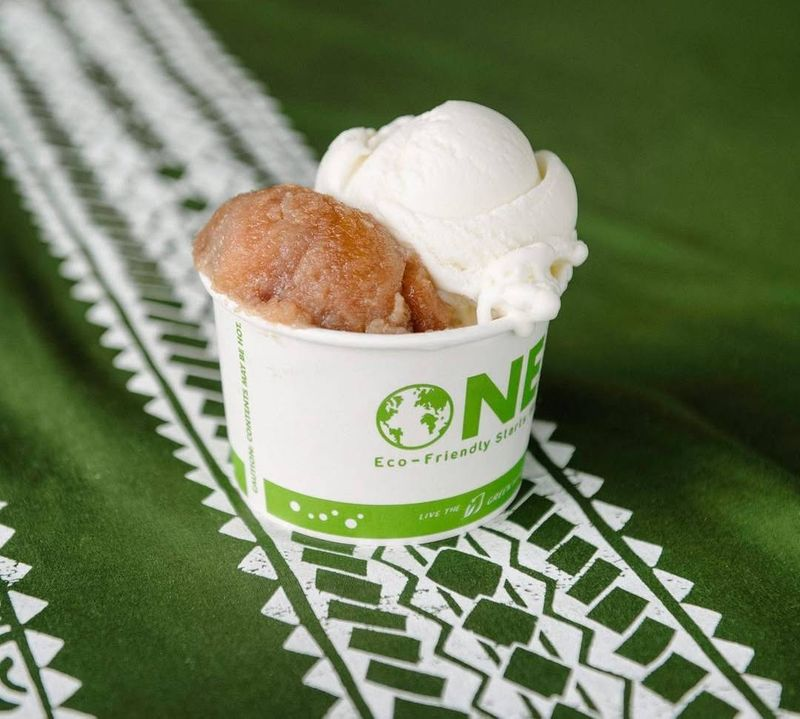
Sweet Lady of Waiahole (Dessert)
The Environmental Impact of Hand-Pounded Poi
The method we use to prepare our food is just as critical as the ingredients we source. Industrial food processing requires massive amounts of electricity and generates significant waste. We maintain a strict dedication to historical, low-impact preparation methods.
We process our fresh poi using a heavy pōhaku kuʻi ʻai (stone mortar) and a large papa kuʻi ʻai (wooden board). Our practitioners use pure physical kinetic energy to strike the steamed root repeatedly until it breaks down into a thick paʻiʻai (undiluted taro paste). This ancient technique requires zero electrical input.
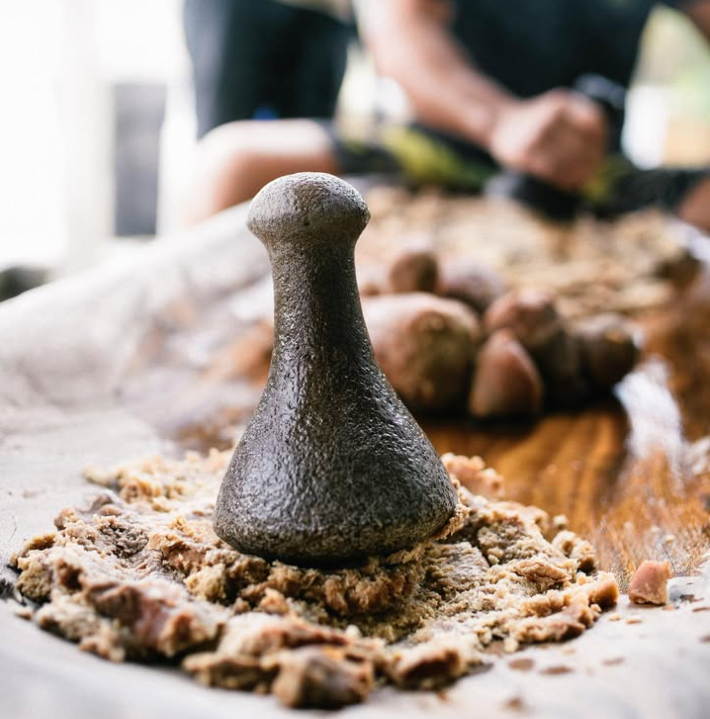
This manual process also drastically improves the shelf life of the food without the use of chemical preservatives. As the hand-pounded poi sits at room temperature, it naturally ferments. The native lactobacilli present in the environment break down the complex starches to create a pleasantly tart flavor profile. This natural preservation method meant ancient Hawaiians could store their food safely for weeks without refrigeration. Today, this exact same science allows us to provide a highly nutritious, shelf-stable staple to our community.
Step-by-Step: How Your Meal Choice Protects the Land
Visiting our kitchen is an active educational experience. You can maximize your positive environmental impact by following a specific ordering strategy at our service counter. We encourage every guest to view their kitchen menu choices as a direct vote for local agriculture.
- Prioritize Native Root Starches: Always choose fresh poi over imported white rice. White rice is entirely shipped in from the mainland. Poi guarantees your money goes directly to an Oʻahu farmer.
- Embrace the Whole Plant: Order dishes like Laulau or Squid Lūʻau that utilize the broad green leaves of the kalo plant. This ensures the farmer is compensated for the entire crop rather than just the underground root.
- Minimize Single-Use Waste: If you are dining at our valley tables, utilize our provided seating areas to consume your meal immediately rather than requesting excess takeaway packaging.
- Educate Your Group: Share the history of mālama ʻāina with your family while you eat. The Hawaiʻi Department of Agriculture stresses that consumer education is the absolute most effective tool for building long-term food security.
Experiencing Sustainable Dining in Kāneʻohe
The true beauty of the Hawaiian agricultural system is that it physically nourishes you while you support it. You can taste the rich volcanic soil of the Koʻolau mountains in every bite of our food. The deep smoke of our Kālua Pig and the creamy coconut sweetness of our historic desserts connect you directly to the environment.
We recognize that logistical convenience often dictates dining choices for busy travelers. You do not have to drive deep into the rural valleys to support sustainable food practices. We operate a second service counter at the Windward Mall food court to make our locally sourced food highly accessible. We transport our hand-pounded poi and slow-roasted meats directly down the highway to this indoor location daily. This strategic expansion allows us to purchase even larger yields from our farmers.
"Hānai i ka ʻai, hānai i ke aloha." To nourish with food, to nourish with love. We cannot genuinely love our community if we do not actively protect the land that sustains us. Every combination plate we serve represents our ongoing commitment to environmental stewardship and indigenous cultural preservation.
Take a definitive step toward supporting Oʻahu's local farmers by choosing an authentic, low-impact meal. Secure your historically prepared dishes today by placing an online order.