
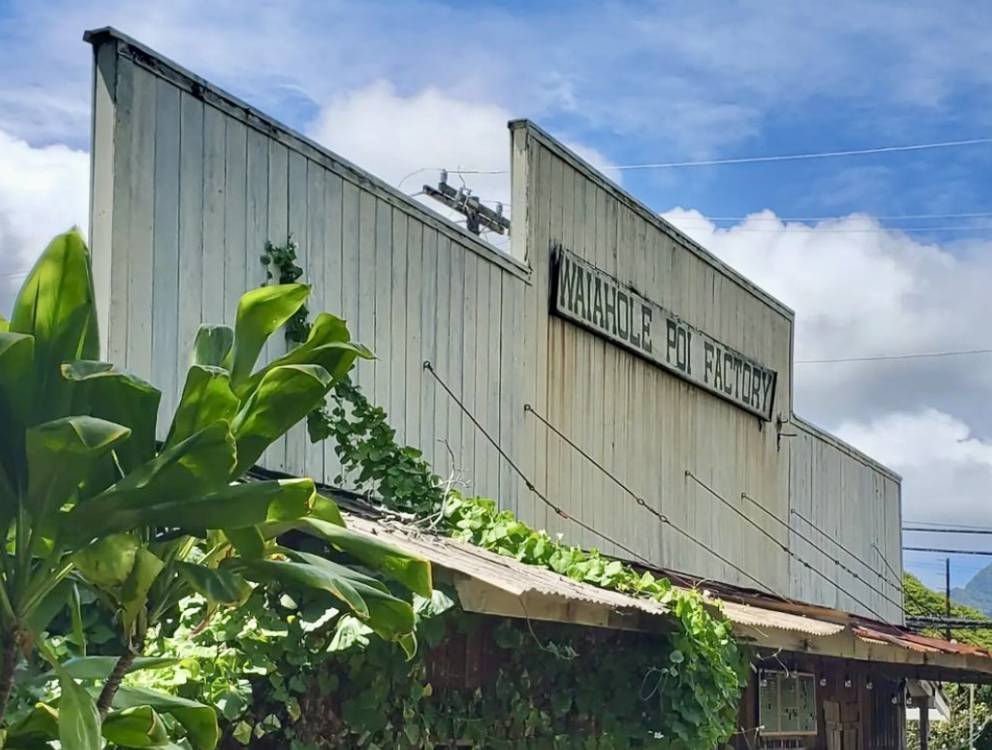
Finding true Hawaiian food on Oahu means stepping away from the crowds of Waikiki and into places where the recipes have been passed down through generations. At Waiahole Poi Factory, the work of hand-pounding poi and preparing classic dishes has continued without interruption since 1905. Family and Native Hawaiian owned, the operation remains rooted in Waiahole Valley’s long tradition of growing kalo (taro) in wetland loʻi. This is not a staged cultural attraction. It is a working poi factory that still feeds the community the way it always has.
Two locations make the experience accessible. The original site sits in the valley itself, surrounded by the Koʻolau mountains and the stream-fed fields that have supported taro for centuries. The second location operates inside Windward Mall’s food court, bringing the same recipes to Kaneohe with longer hours and easy parking. Whether you want the full valley atmosphere or a convenient stop while shopping, the food remains the same: locally sourced, prepared with care, and served with aloha.
Two Locations, One Tradition
The original Waiahole Valley location at 48-140 Kamehameha Highway offers the complete experience. Here the poi is still made on-site, the Country Store carries Hawaiian crafts and local goods, and the setting itself carries cultural weight. Waiahole Valley’s abundant rainfall and stream water create ideal conditions for traditional wetland taro, producing the flavorful corms that become the day’s poi. The valley has long been central to conversations about water rights and Native Hawaiian food sovereignty, and the factory’s continuous operation since 1905 places it inside that larger story.
The Windward Mall Food Court location (46-056 Kamehameha Highway, upper level) serves the identical menu with the practical advantages of mall parking and extended evening hours seven days a week. When the valley location closes on Tuesdays or earlier in the evening, the mall remains open. Both sites use counter service: order at the window, pay, and pick up when your number is called. Lunch hours between 11 a.m. and 1 p.m. can be busy at the valley site, especially on weekends when local families stock up on poi for the week.
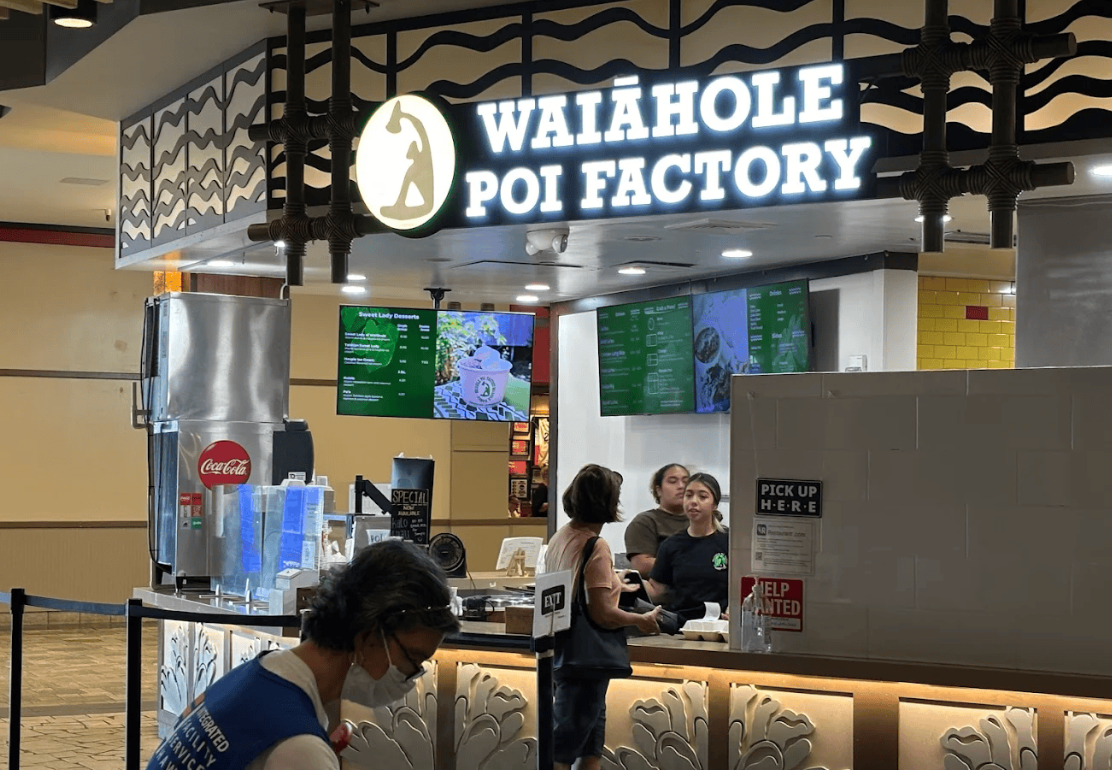
Online ordering is available for both locations through Toast, allowing you to skip the line during peak times if preferred. Yet many regulars still prefer the in-person experience of watching the kitchen work and talking story with staff.
What Makes Hand-Pounded Poi Different
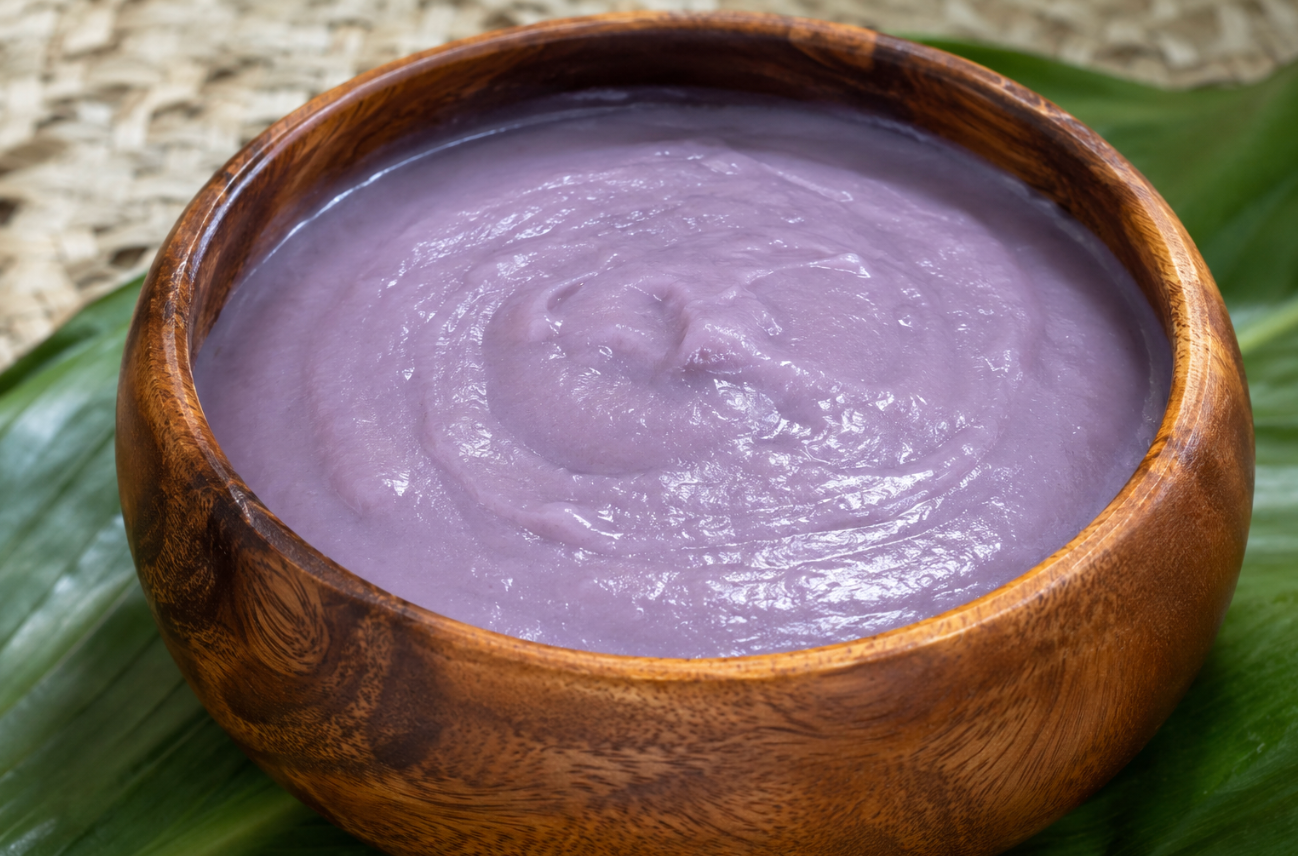
Most poi available in Hawaii today is machine-milled. At Waiahole Poi Factory the process remains traditional. Taro corms are steamed, then pounded by hand with a stone pestle on a wooden board. The labor produces a smoother texture and keeps alive a practice that has been central to Hawaiian foodways for more than a thousand years.
Fresh poi is naturally gluten-free, dairy-free, vegan, and among the most easily digested starches available. When left to ferment it develops beneficial probiotics and a gentle tang. Consistency is measured by the “finger” system: one-finger poi is thick enough that one finger can scoop it, two-finger is the middle ground preferred by many first-timers, and three-finger is thinner. Locals rarely eat poi alone. It is meant to accompany richer dishes—kalua pig, laulau, or lomi salmon—acting as a mild, cooling counterpoint rather than the star of the plate.
The Full Menu: Plates Built for Sharing
The menu stays focused on classic Hawaiian plate-lunch staples prepared with care. No shortcuts are taken with the proteins or the desserts.
Plate Options
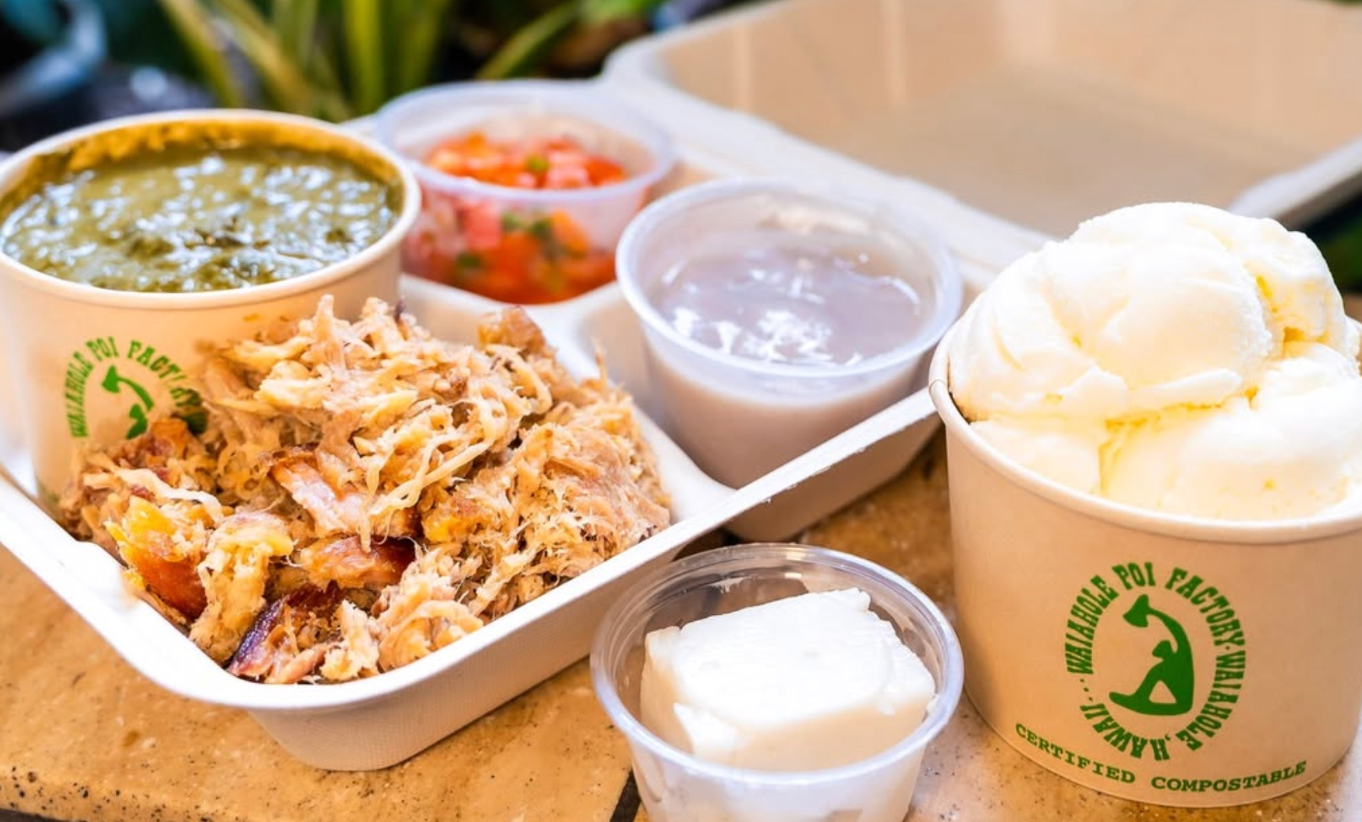
- Kanaka Nui (“The Works”): Laulau, kalua pig, chicken long rice, plus your choice of beef luau or squid luau, rice or poi, lomi salmon, and haupia.
- Combo Plate: Any two entrées with rice or poi, lomi salmon, and haupia.
- Single Plate: One entrée with rice or poi, lomi salmon, and haupia.
- Bowl: One entrée over rice only, for a lighter option.
Core Entrées
- Kalua Pig: Pork butt smoked and slow-cooked for twelve hours, then shredded and seasoned with Hawaiian sea salt.
- Laulau: Generous pork and a touch of butterfish wrapped in taro leaves and steamed until tender.
- Squid Luau: Thinly sliced octopus cooked tender in coconut milk with slow-cooked taro leaves.
- Beef Luau: Braised beef chuck with onions, ginger, and taro leaves.
- Chicken Long Rice: Ginger-chicken broth with clear rice noodles—an elegant alternative to the richer pork and beef dishes.
Sides include hoʻio salad (fern shoots with onion, tomato, and optional dried shrimp—easily made vegan), additional lomi salmon, extra poi or rice, and house-made drinks such as fresh limeade, māmaki tea, and traditional ʻawa at the valley location.
Signature Desserts That Draw the Line
Two desserts stand out. Kulolo is made from grated taro, coconut milk, and sugar, then steamed for a full twenty-four hours. The long steaming caramelizes the natural sugars and creates the dense, sticky, pudding-like texture that defines proper kulolo. Most commercial versions cut the cooking time; Waiahole does not. The result is a deep brown color and rich flavor that sells out regularly.
The Sweet Lady of Waiahole is the factory’s signature creation: warm house-made kulolo topped with creamy haupia ice cream. Named after a beloved local song about a woman who once sold fruit along the Waiahole roadside, the dessert balances hot and cold, chewy and smooth. A Tahitian version swaps in warm banana poʻe. Both are available as single or double scoops and frequently sell out by early afternoon at the valley site.
Practical Planning for Your Visit
Waiahole Valley sits roughly thirty minutes north of Honolulu along Kamehameha Highway (Highway 83). It fits naturally into a windward-coast or North Shore itinerary—about twenty minutes south of the Polynesian Cultural Center and fifteen minutes north of Kualoa Ranch. The mall location works better if you are based in Honolulu or need evening hours.
Both locations accept cash and cards. Fresh poi lasts about a week refrigerated and grows more sour (and, for many, more interesting) as it ferments. Bring a cooler if you plan to take poi or kulolo on the road. Budget $15–$25 per person for a full meal with a drink and dessert; portions are generous.
The valley location also houses the Waiahole Country Store, offering locally made jewelry, apparel, crafts, and snacks. It is not an afterthought gift shop but an extension of the family’s commitment to supporting Hawaiian makers.
Catering and bulk orders by the pound or pan are available for gatherings, and the factory now offers authentic Hawaiian food tours for those who want a deeper look at the process and the place.
Common Questions Answered
Who owns the factory?
It remains family and Native Hawaiian owned, with decisions guided by cultural continuity rather than pure commercial expansion.
Can you watch poi being made?
At the valley location the production area is open and visible during operating hours. There is no formal tour, but the process is not hidden.
Dietary notes
Poi is fully plant-based and hypoallergenic. Kulolo and haupia are gluten-free. Hoʻio salad can be ordered without shrimp. The main proteins contain pork, fish, or seafood, so options for strict vegetarians are limited to sides and poi. Staff are happy to discuss ingredients.
Shipping
Fresh poi does not travel well. Shelf-stable items such as packaged kulolo may be available; contact the factory directly for current options.
The Deeper Reason to Visit
Waiahole Poi Factory is more than a place to eat. It is one of the last continuously operating poi factories on Oahu, still doing the work the way it has been done for generations. The valley location connects you to the landscape that grows the taro. The mall location makes the same food available when the valley is closed. In both places the plates arrive generously, the poi is pounded by hand, and the Sweet Lady of Waiahole remains a quiet local legend.
Come for the kalua pig and laulau. Stay for the 24-hour kulolo. Leave with a container of two-finger poi and the knowledge that you have eaten something that still belongs to this place.
Check current hours and the full menu at waiaholepoifactory.com, or call (808) 239-2222 before you drive. Whether you choose the valley or the mall, the invitation is the same: Hanai i ka ʻAi, Hanai i ke Aloha—nourished by the food and spirit of our ancestors.