
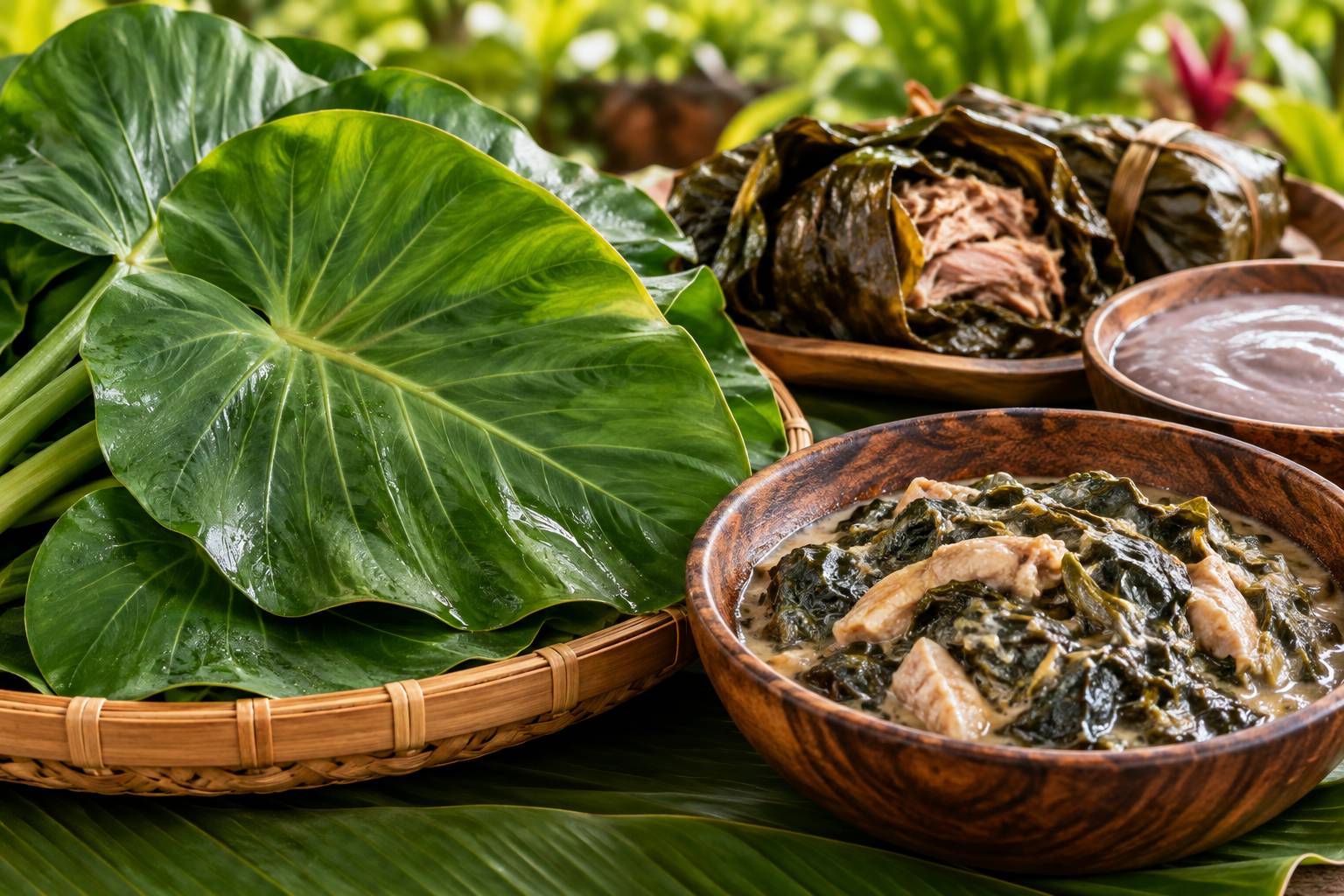
Lūʻau leaves come from the kalo (taro) plant, one of the most important plants in Hawaiian food traditions. When properly cooked, these broad green leaves become tender and develop an earthy flavor that works well with savory meats and coconut milk.
At Waiāhole Poi Factory, lūʻau leaves are part of several dishes on our menu, including Laulau, Beef Lu'au, and Squid Lu'au. Although these dishes use the same ingredient, each preparation brings out a different character in the leaves.
Understanding what lūʻau leaves are can help you appreciate their place in Hawaiian cooking and decide which dish you might enjoy when visiting us.
What Exactly Are Lūʻau Leaves?
Lūʻau leaves are the edible leaves of the kalo plant, known botanically as Colocasia esculenta. Kalo is also the plant used to make poi, although poi comes from its underground corm rather than its leaves.
The distinction matters because the same plant provides ingredients for several different Hawaiian foods.
The corm is cooked and processed into poi, while the leaves are cooked until tender for dishes such as laulau and lūʻau. Kalo is also used to make kulolo, a traditional Hawaiian dessert prepared with taro, coconut milk, and sugar.
For us, these are different expressions of an ingredient that has long been part of Hawaiian food culture.
Kalo also holds cultural significance beyond its use as food. In Hawaiian tradition, Hāloa, associated with the first kalo plant, is regarded as an elder sibling of the Hawaiian people. This relationship reflects the respect given to kalo and its connection to the land.
Our own history is closely tied to this tradition. Our original Waiāhole building was constructed as a poi factory in 1905. Today, we continue sharing Hawaiian food through our family restaurant. You can read more about that connection in our history.
Why Lūʻau Leaves Must Be Properly Cooked
Unlike many salad greens, lūʻau leaves should never be eaten raw.
Taro contains calcium oxalate crystals that can cause an uncomfortable burning or irritating sensation in the mouth and throat when the plant is raw or inadequately prepared.
Proper cooking is essential for making edible taro leaves suitable to eat.
The University of Hawaiʻi's Pacific Food Guide on taro advises against eating raw taro leaves and describes boiling and further cooking as part of their preparation.
Cooking changes the leaves considerably. Their firm structure softens, the color becomes darker, and the texture develops into the tender greens associated with traditional Hawaiian dishes.
This transformation is particularly important because lūʻau leaves are more than a garnish. They are a substantial part of the finished food.
At our restaurant, you can experience their different textures in dishes prepared with taro leaves, from our wrapped Laulau to our slow-cooked Beef Lu'au and Squid Lu'au.
Lūʻau Leaves vs. Ti Leaves: What's the Difference?
People unfamiliar with Hawaiian food sometimes confuse lūʻau leaves with ti leaves because both are associated with traditional cooking.
However, they serve different purposes.
In traditional laulau preparation, lūʻau leaves surround the filling and become part of the food. Ti leaves can form an additional outer wrapping that is removed before eating.
The distinction is useful when trying laulau for the first time: the cooked taro leaves are meant to be eaten, while the outer ti wrapping is removed.
Knowing the difference helps you recognize how the leaves contribute to the dish rather than treating all the greens as disposable wrapping.
How We Use Lūʻau Leaves in Our Hawaiian Dishes
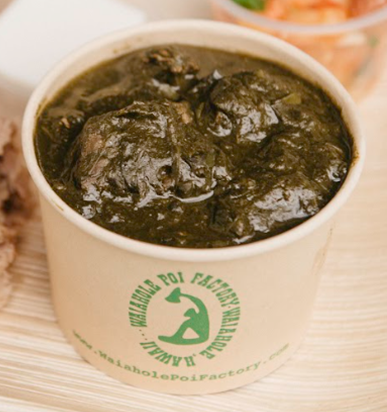
Lūʻau leaves appear in three of our traditional Hawaiian entrées. Each uses the leaves differently, giving you several ways to experience this ingredient.
Laulau: Taro Leaves Wrapped Around Pork and Butterfish
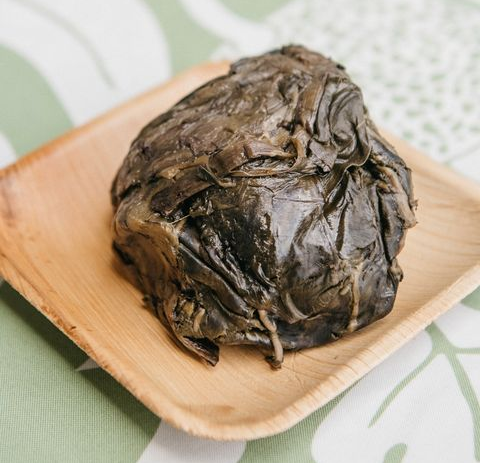
Our Laulau features a generous portion of pork with a touch of butterfish, wrapped and steamed in taro leaves.
The leaves soften during cooking and become part of the finished dish. Their earthy character complements the richness of the pork and butterfish.
Unlike a stew, laulau keeps its ingredients together in a wrapped preparation, so the greens and filling are enjoyed together.
For someone trying lūʻau leaves for the first time, this is an opportunity to experience them as a distinct part of a traditional Hawaiian entrée.
Beef Lu'au: Slow-Cooked Leaves with Braised Beef
Our Beef Lu'au combines braised beef chuck with sautéed onions, ginger, and taro leaves that are slow-cooked until tender.
Here, the leaves are incorporated throughout the stew rather than wrapped around the meat.
As they soften, they become part of the dish's savory texture. The beef, ginger, and onions contribute a different flavor from the pork and butterfish found in laulau.
If you enjoy braised beef and hearty stews, Beef Lu'au offers another way to experience cooked taro leaves.
Squid Lu'au: Taro Leaves with Coconut Milk
Our Squid Lu'au combines slowly cooked taro leaves with coconut milk, Hawaiian sea salt, and thinly sliced octopus.
Despite the name, our published menu describes octopus as the seafood ingredient in this dish.
The coconut milk creates a creamy consistency, while the cooked leaves become part of the mixture rather than remaining separate.
The result is quite different from Beef Lu'au. Both contain taro leaves, but the coconut milk gives Squid Lu'au its characteristic richness.
You can find descriptions of all three dishes on our Hawaiian food menu.
What Do Cooked Lūʻau Leaves Taste Like?
Cooked lūʻau leaves have an earthy, vegetal flavor. Their texture can resemble very soft cooked spinach, although taro leaves have their own character.
The way they are served changes how noticeable that flavor becomes.
In laulau, the leaves surround the pork and butterfish, making them part of each bite.
In Beef Lu'au, the flavor of the greens blends with the braised meat, onions, and ginger.
In Squid Lu'au, the leaves combine with coconut milk and seafood, creating a softer, creamier dish.
If you have never eaten taro leaves, trying them in more than one preparation can help you recognize how much the cooking method and accompanying ingredients influence the finished dish.
How to Enjoy Lūʻau Dishes with Poi
Poi and lūʻau leaves come from different parts of the same kalo plant, making them a natural pairing in Hawaiian cuisine.
Poi is made by cooking the taro corm and processing it with water into a smooth consistency. Its mild flavor complements savory dishes such as laulau and Beef Lu'au.
On our menu, you can choose poi instead of rice with a Single Plate or Combo Plate.
A Single Plate lets you select one entrée, while a Combo Plate allows you to choose two. Both include lomi salmon and haupia.
If you want to experience lūʻau leaves in different preparations during the same meal, you could choose Beef Lu'au and Laulau or pair Squid Lu'au with Beef Lu'au on a Combo Plate.
Our Kanaka Nui plate offers another option. It includes Laulau, Kalua Pig, and Chicken Long Rice, along with your choice of Beef Lu'au or Squid Lu'au and rice or poi. Lomi Salmon and Haupia are also included.
See our current plate selections to decide which combination appeals to you.
Where to Enjoy Traditional Lūʻau Dishes on Oʻahu
If you're curious about lūʻau leaves but have never tried them, you don't need to start with an unfamiliar ingredient on its own.
At Waiāhole Poi Factory, we serve traditional Hawaiian dishes that make these leaves part of a complete meal.
You can visit us at either of our Kāneʻohe locations:
Original Waiāhole Valley Location
48-140 Kamehameha Highway, Kāneʻohe, HI 96744
Our original location is where we continue the food traditions connected to the historic poi factory building. It is also where we offer hand-pounded poi and paʻiʻai on Wednesdays and Sundays, subject to availability.
Windward Mall Food Court
46-056 Kamehameha Highway, Kāneʻohe, HI 96744
Our second location provides another option for enjoying Hawaiian food on Windward Oʻahu, including Tuesdays when our original Waiāhole location is closed.
Both locations offer online ordering for pickup. Check the current menu and available selections when placing your order.
Discover the Role of Lūʻau Leaves in Hawaiian Food
Lūʻau leaves are an important part of Hawaiian cooking, whether they are wrapped around pork and butterfish or slowly cooked into a savory stew.
Learning about this ingredient also reveals how different parts of kalo contribute to the foods we continue to share.
If you'd like to try lūʻau leaves in a traditional Hawaiian dish, explore our menu and choose a plate featuring Laulau, Beef Lu'au, or Squid Lu'au.
We look forward to sharing these food traditions with you.