
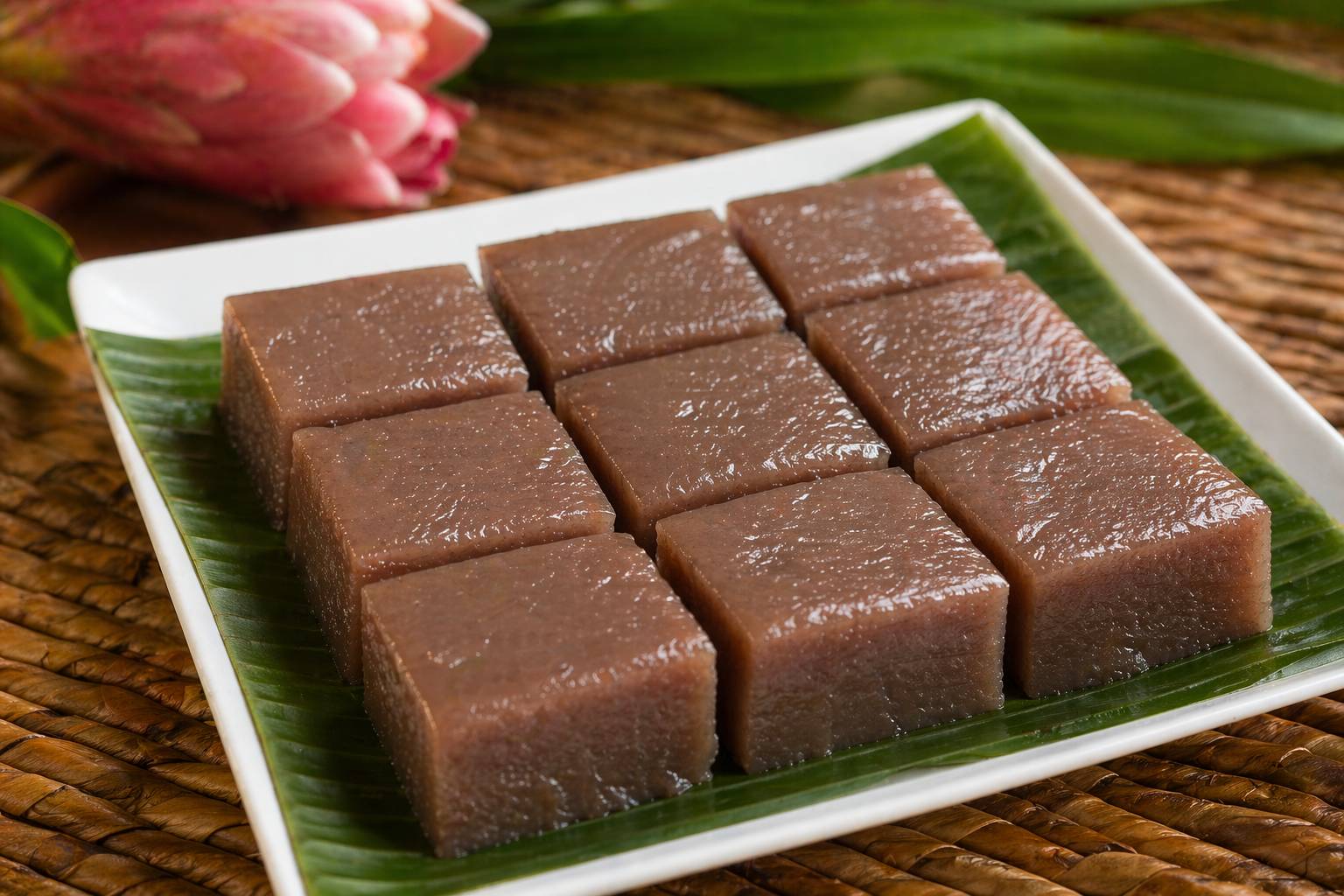
If you’ve ever taken a slow drive along the Windward Coast of Oahu or found yourself waiting in the lively line at the Waiahole Poi Factory, you’ve probably seen people walking away with small, dense, mahogany-colored blocks wrapped tightly in plastic. To someone seeing it for the first time, it looks exactly like a thick chocolate brownie or a heavy block of fudge. But for those who know the real authentic Hawaiian food scene, that block is Kulolo—the most sought-after traditional dessert in the islands.
While most visitors are familiar with the smooth, purple swirls of freshly pounded poi, kulolo is the sweeter, more indulgent side of the kalo (taro) plant. It is a labor-intensive delicacy that requires massive patience, consistent heat, and a deep respect for "slow-and-low" cooking. In this guide, we’ll dive into the ingredients, the grueling prep work, and why this taro treat is the undisputed star of our world-famous Sweet Lady of Waiahole.
The Anatomy of Kulolo: Three Ingredients, One Complex Flavor
Authentic kulolo is a masterclass in simplicity. It relies on just three primary raw ingredients, but the magic happens in the proportions. Unlike modern pastries that use flour and eggs, kulolo is "dense" and filling, packed with the natural nutrients of the valley.
- Kalo (Taro): We use raw, finely grated taro root. This provides the complex starches and the earthy, nutty foundation. We source our kalo from local farmers to keep the cultural integrity of the dish intact.
- Niu (Coconut Milk): Freshly pressed coconut milk adds essential richness and that velvety mouthfeel that balances the heavy taro.
- Sweetener: Traditionally, this was raw honey. Today, we typically use brown sugar or raw cane sugar to help trigger the deep caramelization that happens during the long steam.
When these ingredients are mixed, they form a thick, heavy batter. We wrap this mixture tightly—traditionally in green ti leaves—to seal in the moisture and protect the delicate starches from drying out.
The "Slow and Low" Secret: Why It Takes 24 Hours
The #1 question we get at our Country Store is: "Why is the kulolo dark brown if taro is purple?" It’s all about the time. You can't bake traditional kulolo quickly in a standard oven. Historically, these leaf-wrapped bundles were placed in an imu (underground steam oven) and left to cook for an entire day among hot volcanic stones.
At Waiahole Poi Factory, we keep that heritage alive by steaming our kulolo for up to 24 hours. During this marathon session, the sugars in the taro and coconut milk undergo a Maillard reaction. They caramelize and turn from a light purple to a rich, dark mahogany brown. This process also creates that signature fudgy, chewy, and slightly "tacky" texture that locals crave.
Kulolo vs. Other Taro Staples: A Comparison Table
If you're looking to become a Hawaiian food expert, you need to know the difference between your desserts and your starches.
The Kulolo "Authenticity" Test
How do you know you're eating the real deal? Use this guide to score your snack!
The Visual & Physical Test:
- The "Firm-Squish" Factor: Is the block firm to the touch but has a slight "give" when you press it? (2 pts)
- The Color Gradient: Is it a consistent, deep brown all the way to the center? (2 pts)
- The Aroma: Can you smell that distinct, toasty scent of caramelized coconut? (1 pt)
Your Score:
- 1–2 Points: This might be a "quick-bake" version. It’ll be sweet, but it lacks the deep, fudgy soul of the 24-hour steamed variety.
- 3–5 Points: You’ve found Authentic Waiahole Kulolo. This is the gold standard of Hawaiian sweets.
Pro-Tip for Home: If you’ve been keeping your kulolo in the fridge, the coconut fats will make it very firm. To bring back that "Waiahole Magic," microwave a slice for 15–20 seconds. This reactivates the coconut milk and makes the taro soft and gooey again!
The Legend: The Sweet Lady of Waiahole
You can’t talk about kulolo without mentioning the Sweet Lady of Waiahole. This dessert is a landmark of the Windward Coast because it solves the "texture puzzle."
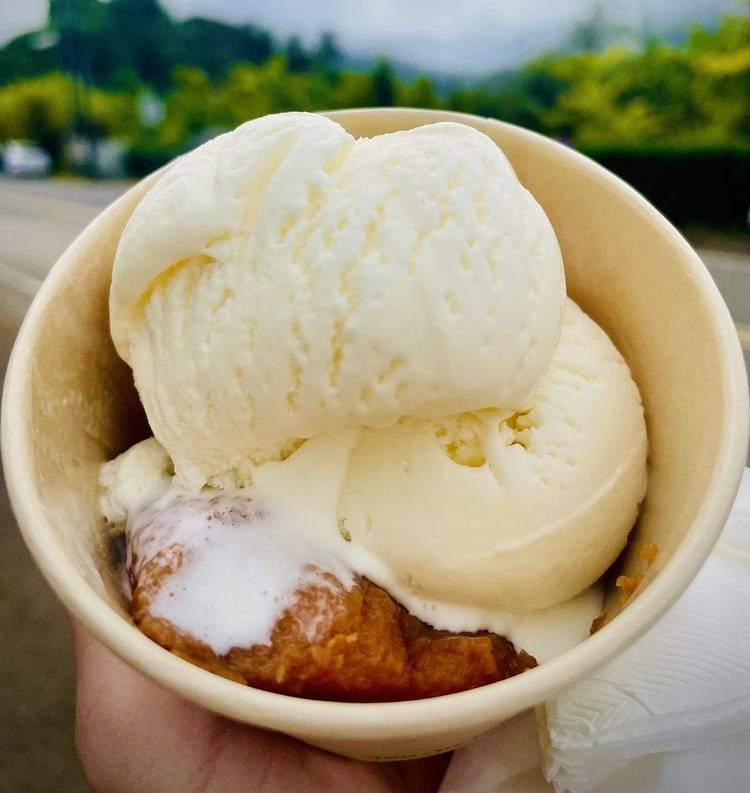
We take a thick, steaming slice of our 24-hour steamed kulolo and top it with a cold, creamy scoop of our signature haupia (coconut) ice cream. As you sit at our outdoor picnic tables, the warmth of the taro melts the ice cream into a rich coconut sauce that seeps into the fudgy layers. It is a perfect marriage of old-world tradition and modern indulgence, and it’s why we’re a top-rated stop in almost every Oahu food guide.
FAQ: Everything You Need to Know About Kulolo
1. Is kulolo gluten-free? Yes! Authentic kulolo is naturally gluten-free. It uses taro starch instead of wheat flour, making it a safe dessert for those with Celiac disease or gluten sensitivities.
2. Is it vegan? Traditional kulolo made with sugar and coconut milk is vegan. However, some family recipes use honey, so it’s always good to ask. (Note: Our "Sweet Lady" ice cream has dairy, but the kulolo itself is dairy-free!)
3. Why is it so hard to find in stores? Because of the 24-hour cook time, it’s a true "slow food." Most commercial bakeries find it too difficult to make every day. We’re proud to be one of the few places on Oahu keeping this tradition alive daily.
4. How long does it stay fresh? Since it's thoroughly steamed and high in sugar, it’s quite stable. It stays fresh at room temperature for 2 days, or in the fridge for up to a week.
5. Can I freeze my kulolo? Yes! You can freeze kulolo blocks for up to three months. Wrap them tightly in plastic and then foil. Just thaw in the fridge and reheat it to restore that soft texture.
6. Where is the best place to buy kulolo in Kaneohe? Visit our historic Waiahole Valley location or our Windward Mall location.
7. Does it taste like poi? Not at all. While they both come from the kalo root, the grating and long caramelization make kulolo taste more like a "taro caramel" or a very thick fudge.
Experience the Sweet Side of Hawaiian History
Kulolo isn't just a dessert; it’s proof of the ingenuity of the Hawaiian people. They mastered the art of turning a sturdy root vegetable into a world-class confection. Whether you enjoy it by the block or as the star of a traditional Hawaiian plate, you’re taking part in a delicious piece of living history.
Ready for a treat?