
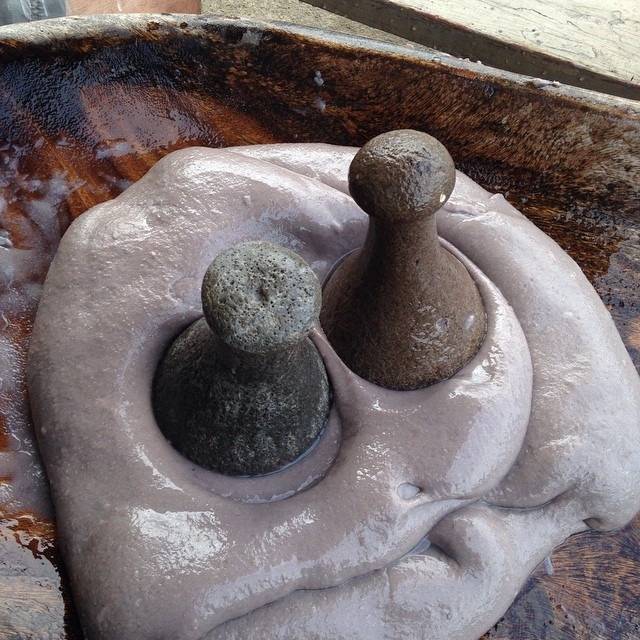
If you have ever sat down to a traditional Hawaiian plate lunch or visited a luau, you have likely encountered a smooth, purple-hued dish that serves as the foundation of the meal. To the uninitiated, it might look like a simple side dish. But to the people of Hawai‘i, Poi is much more than food—it is a sacred connection to the land, a genealogical link to the past, and a nutritional powerhouse that has sustained generations.
In this comprehensive guide, we will explore the origins of this ancient staple, the traditional art of hand-pounding taro, and how you can enjoy it like a true local at Waiahole Poi Factory.
The Sacred Origins: More Than Just a Starch
To understand What is Poi, you must first understand the plant it comes from: Kalo (Taro). In Hawaiian cosmogony, the kalo plant is known as Hāloanakalaukapalala, the elder brother of the first Hawaiian person. This relationship creates a profound cultural bond; when a family gathers around a bowl of poi, there is a deep sense of respect and peace, as the "elder brother" is present at the table.
Kalo is a wetland crop that thrives in the cool, flowing waters of valleys like Waiahole. The corm, or the starchy root of the plant, is harvested, steamed or boiled until tender, and then prepared into the smooth paste we know as poi.
The Art of the Pounding: Hand-Pounded vs. Milled
In the modern food industry, much of the poi found in grocery stores is processed using large industrial mills. While this makes it accessible, it often loses the soul and specific texture that defines the traditional experience.
At Waiahole Poi Factory, we remain dedicated to the Ku‘i Kalo method—the traditional art of hand-pounding.
- The Tools: We use a pōhaku ku‘i ‘ai (stone pestle) and a papa ku‘i ‘ai (wooden board).
- The Process: The steamed taro is worked with rhythmic precision, adding small amounts of water until it transforms from a solid root into a thick, elastic paste called pa‘i ‘ai.
The Result: Hand-pounded poi has a unique "pull" and a complex flavor profile that mechanical milling simply cannot replicate.
The Flavor Profile: Finding Your Perfect "Day"
One of the most fascinating aspects of poi is that it is a "living" food. Because it is a natural product, it undergoes a fermentation process that changes its flavor over time.
- Fresh Poi (Sweet): When it is first made, poi is mild and slightly sweet. This is often the preferred version for beginners or visitors who are trying it for the first time.
- One-Day Poi: After 24 hours, the natural sugars begin to ferment, giving it a very slight tang.
- Sour Poi (Aged): After a few days, the poi becomes quite tart. Many locals prefer "sour poi" because the acidity acts as a perfect palate cleanser when eaten with heavy, fatty meats like Kalua Pig.
How to Eat Poi Like a Local Expert
If you try a spoonful of poi by itself, you might find it plain. However, poi was never meant to be eaten in isolation; it is a flavor balancer.
The Perfect Pairing Strategy
- The Salty Balance: Take a bite of salty Kalua Pig or Lomi Salmon, then take a small dip of poi. The starchiness of the poi cuts through the salt and fat, creating a perfectly balanced bite.
- The "Two-Finger" Rule: Historically, the thickness of poi was described by how many fingers were needed to scoop it from a bowl (one-finger, two-finger, or three-finger poi). Today, we use spoons, but the principle remains: the thicker the poi, the more "hand-pounded" and authentic it usually is.
- The Dessert Hybrid: At our Windward Mall location, you can try the Sweet Lady of Waiahole, which pairs our fresh poi with warm kulolo and haupia ice cream.
The "Poi Palate" Quiz
Not sure how to order your first bowl? Take this quick 3-question quiz to find your style!
1. How do you feel about fermented foods (like Kimchi or Sourdough)?
- A) I love them! The tangier, the better.
- B) I like them in moderation.
- C) Not a fan; I prefer fresh and sweet.
2. What is your main dish today?
- A) Something very salty/fatty (Squid Luau or Kalua Pig).
- B) A mix of everything.
- C) I’m just here for the desserts!
3. Have you tried Poi before?
- A) Yes, I’m a pro.
- B) Once or twice.
- C) Total beginner.
Scoring Guide:
- Mostly A’s: You are a Sour Poi Enthusiast. Ask for poi that has had a day or two to develop its character. It will pair beautifully with our heavy plates.
- Mostly B’s: You are a Traditionalist. Fresh, hand-pounded poi is your best bet for a classic experience.
- Mostly C’s: You are a Poi Newbie. Try the "Sweet Lady" or mix a little bit of fresh poi with your haupia to ease into the flavor.
The Nutritional Superfood You Didn't Know You Needed
Beyond its cultural significance, poi is one of the most hypoallergenic and nutritious foods on the planet.
- Low in Fat: Naturally fat-free and low in calories.
- High in Fiber: Excellent for digestive health.
- Vitamin Rich: Packed with Vitamin B, Calcium, and Phosphorus.
- Probiotic Power: Sour poi contains beneficial bacteria similar to those found in yogurt, aiding in gut health.
FAQ: Everything You’ve Ever Wanted to Ask About Poi
1. Is poi gluten-free? Yes! Poi is 100% gluten-free and grain-free, making it an excellent carbohydrate source for those with celiac disease or gluten sensitivities.
2. Why is some poi purple and some gray? The color depends entirely on the variety of taro used. There are over 150 varieties of kalo, ranging from white to pink to deep purple.
3. Does poi need to be refrigerated? If you want to slow down the fermentation (souring) process, you can refrigerate it. However, traditionally, it was kept at room temperature in a cool place, covered with a thin layer of water to prevent a crust from forming.
4. Can babies eat poi? Actually, poi is often the very first solid food given to Hawaiian babies. Because it is so gentle on the stomach and highly nutritious, it is considered a perfect "first food."
5. How do I get the "crust" off my poi? If your poi sits out, it may develop a slightly darker, firm top layer. This is perfectly safe to eat, but most people prefer to scrape it off or stir a little water back into it to smooth it out.
6. Where can I buy fresh poi in Kaneohe? You can visit our Country Store or our main restaurant in Waiahole Valley to get the freshest hand-pounded poi on the Windward side.
7. What is the "Sweet Lady"? The Sweet Lady of Waiahole is our signature dessert. It features warm kulolo (steamed taro and coconut) topped with haupia ice cream. It’s the perfect way to introduce yourself to taro if you are nervous about eating plain poi.
Experience the Tradition Today
At Waiahole Poi Factory, we aren't just serving food; we are serving a piece of Hawaiian history. Whether you are a tourist looking for an authentic stop on your scenic drive or a local family looking for the taste of home, our doors are open.
Come visit us in the lush Waiahole Valley or at our Windward Mall location to experience the true meaning of "Hawaiian Traditions in Every Bite."
Ready to taste the tradition?
- Browse our Full Menu
- Order Online for Pickup - Waiahole Valley
- Order Online for Pickup - Windward Mall