
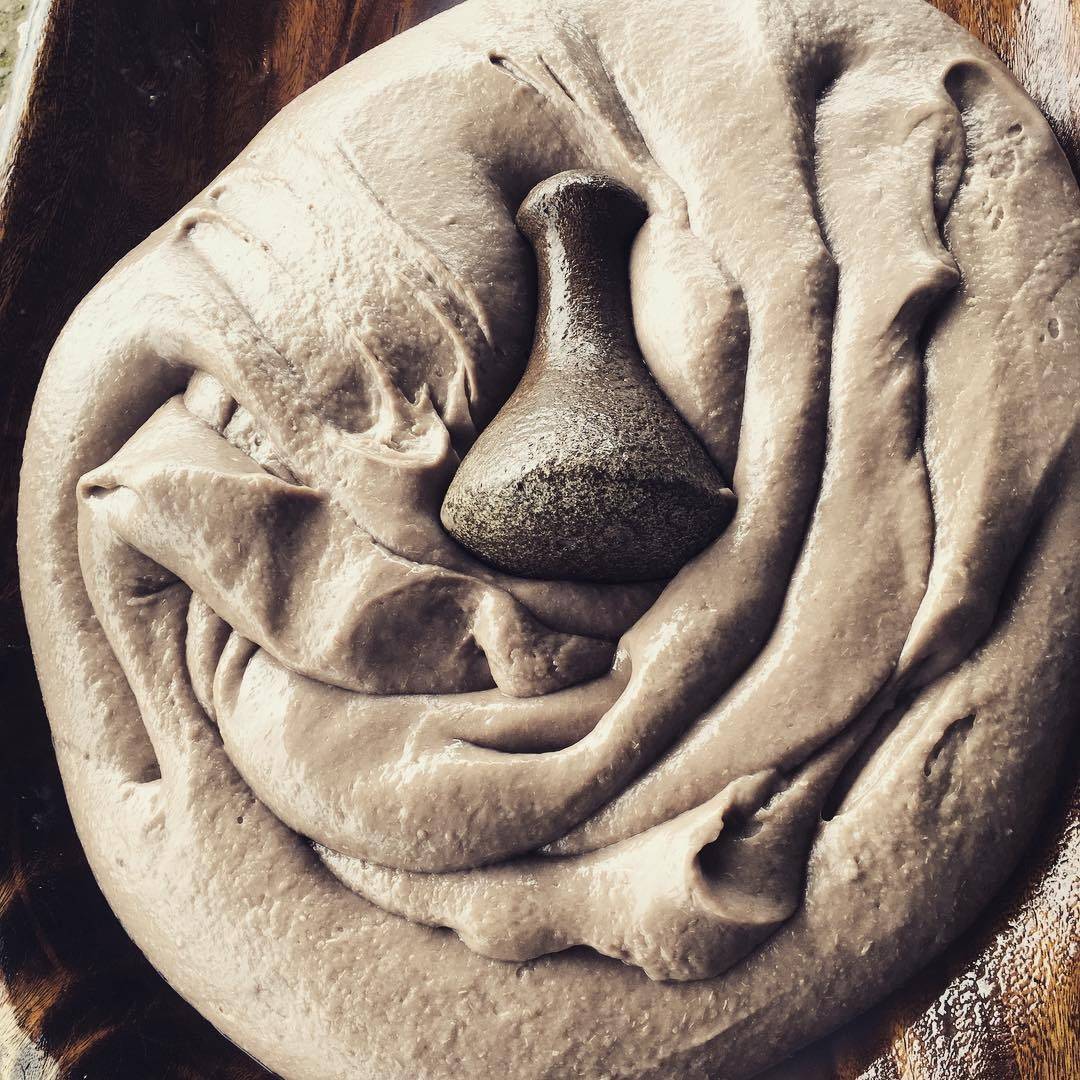
For those who live in the islands, Poi is much more than a side dish—it is a sacred connection to Hawaiian ancestry and the land (‘āina). However, as Hawaiian food has gained global popularity, the quality of this staple has become increasingly varied. If you’ve only ever tasted the thin, liquid-like versions found in plastic bags at the supermarket, you haven’t truly experienced the "Soul of Hawaii."
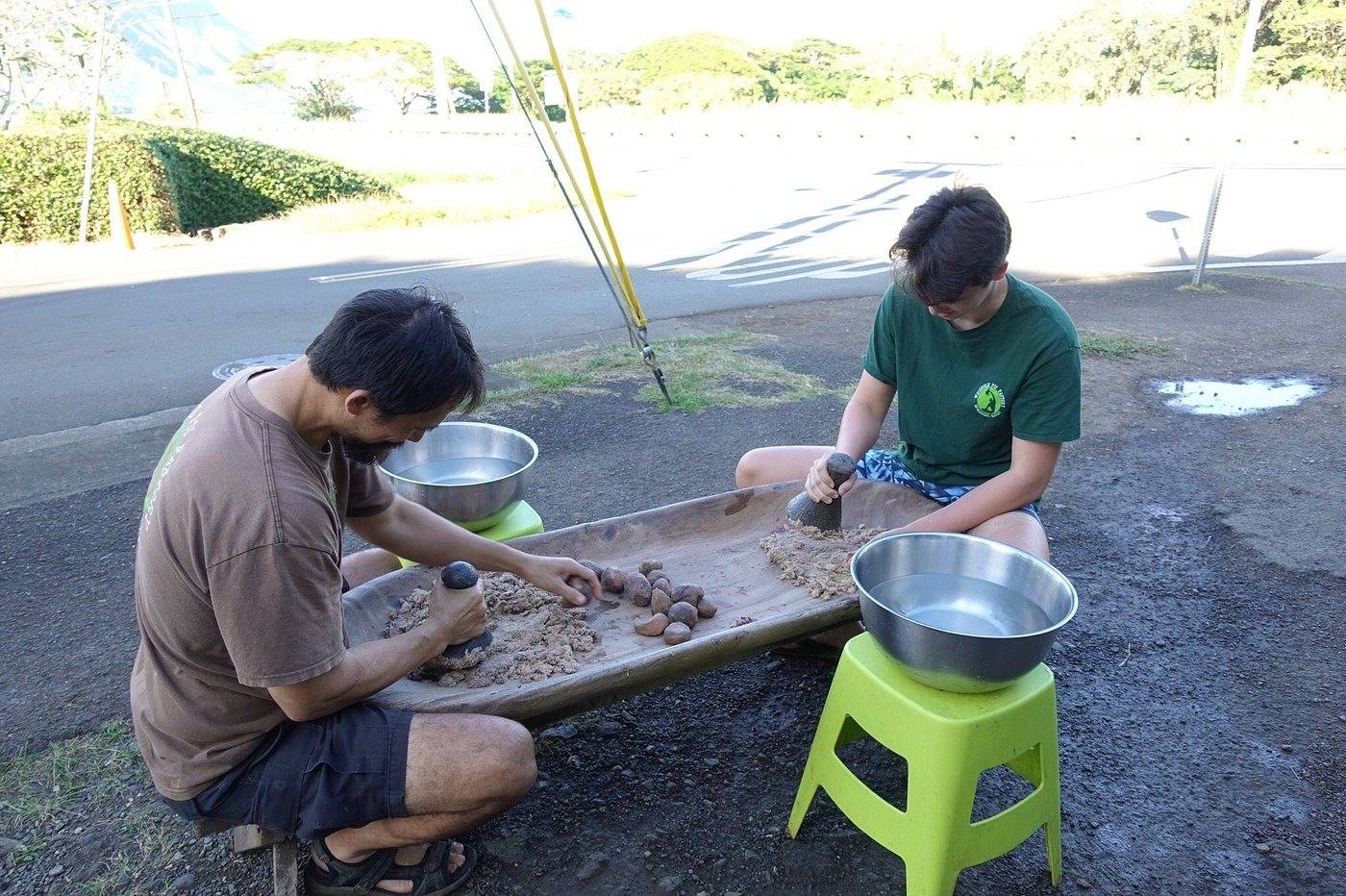
To find the best hand-pounded poi on Oahu, you have to look beyond the industrial mills and find the practitioners of Ku‘i Kalo—the traditional art of pounding steamed taro by hand using a stone pestle. This method is a grueling labor of love that few kitchens still perform. At Waiahole Poi Factory, we have dedicated our lives to preserving this ancient method, ensuring that every visitor can taste the same quality that nourished the ali‘i (royalty) centuries ago.
In this guide, we’ll explain why hand-pounded poi is the gold standard of Hawaiian cuisine, the science behind the texture, and why a trip to the Windward Coast is essential for anyone seeking the real thing.
The Difference: Hand-Pounded vs. Industrial Milled
Most poi consumed today is "milled," meaning it is processed by high-speed metal machinery. These commercial grinders use sharp blades and high heat to pulverize the taro, and large amounts of water must be added to keep the machines from clogging. This results in a product that is often smooth but lacks the "mana" (spirit), nutritional density, and unique texture of the original.
Hand-pounded poi (Pa‘i‘ai), on the other hand, is a rhythmic, manual process. It requires a pōhaku ku‘i ‘ai (stone pestle) and a papa ku‘i ‘ai (wooden board). The steamed taro is worked with precision, using very little water. This creates a dense, elastic, and "sticky" consistency that clings to your finger—often referred to by locals as "two-finger" or "three-finger" poi, depending on the thickness.
Why Hand-Pounded is Superior:
- Superior Texture: It has a satisfying "pull" and substantial weight that industrial versions cannot replicate.
- Concentrated Flavor: Because very little water is added, you taste the deep, nutty, and earthy notes of the taro root itself.
- Nutrient Retention: Minimal processing and low heat keep the natural fiber, vitamins, and minerals intact.
- Cultural Integrity: Every bowl supports the tradition of the lo‘i kalo (taro patches) and the artisans who protect this heritage.
The Top Spot: Waiahole Poi Factory (The Windward Anchor)
When locals and culinary experts are asked where to find the most authentic hand-pounded poi on Oahu, the answer is almost always the same: Waiahole.
Our location isn't a coincidence. We are nestled in the lush, rainy valley that has been a premier taro-growing hub for centuries. Our historic 1904 building serves as a beacon for traditionalists. We source our kalo (taro) from local farmers in the valley, ensuring that the poi we pound reflects the unique mineral profile and freshwater purity of the Windward soil.
When you eat at Waiahole, you aren't just getting a meal; you are witnessing a revival. On many days, you can actually see the pounding process happening in real-time, smelling the sweet, earthy steam of the fresh kalo as it is transformed into the island's most precious staple.
Other Places to Find Authentic Poi on Oahu
While Waiahole is a primary destination, a few other spots on the island carry the torch for traditional taro preparation:
- Keiki and Plow (Hawaii Kai): Often hosts community poi-pounding workshops where families can learn the art together.
- Farmer’s Markets (KCC or Ward): Occasionally, individual practitioners like Paepae o He‘eia sell small batches of pa‘i‘ai at local Saturday markets.
- Highway Inn (Kaka‘ako/Waipahu): A long-standing institution that serves high-quality Hawaiian food, though their poi is often the more standard milled variety unless specified.
Comparison: The Poi Quality Scale
Choosing the right poi can change your entire perception of a Hawaiian Plate Lunch. Use the table below to see how our traditional method stacks up against common alternatives.
The "Poi Purity" Checklist
Are you getting the real deal? Use this checklist during your next Hawaiian meal to score the quality and authenticity of your poi!
The Visual & Physical Test:
- The "Stick" Test: Does the poi stay on the spoon or finger when turned upside down? (Thicker is always better!)
- The Color Check: Is the color a vibrant, deep purple or a natural earthy grey? (Artificial colors are a red flag!)
- The Elasticity: Does it have a "pull" or resistance when you lift your spoon?
The Source & Method Test:
- The Origin: Is the kalo (taro) sourced from a local Oahu or Neighbor Island farm?
- The Tools: Was it prepared using a pōhaku (stone) rather than a metal blade?
- The Water: Does the flavor taste concentrated rather than watered down?
Scoring Guide:
- 1–2 Checks: This is standard "commercial" poi. It’s okay for a quick fix, but it’s missing the soul.
- 3–4 Checks: High-quality restaurant poi. You’re doing well!
- 5–6 Checks: You’ve found the Best Hand-Pounded Poi on the island! You are likely sitting at Waiahole Poi Factory.
Why Hand-Pounded Poi is a Certified Superfood
In ancient Hawai‘i, poi was the primary food for infants and the elderly because it is incredibly easy to digest and naturally hypoallergenic. By choosing the hand-pounded versions at our Windward Mall or valley locations, you are maximizing the health benefits:
- Natural Probiotics: When allowed to ferment for a day or two, it becomes a "living food" that supports a healthy gut microbiome.
- Slow-Burn Energy: It has a low Glycemic Index (GI), providing sustained energy for surfers, hikers, and athletes.
- Vitamin Dense: It is a significant source of Vitamin B, Calcium, Potassium, and Magnesium.
- Clean Eating: Our poi contains zero preservatives, zero added sugars, and is naturally gluten-free.
FAQ: Searching for the Best Poi on Oahu
1. Why is hand-pounded poi more expensive than the store-bought version? It is a labor-intensive, manual process. One batch of hand-pounded poi requires hours of physical strength and skill compared to seconds in a machine. When you buy hand-pounded, you are paying for the artisan’s expertise and the survival of a traditional Hawaiian craft.
2. Can I take hand-pounded poi back to the mainland? According to USDA regulations, cooked taro products like poi are generally allowed to be transported in checked luggage as long as they are sealed. Many visitors stop at our Windward Mall location on their way to the airport to bring a taste of the islands home.
3. Is "Pa‘i‘ai" the same as "Poi"? Close! Pa‘i‘ai is the stage where the taro is pounded with very little water—it is extremely thick and can be wrapped in ti leaves for travel. Poi is what you get when you add a bit more water to that pa‘i‘ai to create a smoother, more "dip-able" consistency.
4. Does hand-pounded poi spoil quickly? Actually, it gets more complex with age! Fresh poi is sweet; "day-old" poi is tangy; and "three-day-old" poi is perfectly sour. It can last in the refrigerator for up to a week.
5. I'm a beginner; how should I eat it? We recommend pairing it with Kalua Pig or Lomi Salmon. The saltiness of the meat balances the earthiness of the poi. If you're nervous, try a small dip with your haupia ice cream!
6. Where exactly is the historic Waiahole location? You can find us at 48-140 Kamehameha Hwy, Kaneohe, HI 96744. Look for the iconic red building!
7. Is there a difference in quality at the Mall location? Not at all. We transport fresh batches from our valley pounding boards to our Windward Mall spot daily to ensure the quality is identical.
Experience the Soul of Hawai‘i
If you are ready to move beyond the supermarket aisle and experience the deep, nutty richness of the best hand-pounded poi on Oahu, come visit us. We take pride in every strike of the stone, ensuring that the spirit of our ancestors is in every bite.
Taste the difference: