

Luau stew is one of those dishes that separates tourists from locals in Hawaii. This rich, creamy bowl of taro leaves simmered with meat and coconut milk appears at family gatherings, plate lunch counters, and backyard cookouts across the islands, yet most visitors miss it entirely. Once you taste it, you understand why Hawaiian families have prepared it for generations. Understanding this staple starts with its cultural roots and the proper technique for handling its defining ingredient.
What Makes Luau Stew Different From Other Hawaiian Dishes
Luau stew relies on young taro leaves, known locally as luau or luʻau leaves. We simmer them with coconut milk and protein until the leaves break down into a thick, silky base. While raw leaves carry a slight bitterness, long cooking transforms them into a mild, earthy flavor. Unlike laulau, where taro leaves wrap around pork and fish before steaming, luau stew cooks every ingredient together in a single pot to form a unified dish.
The recipe connects directly to Hawaii's agricultural tradition. Taro cultivation began with the arrival of Polynesian navigators over a millennium ago, and the plant remains fundamental to Native Hawaiian identity. The term "luau" comes from these tender taro leaves, which later gave their name to traditional Hawaiian feasts. Beyond special occasions, luau stew remains an essential comfort food in home kitchens across the islands.
At Waiahole Poi Factory, we have served traditional Hawaiian food since 1905. Over a century of continuous operation allows us to preserve authentic preparation methods without taking shortcuts that alter the dish's character.
Sourcing and Preparing Taro Leaves Safely
Raw taro leaves contain microscopic calcium oxalate crystals that cause sharp throat irritation if eaten undercooked. Research from the University of Hawaii College of Tropical Agriculture and Human Resources confirms that taro leaves require extensive cooking time to break down these crystals completely. Proper heat application ensures the dish is safe and pleasant to eat.
In Hawaii, fresh luau leaves are available at local produce stands and grocery stores. Choose young, vibrant green leaves without yellow edges or brown spots. Because the stems are tough and fibrous, remove them during prep. Outside Hawaii, frozen taro leaves found in Asian or Pacific Islander markets serve as a reliable alternative. These leaves come pre-blanched, though they still require full simmering time to reach the correct texture.
Wearing kitchen gloves protects sensitive skin from raw leaf sap during preparation. To prep fresh leaves, fold each leaf along its center rib, strip the blade away from the stem, and cut the greens into 2-inch pieces. The leaves shrink considerably as they break down during cooking.
Traditional Luau Stew Recipe: Stovetop Method
While beef chuck is widely used, Squid Luau remains a cornerstone of our Waiahole Poi Factory Menu. For 6 to 8 servings of traditional Beef Luau stew, assemble the following ingredients:
- Protein: 2 pounds beef chuck cut into 1-inch cubes (or 2 pounds cooked, sliced octopus/squid)
- Greens: 2 pounds prepared fresh taro leaves
- Coconut Milk: 2 cans full-fat coconut milk
- Aromatics: 1 diced yellow onion, 4 minced garlic cloves, and 1 inch fresh grated ginger
- Seasoning: Hawaiian sea salt to taste
Sear the meat in a large, heavy pot over medium-high heat, working in batches to ensure proper browning. Remove the meat, then sauté the onion, garlic, and ginger in the remaining pan drippings until soft. Return the meat to the pot, add the prepped taro leaves, pour in 1 can of coconut milk, and add just enough water to submerge the ingredients. Bring the pot to a boil, then immediately lower the heat to a simmer.
Simmer the mixture uncovered for 2 to 3 hours, stirring periodically to prevent scorching on the bottom of the pot. As it cooks, the leaf structure will dissolve into a smooth sauce. After 2 hours, check the leaves to ensure no tough fibers remain. Stir in the second can of coconut milk during the final 30 minutes of cooking to add richness, then season with Hawaiian sea salt.
Instant Pot and Slow Cooker Adaptations
Using an Instant Pot reduces cooking time to roughly 50 minutes under high pressure. Brown the meat using the sauté setting, then combine all ingredients in the cooker. Use only 1 can of coconut milk, as pressure cookers prevent liquid evaporation. Cook at high pressure for 50 minutes, then allow a 15-minute natural pressure release to keep the meat tender.
Slow cookers work well for unattended cooking over 6 to 8 hours on low heat. Because slow cookers retain moisture, reduce the coconut milk to 1.5 cans to prevent a thin consistency. If the finished stew appears too liquid, simmer it uncovered on the stovetop for 20 minutes to thicken.
Serving Luau Stew the Traditional Way
A scoop of plain white rice provides the standard foundation for luau stew, allowing the grains to absorb the coconut gravy. Fresh poi offers a complementary traditional pairing. The subtle fermentation and smooth body of hand-pounded poi cut through the richness of the stew.
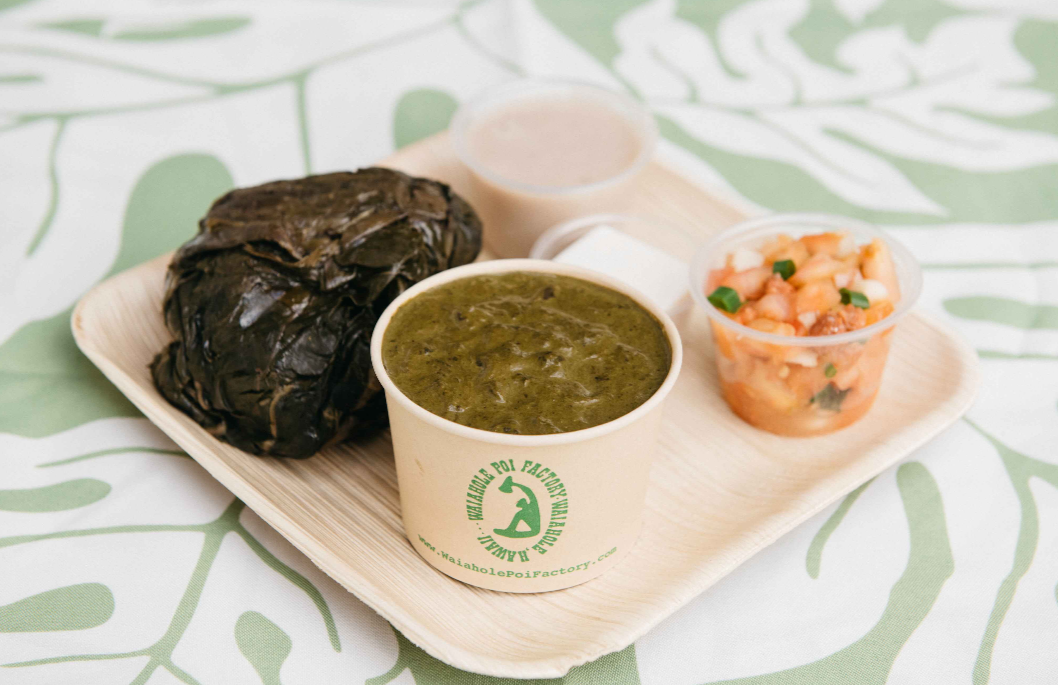
A full Hawaiian combo plate featuring Beef Luau, Kalua Pig, Lomi Salmon, white rice, and a side container of fresh Poi.
A balanced Hawaiian plate incorporates a mix of textures and savory flavors:
- Lomi Salmon: Salt cured salmon tossed with tomatoes and sweet onions.
- Kalua Pig or Laulau: Slow-roasted smoky pork or steamed leaf wraps.
- Sweet Lady of Waiahole: Warm kulolo topped with haupia ice cream.
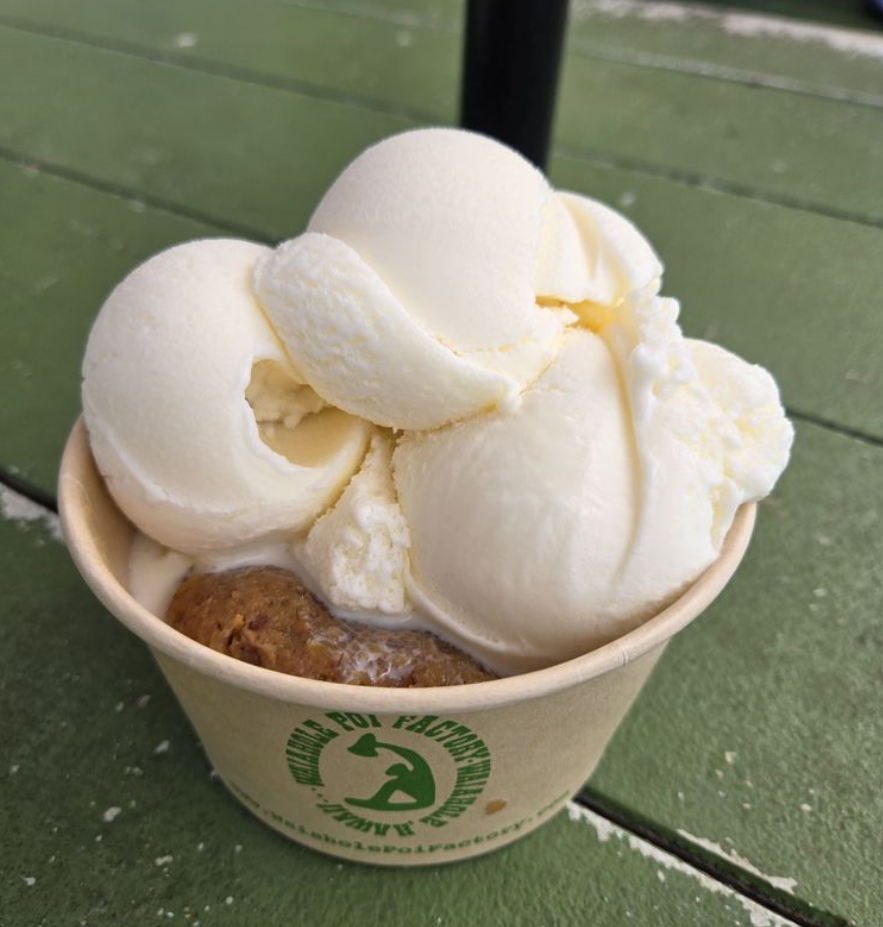
In our kitchen, we hand-pound fresh poi daily using time-honored techniques. You can serve luau stew family-style in large serving bowls or ladled directly over scoops of warm rice, accompanied by a side of chili pepper water for heat.
Storage and Traditional Variations
The flavor of luau stew deepens after sitting overnight in the refrigerator. Store leftovers in airtight containers for up to 4 days. Reheat gently over medium-low heat on the stovetop, adding a splash of water or coconut milk if the sauce has thickened. Avoid boiling during reheating to maintain an even texture.
To freeze, transfer cooled stew into shallow containers and keep for up to 3 months. Because coconut milk can separate when frozen, stir the stew thoroughly while reheating to restore its smooth consistency.
Classic Luau Stew Variations
- Squid Luau (Heʻe Luau): Prepared with tender octopus or squid, bringing a natural seafood sweetness to the coconut leaf sauce.
- Oxtail or Short Rib Luau: Richer cuts that release gelatin during a long simmer, creating a deep beef broth base.
- Lupulu: Made with cured corned beef, adding a salty note popular in island home cooking.
- Vegetarian Luau: Prepared with heartier mushrooms like shiitake or oyster in place of meat, combined with vegetable broth, taro leaves, and coconut milk.
Finding Authentic Luau Stew in Hawaii
Well-prepared luau stew features fully dissolved greens with no fibrous leaf outlines remaining. The finished sauce should coat the back of a spoon with a thick, velvety texture rather than a watery consistency.
Quality stew depends on fresh, local ingredients. Much of Hawaii's taro crop comes from the fertile valleys of Windward Oahu, including Waiahole Valley. Sourcing our ingredients directly from local growers supports native agriculture and maintains regional food traditions.
Visiting family-owned establishments on Oahu's windward coast offers the best opportunity to experience traditional plate lunches cooked with patience and care.
Experience Authentic Hawaiian Cuisine at Waiahole Poi Factory
Taste traditional Beef Luau and Squid Luau crafted from recipes refined over a century. Pair your meal with our fresh, hand-pounded poi and complete your visit with our signature Sweet Lady of Waiahole dessert.
Order Online from Waiahole Poi Factory